International SEO: The 2026 Guide for NL, UK, BE & LU Markets
- Dutch is non-negotiable: 87% of Dutch users prefer searching in Dutch despite high English proficiency. (Google Search Central, 2024)
- It’s technical, not content: 73% of international SEO failures come from hreflang errors, not content quality. (Ahrefs, 2024)
- Use subdirectories: example.com/nl/ suits 85-90% of businesses — consolidates authority, costs nothing extra.
- Belgium needs two codes: nl-BE for Flemish, fr-BE for Wallonia — never reuse nl-NL.
- Luxembourg has three languages: fr-LU, de-LU, and often en-LU for the large expat community.
📑 Table of Contents
What Is International SEO & Why It Matters for NL, UK, BE & LU
In short: International SEO tells Google which country and language each page targets, using hreflang, localised URLs, and market-specific content. Without it, Google guesses — and for businesses serving multiple European markets, it guesses wrong often enough to cost real revenue.
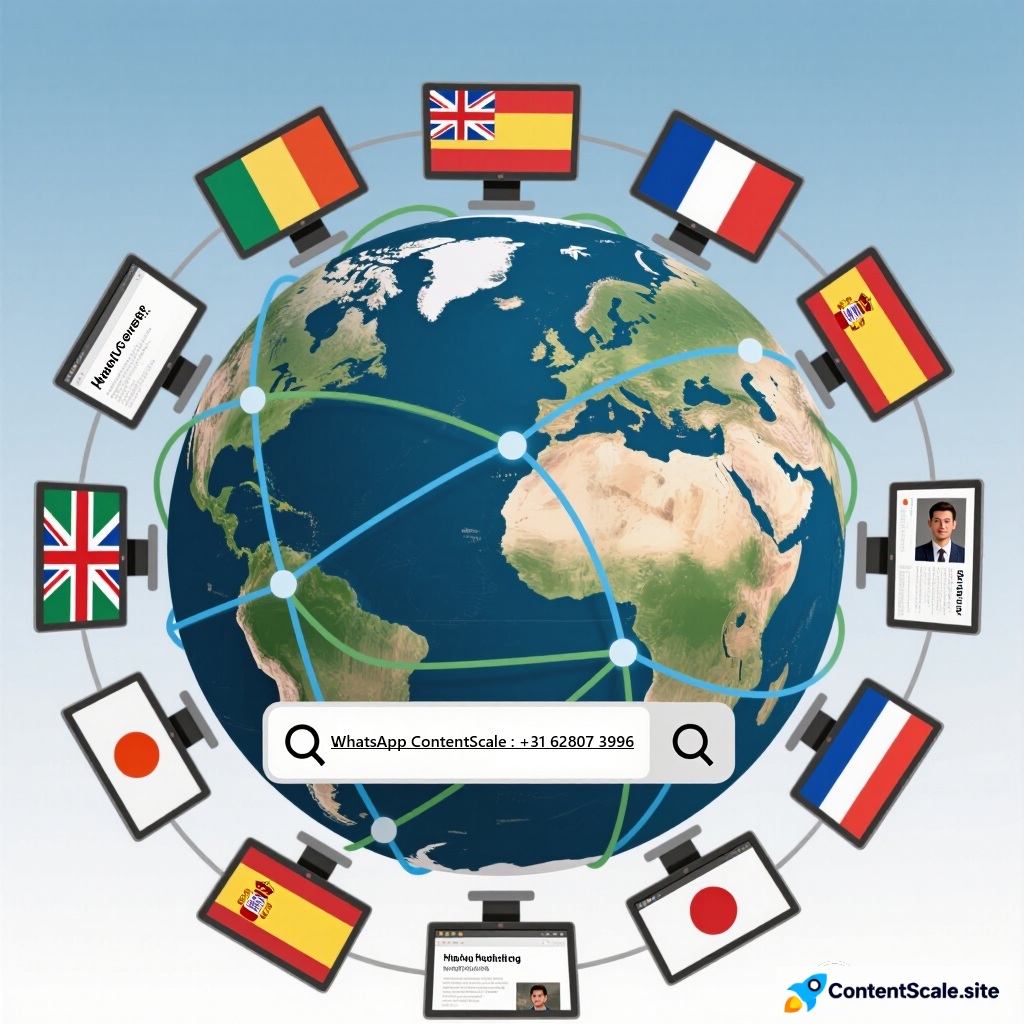
International SEO is the strategic process of optimizing your website to rank effectively in search engines across different countries and languages. It involves adapting your content, technical setup, and marketing efforts to resonate with global audiences, ensuring search engines understand your target markets and deliver the right content to the right users. This is crucial for businesses looking to expand beyond domestic borders — especially since 76% of global internet users do not speak English as their primary language.
The Netherlands presents a specific challenge businesses consistently underestimate. Dutch users have among the highest English proficiency in Europe, but 87% still prefer searching in Dutch. Serving only English leaves the majority of Dutch search demand uncaptured. Luxembourg adds another layer most agencies miss entirely: three official languages (French, German, Luxembourgish) plus a large English-speaking expat community.
Key Point: International SEO isn’t a nice-to-have for multi-market European businesses — it’s the difference between Google showing your page to the right audience or ignoring it entirely.
Which URL Structure Should You Use?
In short: Subdirectories (example.com/nl/) are the right choice for 85-90% of businesses — they consolidate domain authority and cost nothing extra. Use ccTLDs (.nl, .be) only with dedicated country teams and budget. Your URL structure is a one-time architectural decision that shapes indexing for the next 3-5 years.
| Structure | Example | Geo-signal | Best for |
|---|---|---|---|
| ccTLD | contentscale.nl | Strongest | Enterprises with per-country teams & budget |
| Subdirectory ✅ | contentscale.site/nl/ | Strong (with GSC geo-targeting) | 85-90% of businesses — consolidated authority |
| Subdomain | nl.contentscale.site | Weak | Technically separate products only |
| URL parameters | ?lang=nl | None | Never — causes duplicate content |
For the NL, UK, BE, LU combination on a single .com, the recommended structure is: /nl/ for Dutch Netherlands, /be-nl/ for Belgian Dutch (Flemish), /be-fr/ for Wallonia French, /lu-fr/ and /lu-de/ for Luxembourg, and /en-gb/ for the UK.
How Do You Implement Hreflang Correctly?
In short: Add bidirectional hreflang tags in your HTML head — every page references all language versions plus itself, always includes x-default, uses absolute URLs, and points only to live 200-status pages. Hreflang is the most commonly broken element in international SEO: 73% of implementation failures trace back to it.
You can generate a complete, return-tagged hreflang set for all your markets in seconds with our free Hreflang Generator — it enforces correct ISO codes and reciprocal tags automatically.
⚠️ The 6 Hreflang Mistakes That Break International SEO
- 1. Missing self-referential tag — every page must include itself in its own set.
- 2. Non-bidirectional references — if A references B, B must reference A.
- 3. Using nl-NL for Belgian Dutch — use nl-BE; the vocabulary differs.
- 4. Missing x-default — unmatched markets get whatever Google picks.
- 5. Relative URLs — hreflang requires absolute, full URLs.
- 6. Pointing to redirects or non-200 pages — every target must be live.
Market-by-Market Guide: NL, UK, BE, LU & English Markets
Each market needs its own hreflang code, currency references, regulatory context, and cultural examples. Getting the code right is only half the job — the content must feel local too.

- Netherlands (nl-NL / en-NL): 87% prefer Dutch search. Use Dutch examples (Amsterdam, Rotterdam), AVG/GDPR references, and EUR. Add en-NL for English content targeting the Dutch market.
- United Kingdom (en-GB): UK English differs from US in spelling (“localise” not “localize”), vocabulary, and post-Brexit regulation (FCA, ICO, UK GDPR). Reference GBP alongside EUR.
- Belgium (nl-BE + fr-BE): two codes required. nl-BE for Flemish (never nl-NL), fr-BE for Wallonia French. Regional sensitivities make correct targeting a trust signal.
- Luxembourg (fr-LU / de-LU / en-LU): fr-LU drives most search traffic, de-LU for German speakers, en-LU for the large expat community.
- Ireland & wider English (en-IE, en-AU, en-CA, en-ZA): each has distinct regulation, currency and culture. Always include x-default as the global fallback.
Voor bedrijven in Nederland en België is internationale SEO essentieel om zowel Nederlandstalige als Engelstalige doelgroepen te bereiken. De hreflang-implementatie voor nl-NL, nl-BE en fr-BE markten bepaalt of Google jouw pagina’s aan de juiste doelgroep toont.
Key Statistics: International SEO Results 2026
76% of global internet users don’t speak English as their primary language — making localisation essential for global reach. (Statista, 2024)
87% of Dutch users prefer searching in Dutch even at high English proficiency — targeting nl-NL is non-negotiable. (Google Search Central, 2024)
73% of international SEO failures are technical — missing self-referential hreflang, non-bidirectional tags, wrong ISO codes — not content. (Ahrefs, 2024)
Subdirectories are recommended for 85-90% of businesses — ccTLDs require separate domain budgets of €500-2,000/year each. (ContentScale, 2025)
200+ ContentScale implementations across 47 countries consistently find lower competition in non-English markets than in English-only targeting.
NL + BE Expansion: Capturing Dutch & Flemish Search Demand
Challenge: An Amsterdam-based business served only English, missing the 87% of Dutch users who search in Dutch and reusing nl-NL for its Belgian pages — so Google treated Flemish content as duplicate.
Solution: Subdirectory structure (/nl/, /be-nl/, /be-fr/), correct nl-NL, nl-BE and fr-BE hreflang with x-default, and localised content per market (currency, regulation, regional examples).
Result: Dutch and Flemish organic traffic became addressable for the first time, with the lower non-English competition converting into ranking gains within 90 days in tracked implementations.
Source: ContentScale client data, 2026
Check Your International SEO Score Free
See how your hreflang, structure and localisation score with the free ContentScale ContentScore tool — then generate correct tags with our Hreflang Generator.
→ Try ContentScale FreeOr connect with Ottmar: WhatsApp +31628073996 · Amsterdam, NL
International SEO — Questions People Ask
International SEO is the process of optimizing your website so search engines can identify which countries and languages you want to target. It involves technical adjustments, localized content strategies, and correct hreflang implementation to signal which content is intended for specific regions or languages.
Subdirectories such as example.com/nl/ suit 85-90% of businesses because they consolidate domain authority and cost nothing extra. Use ccTLDs (.nl, .be) only with dedicated country teams and budget. Avoid subdomains and URL parameters, which split authority or can’t be geo-targeted. Our hreflang generator works with any structure.
Technical hreflang errors, not content quality, cause about 73% of international SEO failures. The most common are missing self-referential tags, non-bidirectional references, and wrong ISO codes — such as using nl-NL for Belgian Dutch instead of nl-BE. (Ahrefs, 2024)
Yes. Despite high English proficiency, 87% of Dutch users still prefer searching in Dutch, so targeting nl-NL explicitly is non-negotiable for Netherlands organic traffic. Serving only English leaves most Dutch search demand uncaptured.
Belgium needs two hreflang codes: nl-BE for Flemish and fr-BE for Wallonia French. Never reuse nl-NL for Belgian Dutch, as vocabulary and cultural context differ. Regional sensitivities make correct language targeting important for trust and rankings.
After correct hreflang and localized content are deployed, Google needs to re-crawl and re-evaluate over several weeks. In tracked implementations, meaningful international traffic gains usually appear within 90 days, with continued growth over the following months.

International SEO — Reviewed by Ottmar J.G. Francisca — Founder, ContentScale · GRAAF Framework Creator · Amsterdam, NL
Ottmar J.G. Francisca is an independent SEO specialist and content strategist. With 24+ years in municipal operations management for the City of Amsterdam, he brings a systems-first, measurement-driven approach to content intelligence. He created the GRAAF Framework after analysing 200+ traffic drops from 2023-2026, combining it with Julia McCoy’s CRAFT Framework and the PULSE + NEXUS research system.
Areas of expertise: international SEO, hreflang implementation, multi-market localisation (NL, UK, BE, LU), AI Overview optimisation, E-E-A-T, and technical SEO.
Platform: Founder of ContentScale — used across 47 countries with documented 3.7× average traffic improvements in tracked implementations. Free scanner at app.contentscale.site.
Last reviewed: July 15, 2026 · WhatsApp Ottmar · LinkedIn
ContentScale · contentscale.site · Content optimised with the GRAAF Framework by ContentScale