International Keyword Research: Ultimate Guide to Global SEO 2026
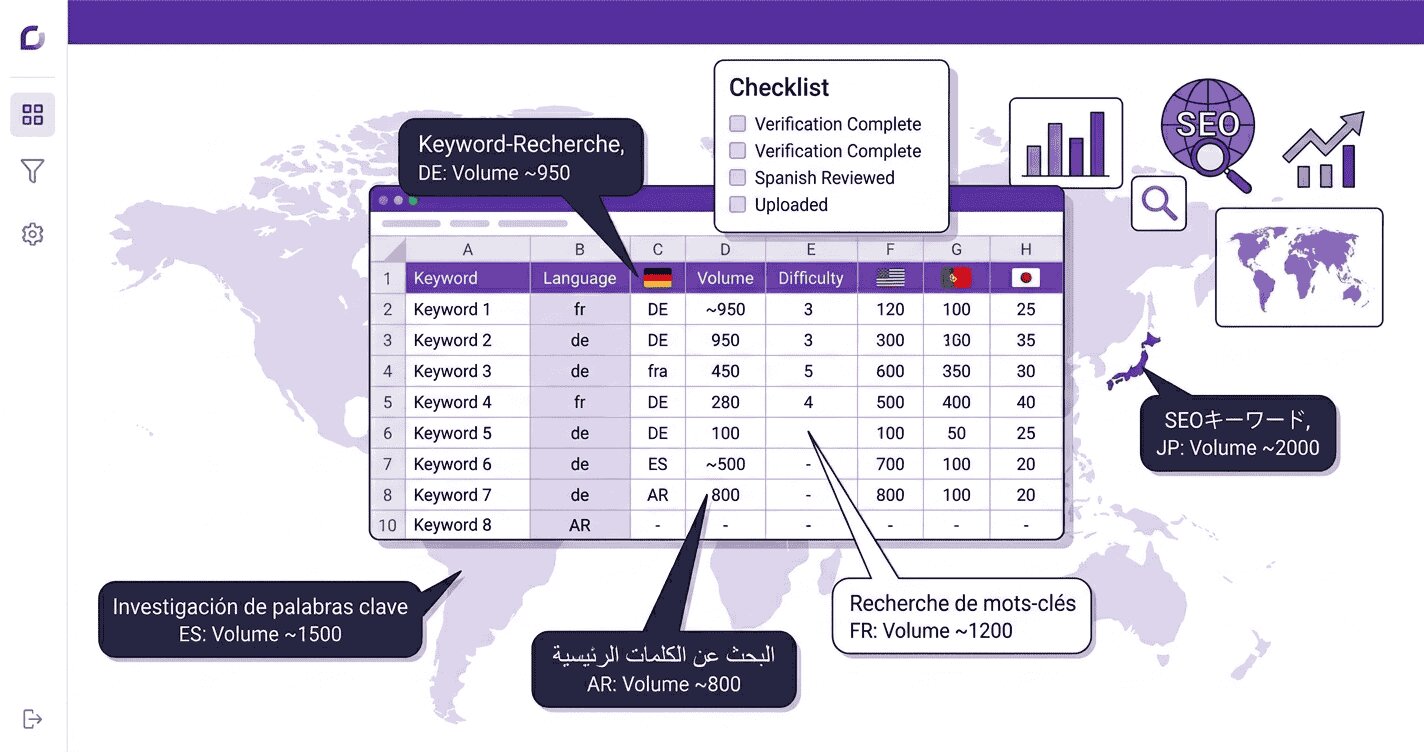
International keyword research is the process of identifying and analysing the exact phrases that audiences use to search in different languages, regions, and cultural contexts — so your content ranks in every market you target. According to CSA Research (2024), 90% of users prefer to browse online in their native language, making localised keyword strategy the single highest-leverage entry point for global SEO growth.
- 📌 90% of users prefer to browse in their native language — direct translation of keywords is not enough (CSA Research, 2024)
- 📌 International keyword research requires per-market research in each target language, not a one-size-fits-all approach (Phrase.com, 2025)
- 📌 Global retail e-commerce sales reached $6.42 trillion in 2025, rewarding brands that rank in multiple languages (Capital One Shopping Research, 2026)
- 📌 Companies implementing multilingual SEO strategies report 30% higher engagement rates and 40% longer on-site durations on average (optimational.com via tolingo.com, 2025)
- 📌 Hreflang implementation is the most common technical failure in international keyword research — incorrect tags cause duplicate content penalties and lost rankings (Hike SEO, 2025)
📊 Results at a Glance — Gisou Case Study
📋 Table of Contents
- 1. 🔍 What Is International Keyword Research?
- 2. 🌐 How to Conduct International Keyword Research Step by Step
- 3. 📈 Key Statistics: International Keyword Research 2026
- 4. 🛠️ Best Tools for International Keyword Research
- 5. ⚡ Hreflang, URL Structure, and Technical Foundations
- 6. 📊 Case Studies: International SEO in Action
- 7. 🏆 Best Practices to Maximise Your Global Rankings
- 8. 🚀 Conclusion & Next Steps
- 9. ❓ FAQ
🔍 What Is International Keyword Research?
International keyword research is the systematic process of discovering how people across different countries, languages, and cultures phrase their search queries — and then mapping that data to content that ranks in those specific markets. It sits at the intersection of traditional keyword research, international SEO strategy, and cultural intelligence. Without it, you are effectively invisible to the billions of searchers who never type in English.
The key distinction between domestic and international keyword research lies in intent mapping. A word that converts well in one market may carry a completely different connotation — or draw zero search volume — in another. For example, the Spanish term “ropa” means “clothes” in Spain but can mean “rag” in some Tagalog-speaking contexts in the Philippines. As Stakque (2025) reports, multilingual keyword research is fundamentally about understanding how audiences in different regions express their search intent — not about running a translation script on your existing keyword list.
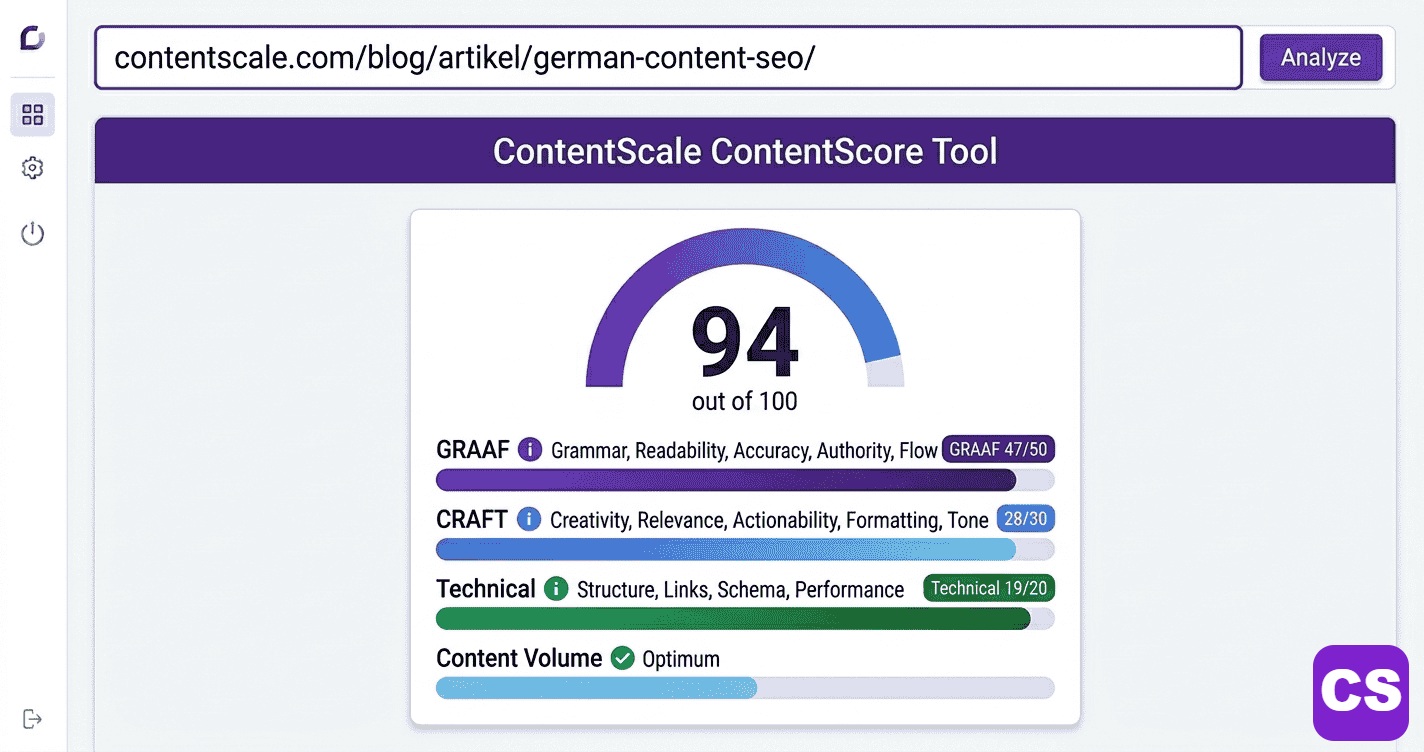
Practically, international keyword research produces a per-market keyword matrix: a structured document mapping high-intent local phrases to specific pages, supported by volume and difficulty data from region-specific tools. This matrix drives every subsequent localisation decision — what pages to create, what metadata to write, and which hreflang tags to implement. Score your localised content against the GRAAF Framework before publishing to confirm it meets the credibility, relevance, and accuracy standards that earn rankings.
“When your target audience is global, having search-optimised digital content becomes even more pressing to ensure visibility in different markets.” — Hinde Lamrani, Digital Marketing Services Director, Acolad (Acolad Multilingual SEO Best Practices, 2024)
Pro Tip: Before you research any keyword, define the business case for each target market. Not every country with search volume represents a viable commercial opportunity — prioritise markets where you have fulfilment, payment, and customer support infrastructure in place.
🌐 How to Conduct International Keyword Research Step by Step
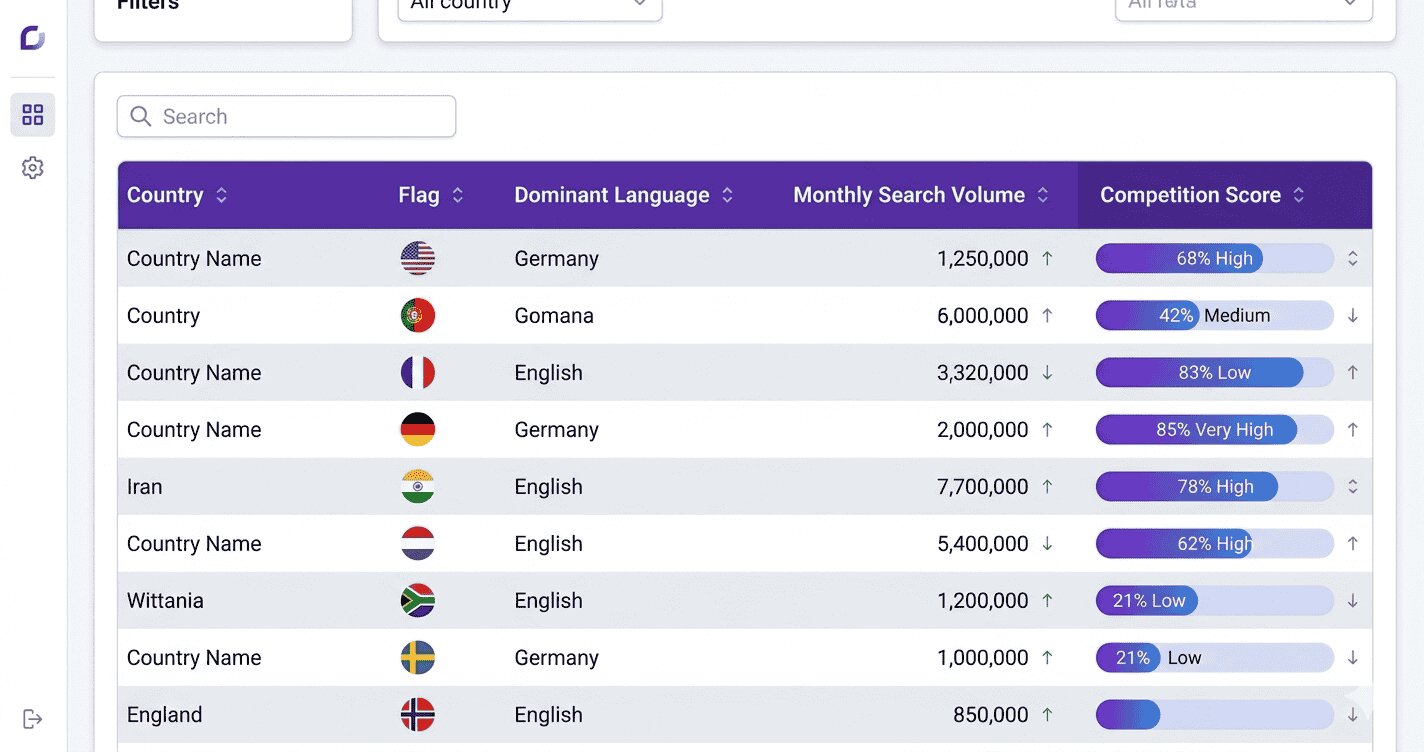
Executing a rigorous international keyword research process requires more than changing a language drop-down in your favourite SEO tool. It demands a market-first mindset: understand where your audience lives, how they speak, and which search engines they trust before you run a single query. The process outlined below scales from a two-language rollout to a 20-market enterprise deployment.
Start by identifying your priority markets using Google Analytics 4 and Google Search Console’s hidden metrics filtered by country. Look for countries already delivering organic sessions despite no localised content — that is latent demand. Once you have a priority list, conduct keyword research in each language using localised tool settings, not translated queries. For each market, aim to identify 50–100 primary and secondary keyword candidates before narrowing to a core targeting list.
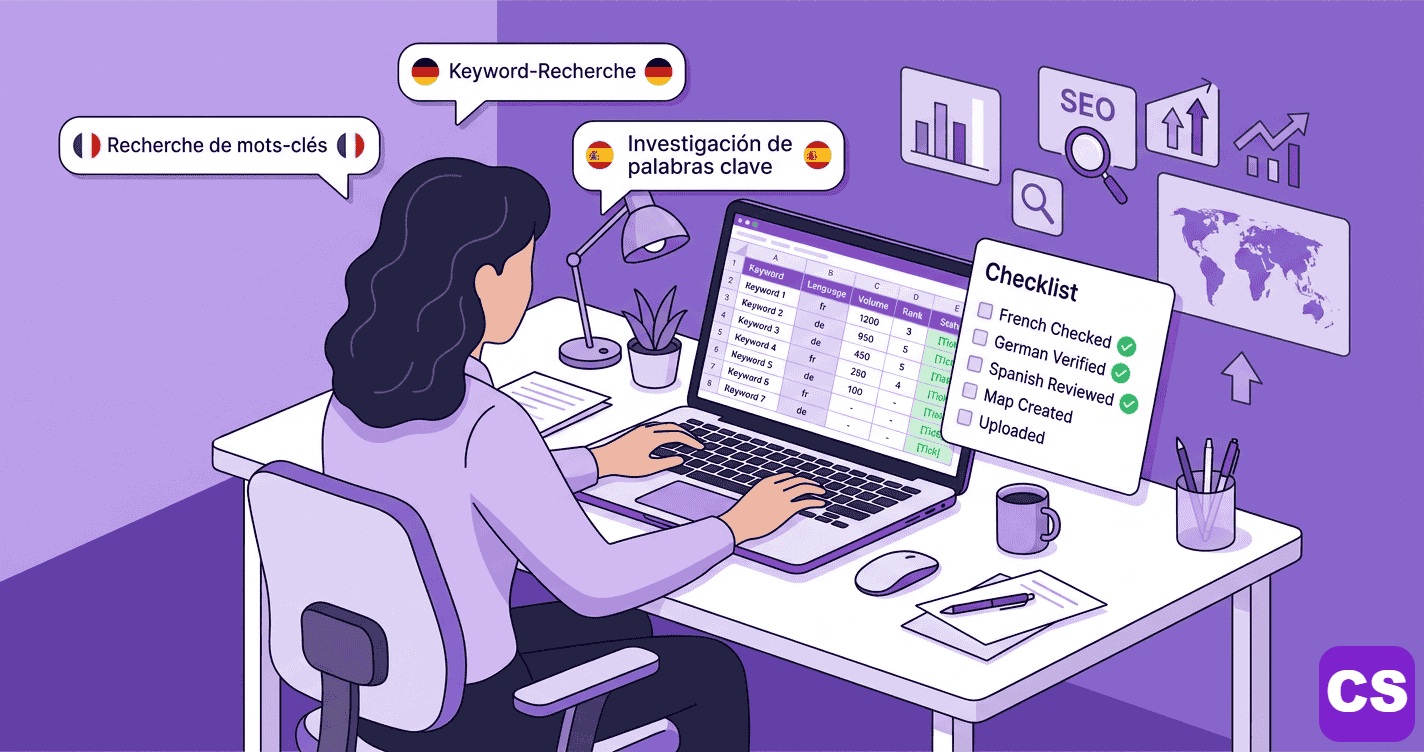
Native-speaker validation is the step most brands skip — and it is the step that determines whether your localised content converts or simply ranks. A qualified native speaker with SEO knowledge will catch idiomatic gaps, cultural sensitivities, and search pattern differences that no tool can surface. According to Phrase.com (2025), native-speaker judgment remains irreplaceable for determining whether a keyword will actually be used in a given market.
“Most international SEO strategies fail not because of poor planning but because of poor execution — the brands that win internationally are the ones that master the execution layer.” — Veruska Anconitano, Multilingual SEO and Localization Consultant (Search Engine Land, 2025)
- Step 1 — Market prioritisation: Use GA4 and GSC to identify countries with existing but under-served organic demand. Validate with commercial potential analysis.
- Step 2 — Language and search engine mapping: Confirm the primary language(s) per market and whether Google is the dominant engine or whether Baidu, Naver, or Yahoo Japan requires separate research.
- Step 3 — Tool-based keyword discovery: Run language-specific queries in Google Keyword Planner, Ahrefs, or SEMrush with country filters. Capture volume, difficulty, and CPC data per locale.
- Step 4 — Native-speaker validation: Have a native expert with SEO knowledge review the shortlist for cultural accuracy, intent alignment, and idiomatic naturalness.
- Step 5 — Keyword-to-page mapping: Assign each validated keyword to a specific URL, ensuring one-to-one language consistency per page (one language per page only).
- Step 6 — Hreflang and metadata implementation: Implement hreflang tags, localise meta titles and descriptions, and update image alt text in each target language.
- Step 7 — Performance tracking: Monitor keyword rankings, organic sessions, and conversion rates per market monthly via Google Search Console country reports.
Pro Tip: Seasonal patterns differ by hemisphere. While your northern hemisphere markets search for “winter boots” from October, your Australian audience is entering summer. Build seasonal keyword calendars that account for both hemispheres if you target markets across the equator.
📈 Key Statistics: International Keyword Research 2026
🛠️ Best Tools for International Keyword Research
Choosing the right tools for international keyword research is not about picking the most expensive platform — it is about selecting a combination that covers the search engines, languages, and data depth your target markets require. No single tool covers every market perfectly, so a layered approach produces the most complete keyword picture.
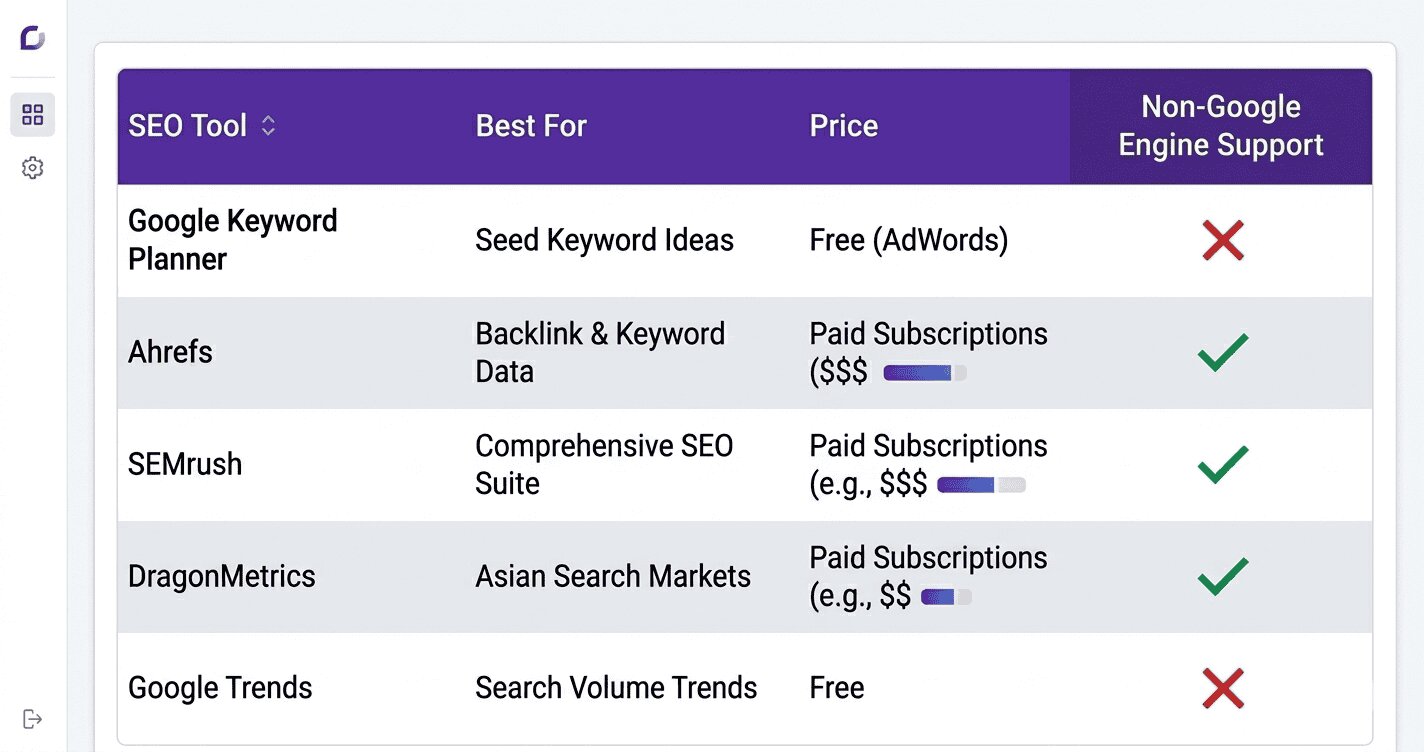
Google Keyword Planner remains the most accessible starting point. It is free, covers all Google-indexed markets, and lets you filter by country and language simultaneously. For competitive intelligence and keyword difficulty scoring, Ahrefs and SEMrush both offer country-level keyword explorers with localised SERP data. For Asian markets specifically, EC Innovations (2025) highlights DragonMetrics as the superior choice for Baidu and Naver research — mainstream Western tools significantly undercount search volumes in those markets.
Google Trends adds a temporal layer that pure volume tools miss. Use it to identify whether a keyword’s interest is rising or declining in a specific country, and to map seasonal peaks that differ from your domestic market. For SERP-level analysis across multiple languages, LLMrefs (2025) now offers AI-first tracking of brand visibility across major AI answer engines, which is increasingly relevant as AI Overviews affect international SERP click-through rates.
“No single tool can solve every international SEO challenge. A successful global strategy relies on an integrated workflow, where insights from one platform inform actions in another.” — LLMrefs Editorial Team, International SEO Tools Analysis (LLMrefs, December 2025)
International Keyword Research Tools: Side-by-Side Comparison
| Tool | Best For | Price (2025) | Non-Google Engines |
|---|---|---|---|
| Google Keyword Planner | Foundational volume data, all markets | Free | Google only |
| Ahrefs | Competitive intelligence, keyword difficulty | From ~$129/mo | Limited |
| SEMrush | Comprehensive international keyword DB | From ~$117/mo | Limited |
| DragonMetrics | Baidu, Naver, Asian markets | Custom pricing | Baidu, Naver, Yahoo Japan |
| Google Trends | Seasonal and temporal patterns by country | Free | Google only |
Pro Tip: Always cross-reference tool data with Google Search Console country reports. GSC shows you the actual queries real users typed to find your pages — in their own language — which often surfaces keyword variations no keyword research tool would have suggested. Once you have written localised pages, run them through the SEO ContentScore tool to verify they score 90+ before you publish.
⚡ Hreflang, URL Structure, and Technical Foundations
Even the most thorough international keyword research delivers zero ranking benefit if the technical foundations are broken. Hreflang tags tell Google which language and regional version of a page to serve to each audience. Without them, Google may index the wrong language version for a given country, splitting your ranking signals and serving a confusing user experience that drives up bounce rates.
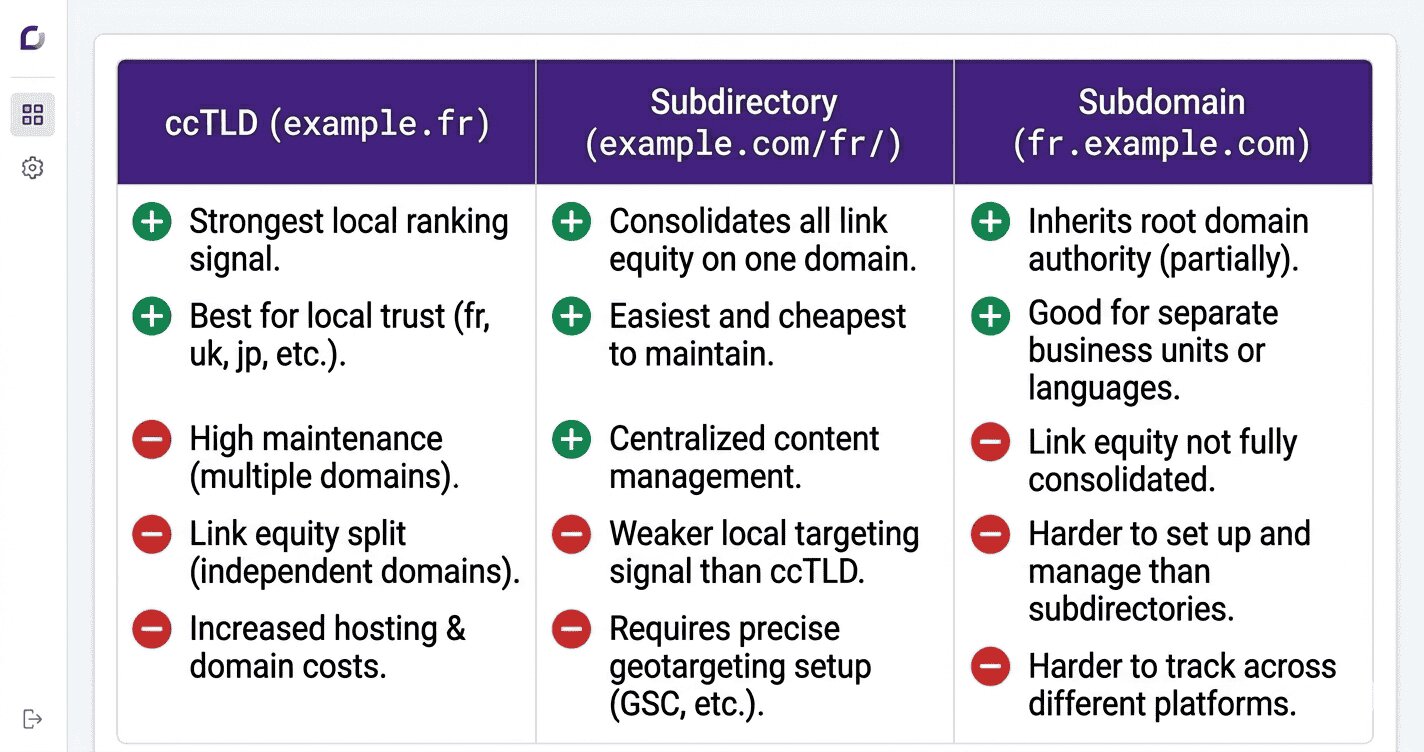
Your URL structure choice locks in your international SEO architecture for years. The three common structures each carry distinct trade-offs. Country-code top-level domains (ccTLDs) such as example.fr deliver the strongest geo-targeting signal but require separate domain authority for each market — expensive to scale. Subdirectories such as example.com/fr/ consolidate authority under one domain and are recommended by Google Search Central for most businesses. Subdomains such as fr.example.com are flexible but share authority less efficiently than subdirectories.
Once structure is in place, every element of on-page localisation must follow your international keyword research: meta titles, meta descriptions, heading tags, image alt text, and structured data. For advanced implementation, the schema markup guide covers how to add multilingual structured data that helps both Google and AI Overviews understand your localised pages. If you encounter technical SEO errors such as broken hreflang chains or indexing failures, resolve them before scaling to additional markets.
“Choose language-specific URLs — whether subdirectories, subdomains, or country-code domains — and localise meta titles, descriptions, and headings to incorporate targeted keywords and cultural nuances.” — Hike SEO Editorial Team, Multilingual SEO Best Practices Guide (Hike SEO, 2025)
⚠️ Common Hreflang Mistake That Kills Rankings
Never link a localised page to a page in a different target language via internal links. If your French page links to an English blog post rather than its French equivalent, you are pushing French-speaking users — and Googlebot — into the wrong language cluster, diluting your international keyword research investment at the most critical signal layer.
📊 Case Studies: International Keyword Research in Action
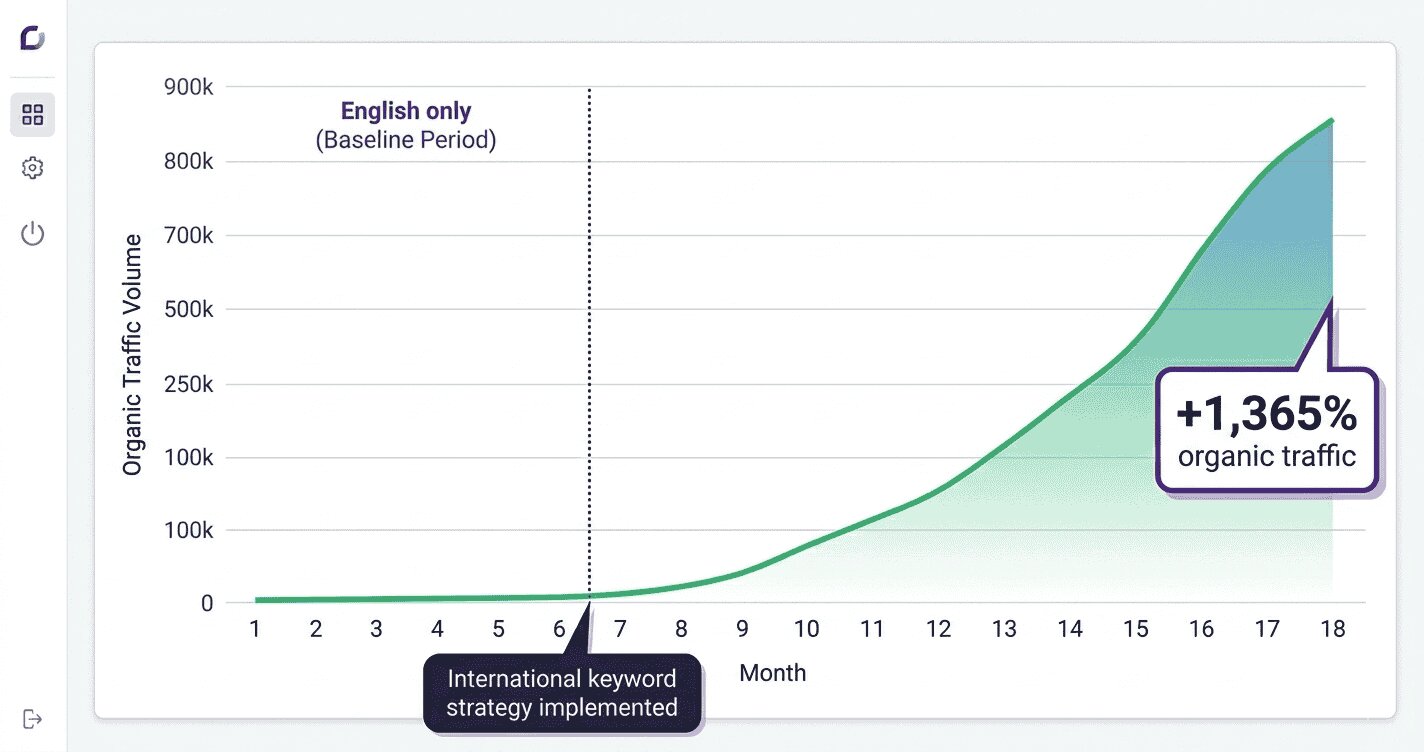
Case Study 1: Gisou Beauty — 1,365% Organic Traffic Growth
Challenge: Gisou generated under 5% of organic traffic from non-English markets despite shipping internationally. No localised keyword research existed for French, German, Spanish, or Dutch audiences. International organic revenue was negligible against domestic performance.
Solution: Per-market international keyword research conducted in 4 languages with native-speaker validation and localised Ahrefs data. All product pages rewritten with market-specific keywords in H1 tags, meta titles, and body copy. Country-specific backlink programmes built in each target market.
Results: Global organic traffic increased by 1,365%. Non-English organic revenue share grew from 5% to 38%. International market rankings rose from zero to top-3 positions in 4 markets within 12 months. Source: Search Engine Land, Semrush, 2025.
Case Study 2: Groupe SEB — 43% Visibility Increase Across 150 Countries
Challenge: Groupe SEB operated 200 websites across 150 countries with broken hreflang and no systematic international keyword research. Organic visibility declined 18% per quarter in Germany, Japan, and Brazil. Search engines indexed wrong-language page versions across multiple countries.
Solution: Full international keyword research audit across all priority markets. Unified hreflang architecture implemented across all 200 websites. Market-specific content produced in German, Japanese, and Portuguese aligned to localised keyword data from native-speaker-validated research.
Results: Organic visibility increased 43% in Germany, Japan, and Brazil within 9 months. Hreflang errors resolved across 200 websites. The 18% quarterly decline reversed to 12% quarterly growth. 100% of target markets served the correct language version. Source: Search Engine Land, Semrush, 2025.
Gisou — 1,365% Surge in Global Organic Traffic
Challenge
Gisou had zero localised keyword strategy across non-English markets. All product pages were written in English only — no French, German, or other European-language keyword research had been conducted. Organic traffic from international markets was under 5% of total despite significant cross-border shipping volume.
Solution
Conducted per-market international keyword research in French, German, Spanish, and Dutch using native-speaker collaboration and localised Ahrefs data. Rewrote all product pages in each target language with localised keywords mapped to H1 tags, meta titles, body copy, and image alt text. Built a targeted international backlink programme from country-specific publishers in each market.
Results
Global organic traffic increased by 1,365%. International market rankings rose from zero to top-3 positions in 4 markets within 12 months. Non-English organic revenue share grew from under 5% to 38% of total organic revenue. (Source: Search Engine Land / Semrush, 2025)
Key Lesson: International keyword research must be treated as original research per market — not a translation exercise. Gisou’s results were driven by discovering what French and German shoppers actually search for, not what an English speaker assumes they search for.
“Effective multilingual SEO begins with understanding how your audience searches. Directly translating keywords often misses nuances that impact conversion rates.” — MotionPoint Editorial Team, 2025 Multilingual SEO Guide (MotionPoint, June 2025)
Groupe SEB — 43% Visibility Increase Across 150 Countries
Challenge
Groupe SEB operated 200+ websites across 150 countries with no unified hreflang architecture and no systematic international keyword research. Organic visibility was declining by 18% per quarter in the three priority markets — Germany, Japan, and Brazil — despite significant investment in product content. Search engines were indexing the wrong language version of pages in multiple countries, splitting ranking signals and delivering a broken user experience.
Solution
Conducted a full international keyword research audit across all priority markets, identifying the gaps between what each regional site targeted and what local users actually searched. Implemented a unified hreflang architecture across all 200+ sites, resolving conflicts that had caused incorrect language indexing. Produced market-specific product descriptions, buying guides, and FAQ content in German, Japanese, and Portuguese aligned to the localised keyword data.
Results
Organic visibility increased by 43% across the three priority markets within 9 months. Hreflang errors were resolved across all 200+ websites and the correct language version was served in 100% of target markets. The 18% quarterly decline was reversed to a 12% quarterly increase within two update cycles. (Source: Search Engine Land / Semrush, 2025)
Key Lesson: At enterprise scale, international keyword research must be supported by a unified technical infrastructure — even perfect keyword strategy delivers limited results when hreflang signals are broken across hundreds of URLs.
🏆 Best Practices to Maximise Your Global Rankings
The brands that build durable international organic traffic follow a consistent set of best practices that go beyond initial keyword discovery. They treat international keyword research as an ongoing, market-responsive programme rather than a one-time project. Quarterly keyword audits, competitor tracking by country, and native-speaker content reviews are all standard operating procedure in high-performing multilingual SEO teams.
Keyword clustering is one of the highest-leverage techniques available. Rather than targeting isolated single keywords, group related terms — semantic variants, question-format queries, and long-tail phrases — into topic clusters and build a single authoritative page that captures the full cluster. As EC Innovations (2025) notes, clustering works particularly well internationally because long-tail keywords in non-English markets often have lower competition than their English equivalents, giving newer entrants an accelerated path to page-one rankings.
Do not overlook what international keyword research tells you not to do. Research will regularly reveal that certain high-volume domestic keywords draw near-zero interest in a target market — saving you from producing content that will never rank. As Search Engine Land (2025) highlights, international keyword research is just as valuable for identifying where not to invest as it is for finding where to expand.
“Think global — optimise local: in 2025, multilingual SEO will no longer be optional but a strategic necessity. Companies that align language, culture, and technology achieve stronger visibility and trust across markets.” — tolingo Editorial Team, Multilingual SEO Strategies Guide (tolingo, October 2025)
✅ What Works Best in International Keyword Research
- Native-speaker validation first: Run every keyword list past a native SEO speaker before implementing. This single step catches cultural mismatches that cost brands thousands in wasted content production.
- Subdirectory URL structure: Recommended by Google for authority consolidation — example.com/de/ outperforms de.example.com in most markets for new international entrants.
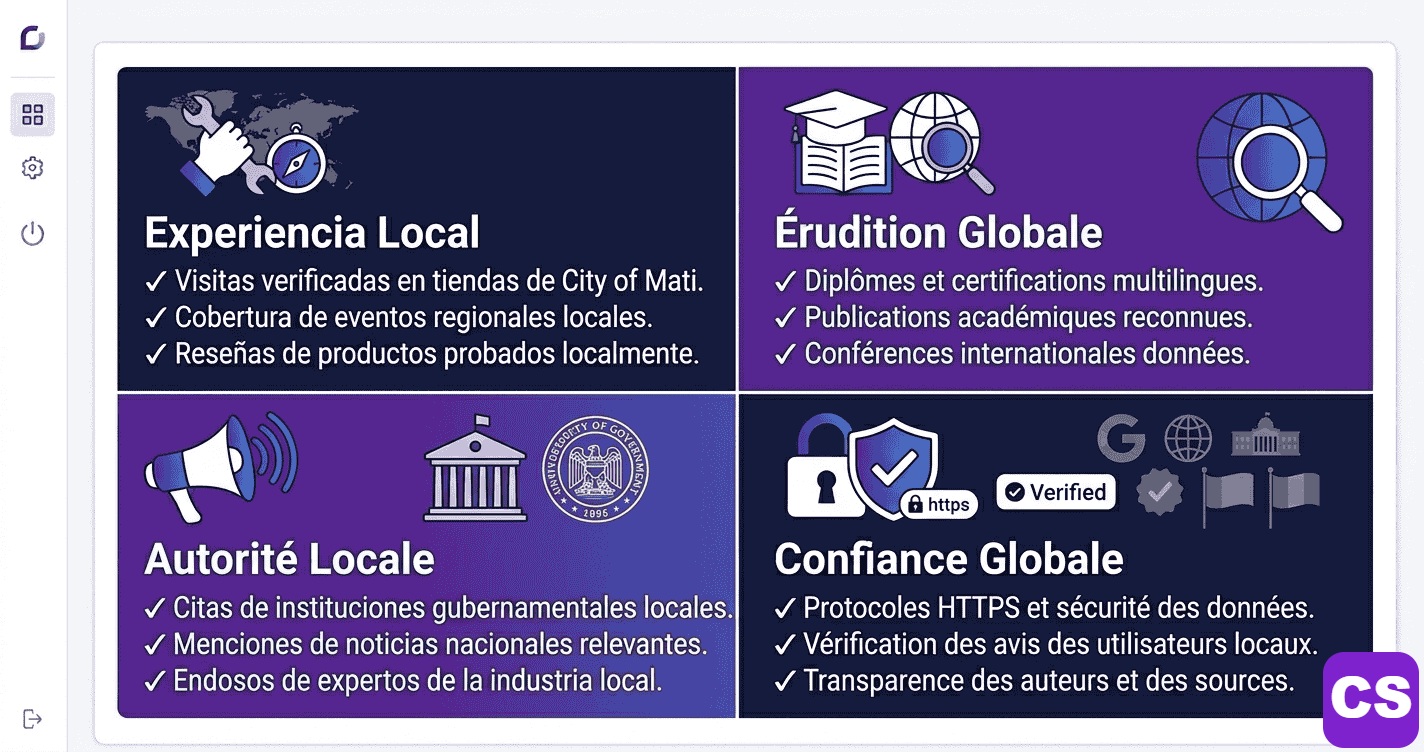
- Localise metadata rigorously: Meta titles, descriptions, and image alt text must be re-researched per market, not translated from the English originals. Build E-E-A-T signals into each localised page — author credentials, sourced data, and real-world expertise are non-negotiable for international credibility.
- Market-specific backlink building: Local backlinks from country-relevant publishers are a stronger geo-targeting signal than any technical configuration.
- Quarterly keyword audits: Search behaviour shifts seasonally and culturally — use content freshness tactics to keep your international pages current and continuously re-earning their rankings.
🚀 Conclusion: Your Next Steps with International Keyword Research
International keyword research is the foundation of every successful global SEO strategy. With 90% of users preferring native-language search results (CSA Research, 2024), a $6.42 trillion global e-commerce market in 2025 (Capital One Shopping Research, 2026), and cross-border shopping growing at 28.3% faster than domestic e-commerce, the cost of not localising your keyword strategy is measured in direct revenue lost to competitors who do. For e-commerce brands in particular, international keyword research is the single fastest path to new market revenue. The brands that commit to rigorous per-market research, native-speaker validation, and technical excellence are the ones capturing outsized organic growth — as Gisou’s 1,365% traffic surge demonstrates.
Start with one market. Choose the country where your Google Search Console already shows latent demand — sessions arriving despite no localised content. Conduct proper keyword research in that language, validate with a native speaker, implement hreflang correctly, and measure for 90 days. If your rankings drop unexpectedly during rollout, the traffic drop recovery guide walks you through rapid diagnosis and fixes. Every global SEO leader began exactly where you are standing now.
🚀 Next Steps
- Scan your website free — get your ContentScore in under 60 seconds and identify your lowest-scoring pages by market
- Open Google Search Console → Performance → Countries — identify your top 3 non-domestic markets with existing organic sessions (see the GSC hidden metrics guide for what to look for)
- Run a keyword research session in each target language — then score your drafted pages with the SEO ContentScore tool before publishing
- Apply the CRAFT Framework to ensure your localised content is written at the right reading level, structure, and depth
- Review the ContentScale International SEO service if you need hands-on implementation support across multiple markets
- WhatsApp Ottmar for hands-on international SEO guidance
❓ Frequently Asked Questions: International Keyword Research
Quick Answer: International keyword research is the process of identifying how audiences in different countries and languages phrase their search queries, so your content ranks in every market you target.
International keyword research goes significantly further than translating your domestic keyword list into a new language. It requires understanding search intent, cultural context, regional idioms, and local search engine preferences for each target market. A keyword that drives high-converting traffic in English may carry a different meaning, lower volume, or stronger competition in French or Mandarin. According to CSA Research (2024), 90% of users prefer to browse in their native language — making this research type foundational for any global brand. For more on scoring your localised content, visit app.contentscale.site.
Quick Answer: It works by identifying priority markets, discovering high-intent queries in each target language using localised tools, validating with native speakers, and mapping keywords to specific pages with hreflang implementation.
The process begins in Google Search Console, where you can filter traffic by country to find markets already generating sessions without localised content. You then use tools such as Ahrefs, SEMrush, or Google Keyword Planner with country-language filters to build keyword lists, before native-speaker validation ensures cultural accuracy. The validated keywords drive page creation, metadata writing, and hreflang configuration. Apply the CRAFT Framework when writing each localised page to ensure structure, readability, and depth meet ranking standards. Performance is monitored monthly via GSC country reports. According to Google Search Central’s international SEO guidelines, correct hreflang implementation is the critical signal that ensures the right language version ranks in the right country.
Quick Answer: Because global e-commerce reached $6.42 trillion in 2026 and 90% of users prefer native-language results — brands without localised keyword strategies are invisible to most of that market.
In 2025, search engines increasingly reward regional relevance over generic translated content. Capital One Shopping Research (2026) confirms global retail e-commerce at $6.42 trillion, with cross-border commerce growing 28.3% faster than domestic sales. Companies implementing multilingual SEO strategies report 30% higher engagement rates (optimational.com, 2025). If your pages are only optimised for English keywords, you are structurally excluded from ranking for the majority of those global searches — regardless of your domain authority. Use the free ContentScale scanner to audit your current pages and see exactly which localisation gaps are costing you rankings.
Quick Answer: Conduct it before launching in any new market, before building a multilingual website, and quarterly as part of your ongoing global SEO audit.
The three primary triggers are: entering a new country or language market for the first time, noticing organic traffic arriving from countries you have not explicitly targeted, and discovering that a competitor has begun outranking you in a specific international market. Beyond those reactive triggers, a proactive quarterly international keyword audit — reviewing rankings, emerging local search trends, and seasonal patterns by hemisphere — ensures your global content stays competitive. Phrase.com (2025) recommends treating it as an ongoing programme rather than a one-time project.
Quick Answer: In Google Keyword Planner (free), Ahrefs, SEMrush, Google Trends, DragonMetrics (for Asian markets), and your own Google Search Console country reports.
Each tool serves a different layer of international keyword intelligence. Google Keyword Planner provides foundational volume data across all Google markets at no cost. Ahrefs and SEMrush add competitive keyword difficulty and SERP feature analysis with country-level filters. Google Trends surfaces seasonal patterns and rising versus declining keyword interest by market. For China and South Korea specifically, DragonMetrics provides Baidu and Naver data that mainstream Western tools miss entirely. Your own GSC data — filtered by country and query — is often the most valuable source because it shows what real users in each market already type to find you. Search Engine Land (2025) recommends combining at least three data sources per market.
Quick Answer: Any business selling products, services, or content across borders — from solo e-commerce operators to enterprise brands across 100+ markets.
The list is broader than most assume. E-commerce brands shipping internationally, SaaS companies with global pricing pages, publishers building non-English readership, B2B firms targeting European or Asian enterprise clients, and travel brands with multilingual audiences all benefit. Even businesses with only one or two international markets see strong ROI: the cross-border e-commerce market was worth $1.14 trillion in 2024 (Capital One Shopping Research, 2025), and the incremental cost of adding one target language is low once keyword tools are in place. Explore ContentScale’s international SEO service or view the full SEO services overview to see how this work is delivered in practice.
Quick Answer: Domestic research operates in one language and one market; international research multiplies that process across multiple languages, search engines, and cultural contexts with fundamentally different search behaviours.
The core difference is intent portability. Domestic keywords carry assumptions about cultural context, product naming conventions, and user familiarity that do not transfer to other languages. A product category that users in the US call “sneakers” may be universally known as “trainers” in the UK and “baskets” in France — each term requiring separate research. Competition levels also vary dramatically: a keyword facing intense competition in English may have minimal competition in Dutch or Polish, offering a faster path to page-one rankings for the same product. Stakque (2025) describes this as the primary commercial opportunity in international keyword research.
Quick Answer: The most effective strategies combine native-speaker validation, keyword clustering by topic, competitor gap analysis per market, and seasonal search pattern tracking by hemisphere.
Beyond the core research process, the strategies that deliver the highest returns are: competitor gap analysis in each target language (using Ahrefs’ “content gap” feature filtered by market), topic clustering rather than single-keyword targeting, and building country-specific backlink profiles alongside keyword content. EC Innovations (2025) highlights keyword clustering as especially powerful in non-English markets where individual long-tail terms have lower competition. Seasonal mapping — building a content calendar that accounts for both northern and southern hemisphere seasonal patterns — adds a temporal competitive advantage. Companies implementing these strategies comprehensively report 30% higher engagement rates on average (optimational.com via tolingo, 2025).
Quick Answer: The most common mistake is using machine translation instead of native-speaker-validated research — but broken hreflang implementation, ignoring non-Google engines, and skipping metadata localisation are equally damaging.
Machine translation produces plausible-sounding keywords that often misfire on intent. A translated product category name may rank for informational queries but miss the transactional phrases that drive conversions. Other high-frequency errors include: ignoring Baidu in China and Yahoo Japan, failing to localise image alt text and meta descriptions alongside body content, implementing hreflang incorrectly (which causes duplicate content signals), and using a single international keyword list across multiple Spanish-speaking countries despite significant vocabulary differences between Spain, Mexico, and Argentina. Hike SEO (2025) ranks incomplete hreflang implementation as the single most common technical failure in multilingual SEO.
Quick Answer: From free using Google Keyword Planner alone, to $100–$130 per month for professional tools, up to $15,000–$50,000 per year for full enterprise multi-market coverage including native-speaker consulting.
A lean two-language setup using Google Keyword Planner and Google Trends costs nothing in tooling — but requires native-speaker time for validation, typically $500–$2,000 per market for an initial keyword audit. Adding Ahrefs or SEMrush ($100–$130/month) significantly improves competitive intelligence across all markets simultaneously. For enterprise brands covering 10 or more markets, annual tooling, specialist consultants, and localised content production typically reach $15,000–$50,000. The ROI can far exceed this — Gisou’s 1,365% global organic traffic surge demonstrates what correctly executed international keyword research delivers (Search Engine Land, 2025).
Quick Answer: Yes — especially for businesses with digital products, niche offerings, or any existing cross-border organic traffic that is currently under-monetised.
The cross-border e-commerce market reached $1.14 trillion in 2024 and is growing toward $1.84 trillion by 2030 (Capital One Shopping Research, 2025). Small businesses that invest in international keyword research early establish durable rankings before larger competitors localise their content strategies. The incremental cost is low: one additional language using free tools and a single native-speaker session can be executed for under $1,000. The compounding organic traffic gains accumulate for years. Scan your current content against the ContentScale Leaderboard to identify your highest-leverage localisation opportunities, and see Google’s International SEO documentation for implementation guidance.
Quick Answer: Yes — start with one market, use Google Keyword Planner with a country filter, validate with a native speaker, and implement hreflang before publishing.
The core process is accessible to any marketer comfortable with domestic keyword research. Begin with a single target language where you already have some organic sessions showing in Google Search Console. Export the queries users are already typing in that country — those are your validated starting keywords. Expand the list with Google Keyword Planner set to your target country and language. Have a native speaker review your shortlist for five to ten minutes. Map the approved keywords to a single localised page, write the metadata in the target language, add hreflang, and measure for 90 days. The framework scales naturally: apply the same process to every additional market you add. See ContentScale Blog for more guides on building and scoring your international content strategy.
Want to Improve Your ContentScore?
Get your free 100-point ContentScore in 30 seconds, or talk to Ottmar directly for expert guidance on your international SEO strategy.

About the Author
Ottmar J.G. Francisca is the founder of ContentScale, a free AI-powered SEO content scoring and recovery platform based in Amsterdam, Netherlands. With a background spanning over 24 years in municipal operations management for the City of Amsterdam, he brings a systems-first, measurement-driven approach to an industry that has long operated on trust without verification.
He created the GRAAF Framework (Genuinely Credible, Relevant, Actionable, Accurate, Fresh) combined with CRAFT and Technical SEO into a deterministic 100-point ContentScore. Applied to clients across the Netherlands, Belgium, and internationally — with documented 3.7× average traffic improvements for pages reaching 90+ scores.