What is GEO? Generative Engine Optimization.
GEO is why your traffic drops while your rankings hold steady. This article explains what GEO is, how it differs from SEO, and how to measure whether it works — in 30 seconds, free.
What is GEO? Generative Engine Optimization (GEO) is the practice of structuring your content, brand entity and technical setup so that AI search engines — Google AI Overviews, ChatGPT, Perplexity, Gemini — recognise you as a trustworthy source and cite you in their generated answers. Where SEO positions you in a list, GEO places you in the answer itself.
What is GEO? Generative Engine Optimization explained
Generative Engine Optimization (GEO) is the practice of optimizing your online presence — website, content and external mentions — so that AI search engines recognise you as a trustworthy source and cite you in their generated answers to relevant queries.
The term GEO was introduced in 2023 by researchers at Princeton University. In their GEO-bench paper they tested nine optimisation techniques on a generative search engine and found that targeted GEO adjustments could boost visibility in AI answers by up to 40%. Since then, GEO has matured into a mainstream discipline alongside SEO and AEO.
What is GEO in practice? The difference with traditional SEO: you are not optimizing for a position in a list, but for citation in a synthesized answer. AI search engines generate their response by combining multiple sources — and mention only a handful. GEO ensures you are among them.
Why GEO is urgent right now
The numbers are clear: according to Gartner, traditional search volume is declining by 25% in 2026 as users migrate to AI chatbots. SparkToro reports that 68% of Google searches in the US end without a click (zero-click search). And ChatGPT held over 60% market share in the chatbot market as of February 2026. What is GEO? The answer to that shift — the way to remain visible where your audience searches.
What is GEO vs SEO vs AEO? The comparison
Three acronyms, three layers. They are not mutually exclusive — you need all three. But each optimises for something different.
| What | SEO | AEO | GEO |
|---|---|---|---|
| Goal | Position in search results | Be the direct answer | Get cited in the AI answer |
| Optimises for | Google’s ranking algorithm | Featured snippets, voice search | AI Overviews, ChatGPT, Perplexity, Gemini |
| Measures success as | Rankings + clicks | Position 0 (snippet) | Citation as source in AI answer |
| Focus | Keywords + backlinks | Answer format + schema | Entity + citable passages + E-E-A-T |
| Origin | ~1997 | ~2016 | 2023 (Princeton paper) |
The bottom line: SEO puts you in the list. AEO makes you the answer. GEO gets the AI to cite you when it composes its own answer. What is GEO relative to SEO? It is the next evolutionary step — not a replacement, but an extension for a world where AI answers the question before the click.
There is a fourth layer most people miss: LLMO (Large Language Model Optimization) — your brand’s presence as an entity inside the language model itself. Without LLMO, the model doesn’t know you; without GEO, it doesn’t cite you. ContentScale measures both layers.
How does GEO work? RAG, entities and query fan-out
What is GEO at a technical level? It revolves around two problems: being found (retrieval) and being chosen (selection).
Step 1: Retrieval (being found)
AI search engines run on RAG (Retrieval-Augmented Generation): they launch a search, retrieve sources, and synthesise an answer from them. If you are not in that source set, you cannot be cited.
What helps: being indexed, building topical authority, being a recognized entity in the Knowledge Graph, and having content that survives query fan-out — where Google via Gemini splits a query into sub-queries.
Step 2: Selection (being chosen)
Once retrieved, the model decides who to cite per passage. Here the format makes the difference: self-contained answer passages (“X is Y” at the start of a section), statistics with sources, and strong E-E-A-T signals.
What helps: definition openers of 40–60 words, numbered lists, named authors with credentials, and facts with source and year — never invented figures.
What is GEO’s golden rule? Entity first, format second
Most GEO guides focus on format: “write citable passages.” But that is step two. Step one is that the AI model must know your brand as an entity. You achieve this with consistent naming (schema.org Organization + sameAs), NAP consistency, and mentions on external platforms. Without entity recognition, optimizing GEO format is polishing a ghost — visible to no one.
A key data point: according to Ahrefs analysis across 863,000 keywords, the correlation between Google ranking and AI Overview citation has weakened. In 2025, roughly 76% of citations came from the top 10; by 2026, that dropped to approximately 38%. What is GEO’s practical implication? You do not need to be in position 1 to get cited — but your content does need to be retrievable and citable.
What is GEO without measurement? Guesswork.
Most GEO guides stop at “write better content.” But how do you know it is working? There is no Google Search Console for AI answers. That is exactly the gap ContentScale fills.
The free AI Citations Tracker combines two systems:
- AI Visibility Tracking: are you cited in Google AI Overviews, ChatGPT, Perplexity and Copilot? Which competitors are cited? What signals triggered that citation?
- Google Search analysis: real GSC data (clicks, impressions, CTR, positions), linked to AI Overview impact. Where are you losing clicks to AI answers?
What is GEO in measurable terms? It is the difference between “I hope AI cites me” and “I know AI cites me — and I know why not when it doesn’t.” No other system combines AI visibility with real search data this way. Scan any URL free in 30 seconds, no account required.
What is GEO? FAQ
What is GEO in simple terms?
What is the difference between GEO and SEO?
How do you measure whether GEO is working?
What is the difference between GEO, AEO and LLMO?
Can I do GEO myself or do I need an agency?
What is query fan-out and why does it matter for GEO?
Now you know what GEO is. Measure it.
Scan your page free and find out whether AI cites you — and why not when it doesn’t.
Related articles
AEO vs GEO vs SEO →
The difference between the three disciplines explained. Which do you need in 2026?
What is an AI Overview? →
How Google’s AI summary works and why it affects your clicks.
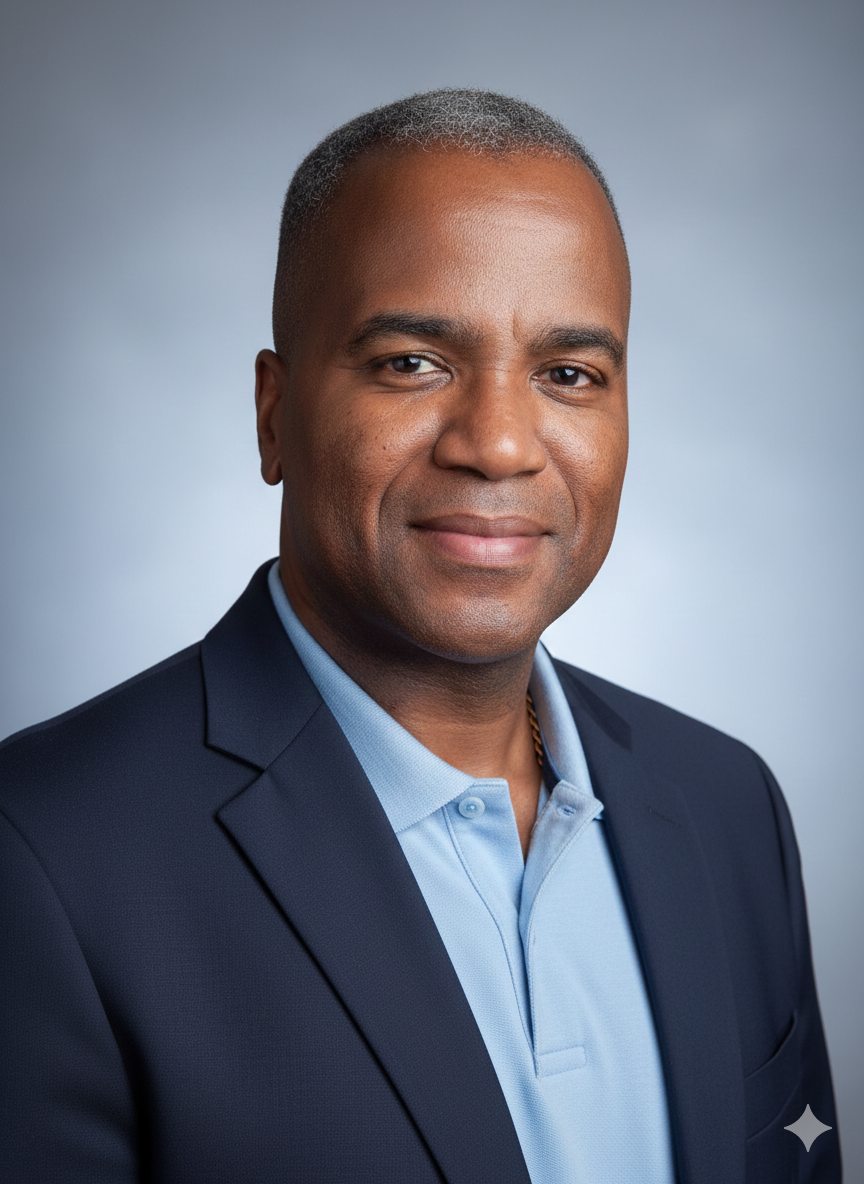
Ottmar J.G. Francisca
Ottmar J.G. Francisca built the ContentScale AI Citations Tracker and created the GRAAF Framework — the 100-point content-quality system in combination with the free AI Citations Tracker. Operating solo from Amsterdam with 24+ years in systems and operations management for the City of Amsterdam, he developed GRAAF after analyzing 200+ traffic drops and combined it with Julia McCoy’s CRAFT Framework and the PULSE + NEXUS research system. The free tracker is now used by 200+ businesses across 47 countries, with a documented 78% traffic-recovery rate within 90 days.
✓ 200+ businesses across 47 countries · ✓ 78% traffic-recovery rate within 90 days · ✓ Creator of the GRAAF Framework · ✓ 24+ years systems & operations management