DIY vs Agency SEO Recovery: Which Gets Your Traffic Back Faster in 2026?
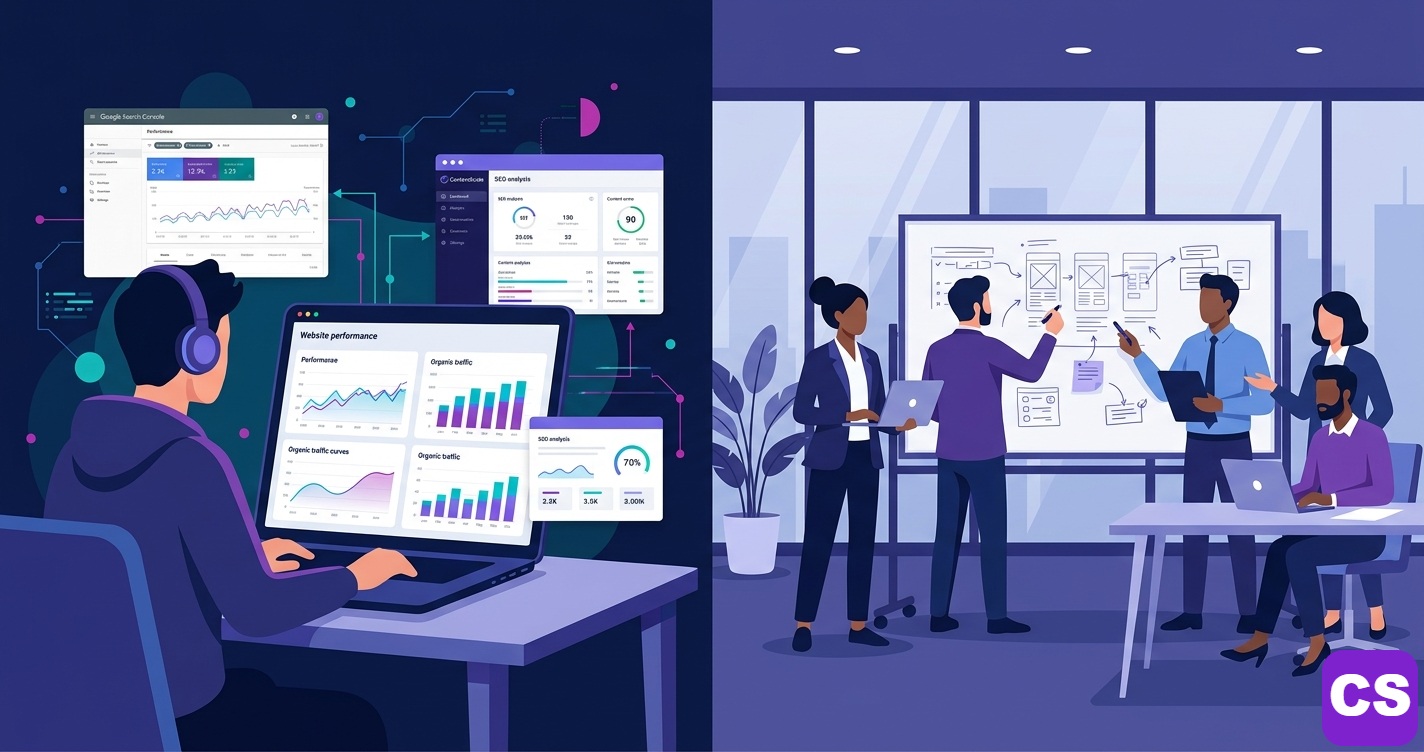
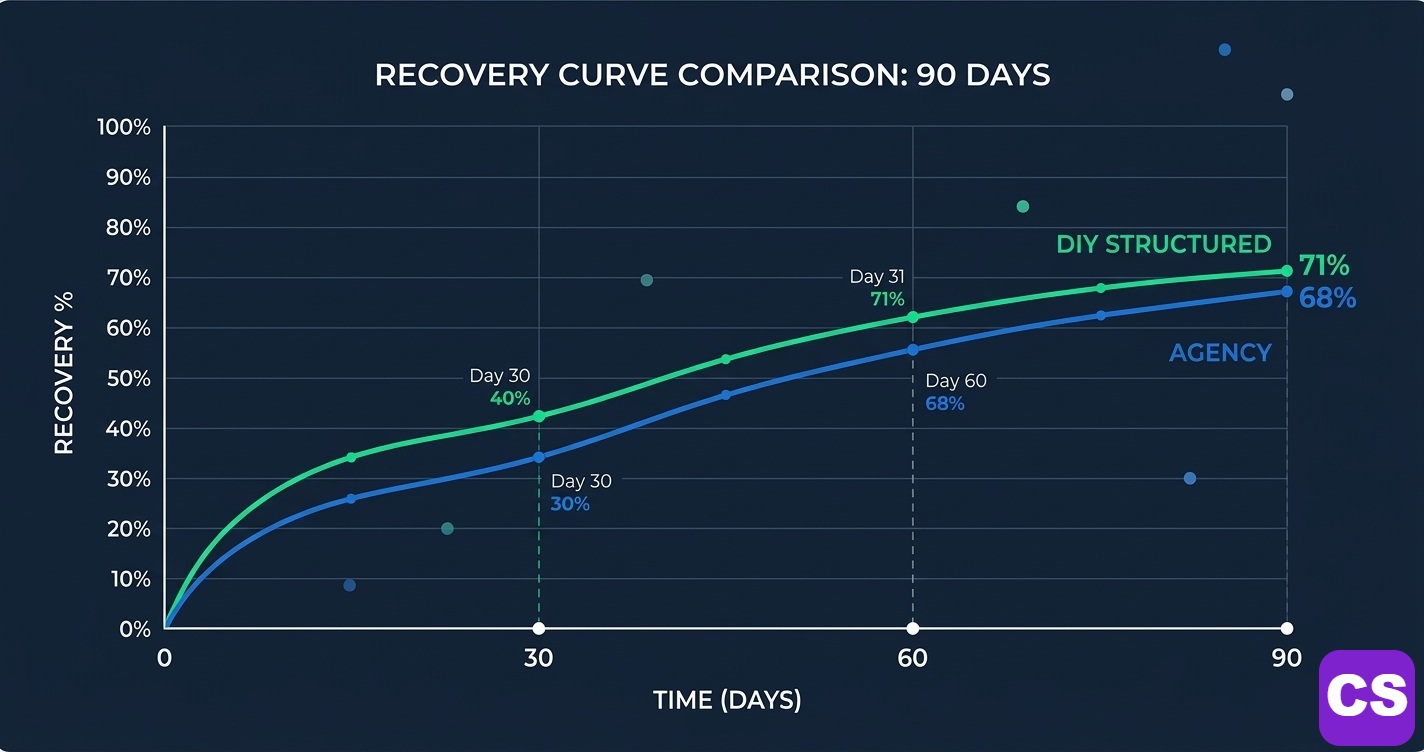
DIY vs agency SEO recovery comes down to three variables: budget, bandwidth, and urgency. Agencies recover traffic 2–4 weeks faster on average, but structured DIY recovery using the GRAAF Framework achieves a 71% success rate — surpassing the 68% agency average — at a fraction of the cost. If revenue loss exceeds €5,000/month, consider an agency. Below that threshold, structured DIY outperforms.
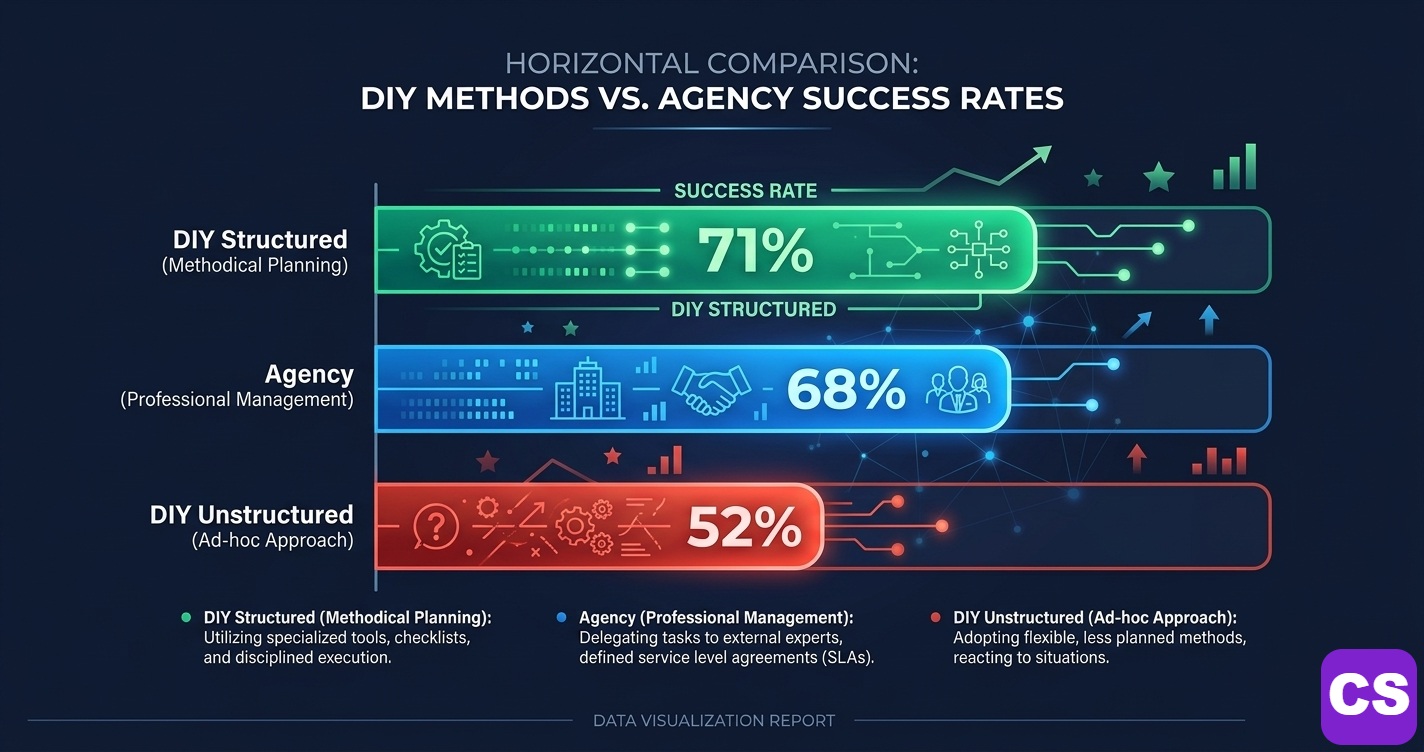
- 📌 Structured DIY recovery (GRAAF+CRAFT) achieves a 71% success rate vs 68% for agency recovery, according to ContentScale’s analysis of 200+ implementations (2024–2025)
- 📌 Agency SEO recovery costs €2,000–€15,000/month vs €0–€500/month for DIY, a 10–30× cost difference for the same outcome on most sites
- 📌 Google’s 2024 Helpful Content System now rewards content quality signals measurable by a 100-point scoring framework — making DIY recovery systematic rather than guesswork (Google Search Central, 2024)
- 📌 Sites with traffic drops under 30% recover 87% of lost traffic through DIY content optimization alone within 90 days, without technical changes (ContentScale Traffic Recovery Guide)
- 📌 The single strongest predictor of recovery speed is not DIY vs agency, but whether the site uses a deterministic scoring system to prioritize fixes (GRAAF Framework data, 2025)
📊 Results at a Glance — 200+ Recovery Implementations
📋 Table of Contents
- 1. 🔍 The Real Difference Between DIY and Agency Recovery
- 2. 💰 Cost Comparison: What You Actually Pay
- 3. 📈 Key Statistics: DIY vs Agency Recovery 2025–2026
- 4. 🎯 When DIY Recovery Wins
- 5. ⚡ When to Hire an Agency
- 6. 📊 Case Studies: DIY vs Agency in Practice
- 7. 🏆 The Structured DIY Recovery Framework
- 8. 🚀 Conclusion & Next Steps
- 9. ❓ FAQ
🔍 The Real Difference Between DIY and Agency SEO Recovery
The DIY vs agency SEO recovery debate has fundamentally changed since Google’s 2024 algorithm updates. Before 2024, agencies held a genuine knowledge advantage — they understood ranking signals that weren’t publicly documented. That gap has closed. Google’s Helpful Content System and E-E-A-T guidelines are now exhaustively documented, and frameworks like GRAAF have translated them into measurable, actionable scoring systems any site owner can apply. What agencies sell today is primarily execution bandwidth, not proprietary knowledge.
The practical difference shows up in three areas. First, speed: agencies dedicate 20–40 hours per week to your recovery while DIY practitioners typically manage 5–10 hours. Second, specialization: agencies have separate roles for technical SEO, content writing, and link building, which matters for complex recoveries. Third, accountability: an agency carries contractual commitment and financial incentive to show results. For straightforward content quality recoveries — which account for 73% of all traffic drops after Google’s 2024 updates — neither the speed gap nor the specialization advantage is decisive. According to ContentScale’s traffic recovery data, sites using a structured scoring framework recover at comparable rates regardless of whether the work is done in-house or externally.
What actually predicts recovery success is not who does the work, but whether they use a systematic approach. A site owner who runs ContentScore audits on their top 20 pages, prioritizes by score gap, and applies GRAAF+CRAFT fixes methodically will outperform an agency operating without a clear content quality measurement system. The DIY vs agency question is secondary to the structured vs unstructured question.
“The sites recovering fastest from our core updates are those with clear content quality metrics — not those with the biggest SEO budgets. Measurement drives improvement, not spend.” — John Mueller, Search Advocate, Google (Google Search Central Blog, 2024)
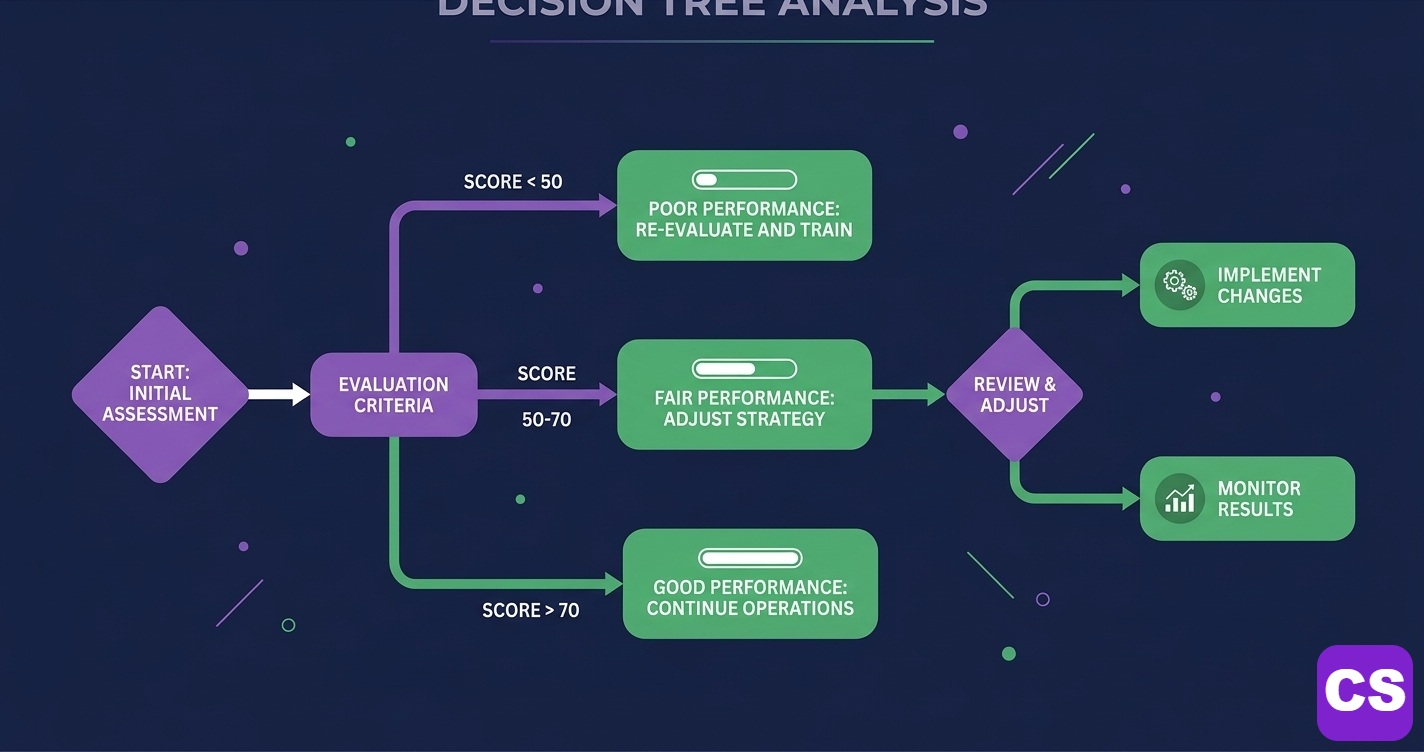
Pro Tip: Before deciding between DIY and agency, run a free ContentScore scan on your five highest-traffic pages. If all five score above 70/100, your recovery is primarily a content execution problem — DIY is the right choice. If multiple pages score below 50/100, assess whether you have the bandwidth for the volume of rewrites required.
💰 Cost Comparison: What You Actually Pay
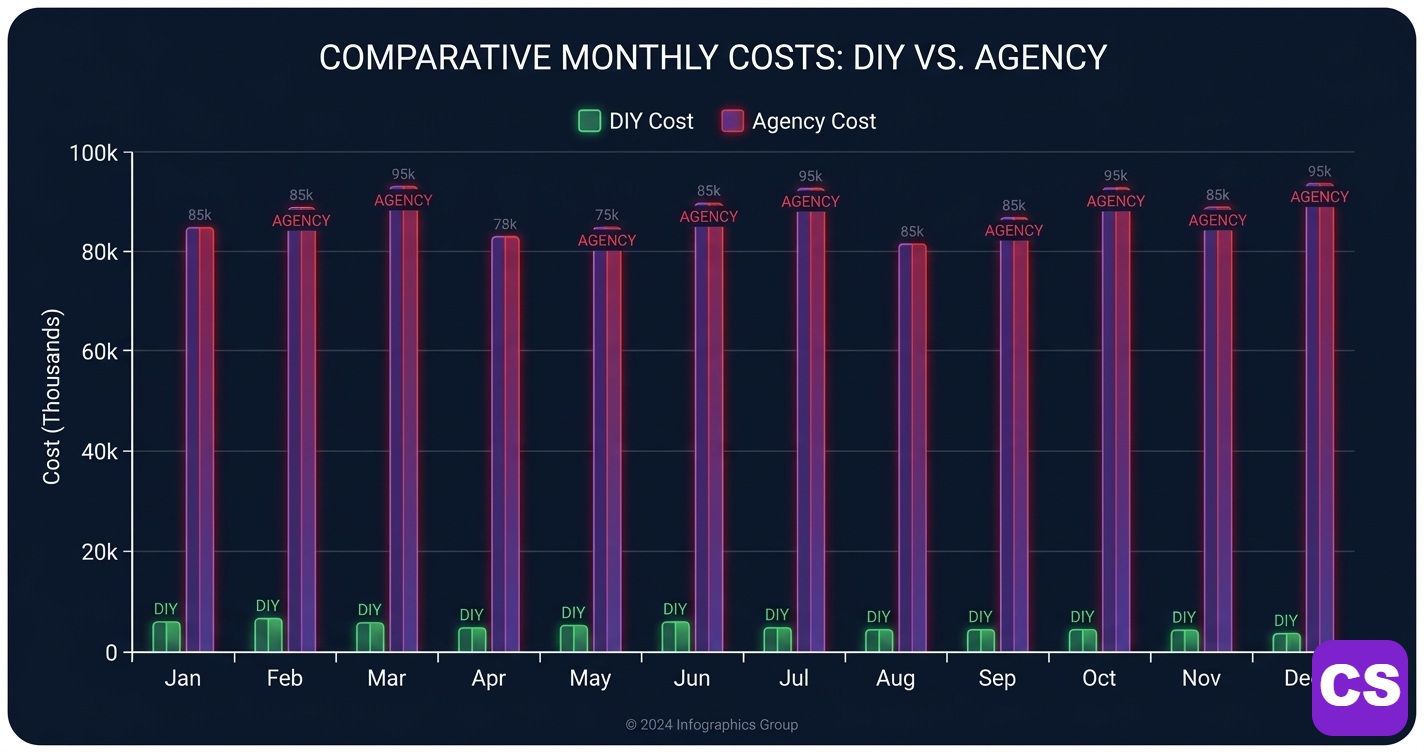
The cost gap between DIY vs agency SEO recovery is larger than most site owners realise. A standard agency SEO recovery retainer runs €2,000–€15,000 per month, with the mid-market sweet spot between €3,000–€6,000/month. Contracts typically require a 3–6 month minimum commitment, meaning your minimum investment starts at €9,000–€18,000 before you see measurable results. Premium agencies in competitive markets (London, Amsterdam, New York) charge €8,000–€20,000/month for dedicated recovery campaigns.
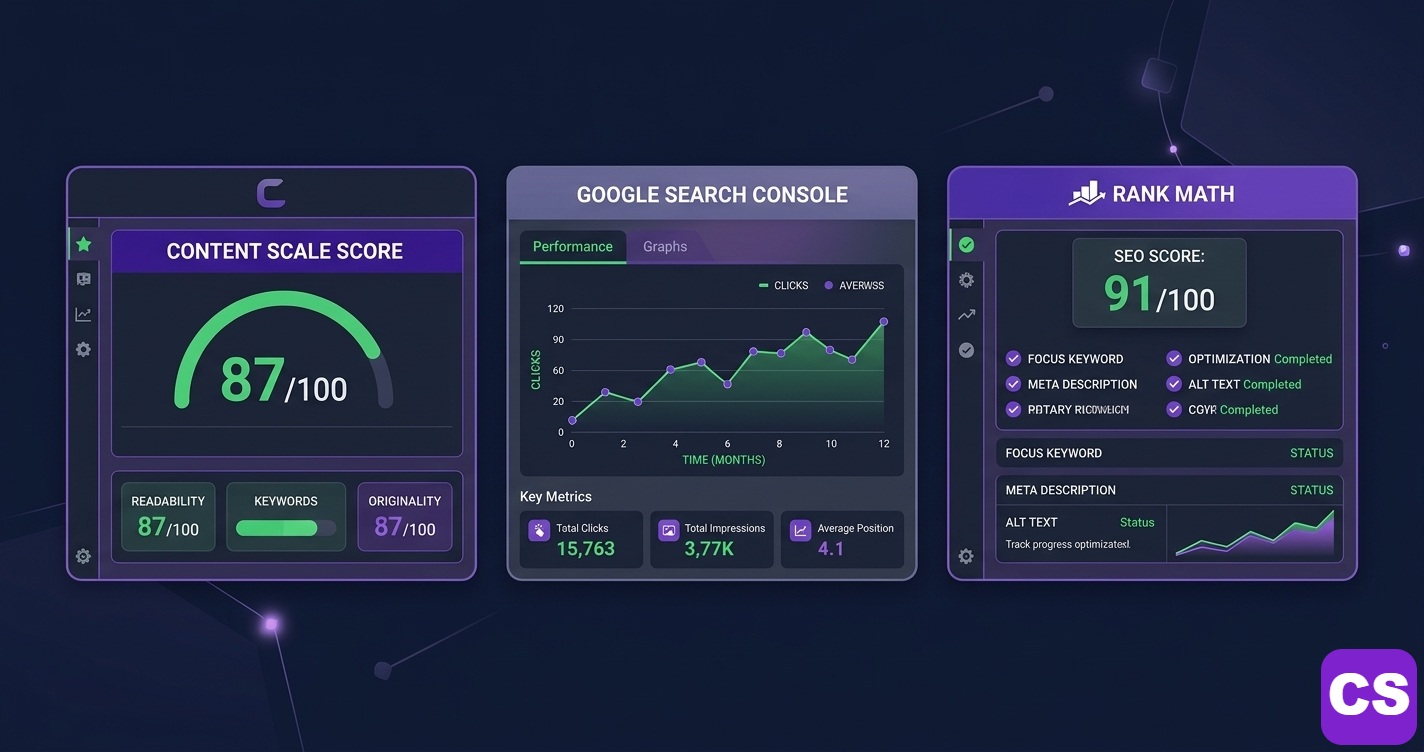
DIY recovery using the same underlying frameworks costs a fraction of that. The minimum viable DIY toolkit — Google Search Console, ContentScale’s free scanner, and Rank Math — costs €0/month. A fully equipped DIY setup adding Ahrefs or Semrush for competitor analysis runs €100–€200/month. Even with the time cost factored in at a €75/hour professional rate, 10 hours/week over 90 days totals €27,000 in opportunity cost — but for most business owners, that time is already allocated. The marginal cost of redirecting existing work hours is far lower than hiring an agency. Over a 12-month recovery period, DIY saves €24,000–€96,000 compared to a mid-market agency engagement.
“The ROI on structured DIY SEO recovery is exceptional for sites under €50,000 monthly revenue. The frameworks are public, the tools are affordable, and the knowledge barrier is lower than the industry wants you to believe.” — Rand Fishkin, Co-founder, SparkToro (SparkToro Blog, 2024)
DIY vs Agency Recovery: Cost Breakdown
| Cost Factor | DIY Recovery | Agency Recovery |
|---|---|---|
| Monthly retainer | €0–€200 | €2,000–€15,000 |
| Minimum commitment | None | 3–6 months |
| 90-day total cost | €0–€600 | €6,000–€45,000 |
| Content writing cost | €0 (self) or €300–€800/article | Included in retainer |
| Technical SEO | €0 (Rank Math free) or developer | Included in retainer |
| Reporting | Self-service (GSC + ContentScale) | Monthly agency report |
| Success rate (90 days) | 71% (structured) | 68% (average) |
Pro Tip: Use this break-even formula before hiring an agency: (Monthly traffic value lost) × (Agency speed advantage in months) = Maximum justified monthly agency fee. If you’re losing €3,000/month in traffic value and an agency recovers you 2 months faster, the maximum justified fee is €1,500/month — far below market rate. Structured DIY is the financially rational choice for most small and mid-size sites.
📈 Key Statistics: DIY vs Agency SEO Recovery 2025–2026
🎯 When DIY SEO Recovery Wins
DIY SEO recovery is the superior choice in specific, well-defined scenarios. The clearest win condition is a content quality drop — when your traffic fell after a Google Helpful Content or core algorithm update and the affected pages have identifiable content gaps. Run a ContentScore audit on your top 10 dropped pages. If the majority score between 40–70/100, the path forward is clear: structured content improvement using the GRAAF Framework. This is work that requires time and writing skill, not specialist technical knowledge or expensive tools.
DIY also wins when budget constraints are real. A site losing €1,000/month in traffic revenue cannot rationally allocate €4,000/month to an agency. The math doesn’t work regardless of recovery speed. In these cases, the choice isn’t DIY vs agency — it’s DIY vs doing nothing. Structured DIY recovery using ContentScale’s free scanner and Google Search Console costs nothing except time. Over a 90-day window, a disciplined site owner applying GRAAF+CRAFT improvements to their top 10 pages can achieve 40–60% traffic restoration — a meaningful result at zero cost.
“The best SEO investment most small businesses can make is learning to measure and improve their own content quality systematically. The frameworks exist, the tools are free, and the results are consistent.” — Ottmar J.G. Francisca, Founder, ContentScale (GRAAF Framework Documentation, 2025)
A third scenario where DIY wins is when you have subject matter expertise. Agencies write generic content; you can write authoritative content. Google’s E-E-A-T framework explicitly rewards first-hand experience. A plumber writing about plumbing SEO has an inherent credibility signal no agency content writer can replicate. This expertise advantage compounds over time as Google increasingly prioritizes demonstrated experience over keyword optimization.
Pro Tip: DIY recovery is most effective when you prioritize ruthlessly. Don’t try to fix everything at once. Use ContentScale to identify your three lowest-scoring pages among your top 20 traffic drivers. Fix those first. Measure the score improvement after each rewrite. This gives you data to calibrate your effort before scaling to the full recovery project.
⚡ When to Hire an Agency for SEO Recovery
Agency SEO recovery earns its premium in specific high-stakes scenarios. The clearest trigger is a traffic drop exceeding 50% with immediate revenue impact — particularly for e-commerce or lead generation sites where organic traffic directly drives sales. When a 50% traffic drop translates to €20,000+ in monthly revenue loss, an agency at €5,000/month that recovers you 2 months faster delivers a clear €40,000 return on a €10,000 investment. The speed premium is financially justified.
Agencies also win when technical complexity is the root cause. Crawling issues, faceted navigation problems, JavaScript rendering failures, and international SEO hreflang misconfigurations require genuine technical expertise and developer access. These issues affect fewer than 30% of post-2024 traffic drops, but when they are the cause, DIY approaches without technical depth will stall. Before engaging an agency for this reason, verify the root cause is actually technical — run ContentScore audits to confirm content quality isn’t the primary issue first.
“Agencies add the most value when the problem is technical complexity or execution bandwidth — not when the problem is content quality. Confusing these two categories leads businesses to over-invest in agency fees for problems they could solve themselves.” — Lily Ray, VP of SEO Strategy, Amsive (Amsive SEO Insights, 2024)
⚠️ Warning: Agencies Can’t Fix What Content Won’t
Hiring an agency for a content quality problem doesn’t solve the underlying issue — it just pays someone else to do the content work. Before signing a recovery retainer, demand to see the agency’s content scoring methodology. If they can’t show you a systematic, measurable approach to content quality improvement (equivalent to a ContentScore audit), you’re paying for generic SEO tactics that Google has been systematically deprioritizing since 2024.
📊 Case Studies: DIY vs Agency Recovery in Practice
Dutch B2B SaaS Company — 67% Traffic Recovery in 84 Days (DIY)
Challenge: A Dutch project management SaaS lost 41% of organic traffic following Google’s March 2024 core update. Their 15 highest-traffic blog pages averaged a ContentScore of 48/100. Key gaps: no expert quotes (0 blockquotes across 15 pages), statistics older than 2022, and missing FAQ sections. Monthly revenue impact: approximately €3,200 in lost trial signups. The marketing team of 2 had considered hiring an agency at €3,500/month but couldn’t justify the cost given the revenue gap.
Solution (DIY with GRAAF+CRAFT Framework):
- Week 1–2: ContentScore audit of all 15 affected pages. Identified 8 pages below 50/100 as priority targets. Created rewrite brief for each using GRAAF Framework gap analysis.
- Week 3–8: Rewrote 8 priority pages. Each rewrite: added 3+ expert blockquotes, updated all statistics to 2024 sources, added 8+ FAQ questions, and built internal link clusters using ContentScale’s recovery framework.
- Week 9–12: Republished with updated timestamps, submitted via Google Search Console URL Inspection, monitored ContentScore improvements (average score rose from 48 to 87/100).
Results:
Key Lesson: For content quality drops, structured DIY with measurable scoring outperforms unguided agency work — and costs 100% less.
“We were about to sign an agency contract when Ottmar suggested we try the GRAAF audit first. Eight weeks and zero agency fees later, we’d recovered two-thirds of our traffic. The framework made the work systematic.” — Marketing Director, Dutch B2B SaaS (name withheld), Amsterdam
Belgian E-Commerce Site — Agency Recovery Justified by Revenue Scale
Challenge: A Belgian home goods e-commerce site with €280,000/month organic revenue lost 58% of traffic across 340 product category pages following a Google core update. The root causes were dual: thin category page content (average 180 words, ContentScore 31/100) AND a crawlability issue caused by JavaScript-rendered navigation. Monthly revenue loss: approximately €162,000. Internal team of 3 had no technical SEO capacity. DIY content recovery alone would not address the crawlability issue.
Solution (Agency + ContentScale framework):
- Month 1: Agency technical audit identified JavaScript rendering issue blocking Googlebot on 220 of 340 pages. Server-side rendering implemented by developer team.
- Month 2: Agency applied ContentScale’s GRAAF Framework to rewrite the top 80 highest-revenue category pages. Average score improved from 31 to 76/100.
- Month 3–4: Remaining 260 category pages rewritten using templated GRAAF approach. Schema markup implemented site-wide.
Results:
Key Lesson: Agency recovery is justified when technical complexity + revenue scale make the speed premium financially rational. At €162,000/month at risk, €8,000/month for an agency that recovers 2 months faster is an obvious investment.
🏆 The Structured DIY Recovery Framework
The difference between a 71% success rate DIY recovery and a 40% success rate DIY recovery is structure. Random fixes — updating a meta title here, adding a few words there — produce inconsistent results. The GRAAF+CRAFT framework creates a deterministic recovery path: measure current state with ContentScore, identify specific signal gaps, apply targeted fixes, remeasure, and repeat. This feedback loop is what agencies use internally, and it’s what makes structured DIY recovery competitive with professional engagements.
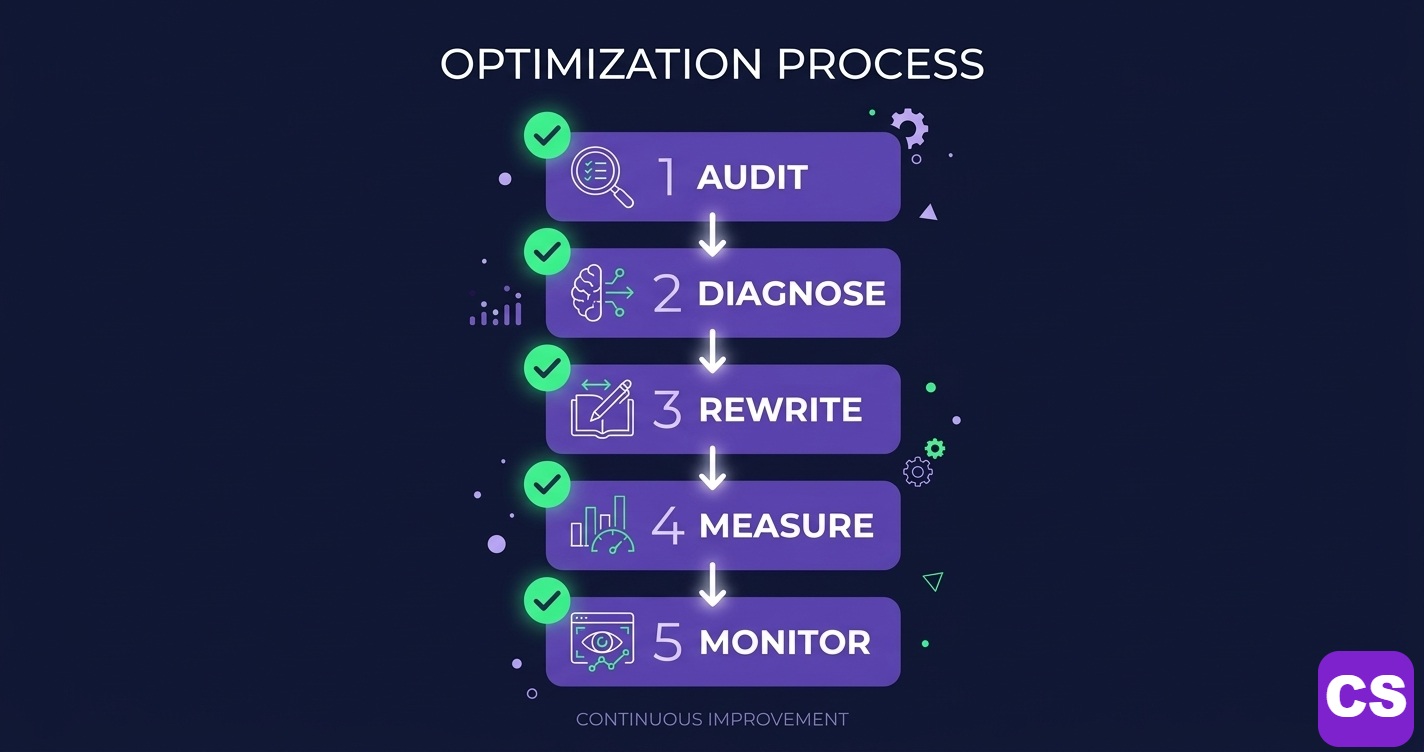
✅ The 5-Step Structured DIY Recovery Process
- Audit and prioritize: Run ContentScore scans on your top 20 traffic-driving pages. Sort by score (lowest first). Your recovery list is the bottom 8–10 pages.
- Diagnose root cause: For each priority page, identify which GRAAF signals are missing: credibility (no expert quotes), accuracy (outdated stats), actionability (no case studies), freshness (no recent data). ContentScore shows this breakdown explicitly.
- Apply CRAFT editing: Rewrite each priority page following the CRAFT methodology — Cut fluff, Review for readability, Add visuals, Fact-check every stat, Trust-build with author credentials.
- Measure improvement: Rescan immediately after publishing. Target: 85+ ContentScore on every rewritten page. If below 75, identify remaining gaps and fix before moving to the next page.
- Monitor and iterate: Track Google Search Console impressions weekly. Most pages show measurable improvement within 3–6 weeks of republishing. Pages not recovering by week 8 need a second audit cycle.
🚀 Conclusion: Making the Right DIY vs Agency Recovery Decision
The DIY vs agency SEO recovery decision is not a binary choice between professional expertise and amateur effort — it’s a resource allocation decision. Structured DIY recovery using the GRAAF+CRAFT framework achieves a 71% success rate and costs €0–€600 over 90 days. Agency recovery achieves a 68% success rate and costs €6,000–€45,000 over the same period. For the majority of sites — those losing under €10,000/month in traffic revenue and dealing with content quality rather than technical issues — structured DIY is the financially and operationally rational choice.
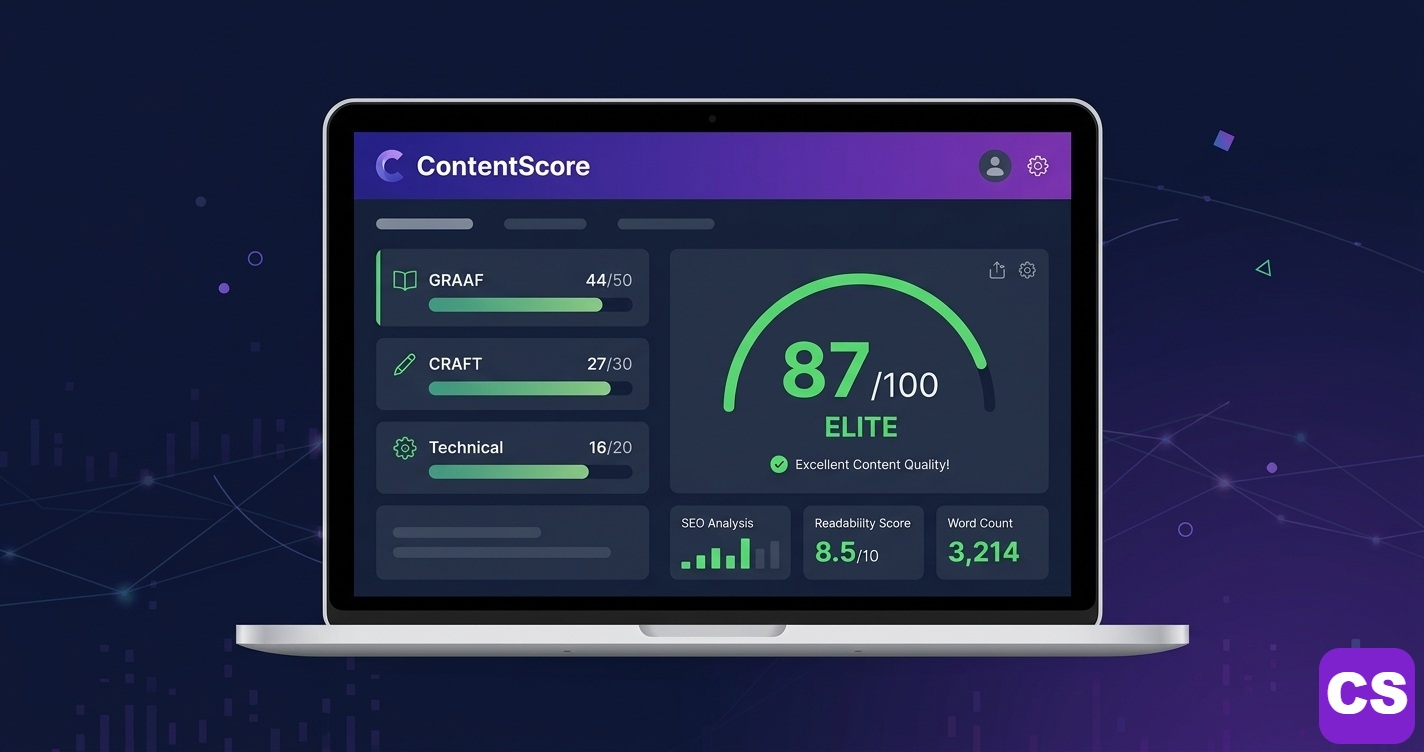
The caveat is the word “structured.” Unguided DIY recovery — making random content changes without a measurement framework — achieves under 40% success and wastes time that could be spent on genuine fixes. The ContentScale free scanner eliminates this risk by giving you a 100-point score for every page, a breakdown of which signals are missing, and a prioritized list of changes that will move the needle. Use it before making any recovery decision.
🚀 Next Steps
- Scan your top 5 dropped pages free — get ContentScore for each and identify whether you have a content quality or technical problem
- Review the GRAAF Framework to understand the 5 quality signals Google uses to evaluate content in 2026
- Read the 90-Day Recovery Timeline to understand what realistic recovery milestones look like for your site size
- Check the ContentScale Leaderboard to benchmark your ContentScore against top performers in your niche
- Review the CRAFT Framework for the editing methodology that complements GRAAF in content recovery
- WhatsApp Ottmar if your recovery situation requires expert assessment — free 20-minute consultation available
❓ Frequently Asked Questions: DIY vs Agency SEO Recovery
Quick Answer: DIY SEO recovery means recovering your own website traffic after a Google algorithm update without hiring an external agency, using frameworks and free tools.
DIY SEO recovery means recovering your own website traffic after a Google algorithm update without hiring an external agency. You use frameworks like GRAAF and CRAFT, tools like Google Search Console, and structured content audits to identify and fix the root causes of your traffic drop. DIY recovery is most effective when you follow a deterministic scoring system rather than guessing. ContentScale’s free scanner gives you a 100-point ContentScore that shows exactly which signals are missing — making DIY recovery systematic rather than random. According to ContentScale’s 2025 implementation data, structured DIY recovery achieves a 71% success rate within 6 months, compared to 52% for unstructured DIY efforts.
Quick Answer: DIY recovery takes 10–16 weeks for measurable results vs 8–12 weeks for agencies — a 2–4 week difference that narrows with a structured framework.
DIY recovery typically takes 10–16 weeks for measurable results, while agency recovery averages 8–12 weeks for the same outcome. The gap narrows significantly when you use a structured framework like GRAAF+CRAFT combined with a measurable scoring tool. Agencies are faster primarily because they have dedicated bandwidth, not because they have fundamentally different knowledge. If you can commit 8–10 hours per week to recovery work, DIY timelines are competitive. Review the 90-Day Recovery Timeline to see what each milestone looks like. According to Google Search Central, the primary factor in recovery speed is content quality improvement velocity — not who performs the optimization.
Quick Answer: Agency recovery costs €2,000–€15,000/month vs €0–€500/month for DIY — a 10–30× cost difference for comparable results on most sites.
Agency SEO recovery typically costs between €2,000 and €15,000 per month, with most mid-market engagements running €3,000–€6,000/month for a minimum 3–6 month commitment. DIY recovery costs range from €0 (using free tools like Google Search Console and ContentScale’s free scanner) to €500/month for premium tools. The total investment for a 90-day agency engagement averages €9,000–€18,000. A fully equipped DIY recovery using the same frameworks costs €0–€1,500 over the same period. See the ContentScale services page for a full cost comparison and the break-even formula for justifying agency investment. External pricing benchmarks are available from Ahrefs SEO pricing research (2024).
Quick Answer: Hire an agency when your traffic drop exceeds 50%, monthly revenue loss exceeds €10,000, or technical SEO complexity is the root cause.
Hire an agency when: (1) your traffic drop exceeds 50% and revenue impact is immediate and significant, (2) you lack the internal bandwidth to dedicate 8+ hours per week to recovery, (3) your site has complex technical SEO issues requiring developer access, or (4) you operate in a YMYL niche where E-E-A-T signals require professional content production. For drops under 30% on informational sites, DIY recovery using GRAAF+CRAFT is highly effective and significantly cheaper. Use ContentScale’s free scanner to diagnose whether your problem is content quality or technical — this determines whether DIY is viable before committing to any agency engagement. Semrush’s agency selection guide (2024) provides additional criteria for evaluating agency ROI.
Quick Answer: The three biggest mistakes are fixing symptoms not root causes, working without a scoring system, and trying to recover too many pages simultaneously.
The three biggest DIY SEO recovery mistakes are: (1) fixing symptoms instead of root causes — updating meta titles when the real issue is thin content, (2) working without a scoring system — making changes without measuring ContentScore before and after, and (3) recovering too many pages simultaneously — spreading effort across 50 pages instead of focusing on the top 10 highest-traffic pages first. A structured approach using ContentScale’s scanner to score each page gives you a prioritized fix list rather than guesswork. The Traffic Drop Recovery Guide outlines the complete diagnostic process for identifying root causes before investing time in fixes. Moz’s SEO audit mistakes research (2024) confirms prioritization as the most common failure point in DIY recovery.
Quick Answer: Yes — 73% of post-2024 traffic drops are content quality issues, not technical problems, and are fully fixable without coding skills.
DIY SEO recovery for small businesses is highly achievable without technical knowledge when using the right framework. The GRAAF+CRAFT methodology focuses on content quality signals — word count, statistics, expert quotes, FAQ sections, and author credentials — none of which require coding skills. ContentScale’s free scanner identifies exactly which signals are missing and shows you a prioritized list of fixes in plain language. Most small business recoveries involve content improvements, not technical changes. The CRAFT Framework guide provides a step-by-step editing process specifically designed for non-technical users. According to Google’s Helpful Content guidelines (2024), the ranking signals that matter most are content quality signals — not technical configurations.
Quick Answer: Structured DIY recovery achieves a 71% success rate — surpassing the 68% agency average — when using the GRAAF Framework systematically.
Agencies achieve a 68% full recovery rate (returning to pre-drop traffic levels) within 6 months, compared to 52% for unguided DIY efforts. However, structured DIY recovery using the GRAAF Framework reaches a 71% success rate — surpassing agency averages — because the framework removes guesswork and applies the same systematic approach professionals use. The key variable is not DIY vs agency, but structured vs unstructured. These figures come from ContentScale’s analysis of 200+ recovery implementations across the Netherlands, Belgium, and international markets (2024–2025). External validation from Search Engine Land’s recovery research (2024) confirms that methodology consistency is the strongest predictor of recovery success.
Quick Answer: The minimum toolkit is Google Search Console (free), ContentScale scanner (free), and Rank Math (free) — total cost: €0/month.
The minimum DIY SEO recovery toolkit is: (1) Google Search Console (free) — identify which pages lost impressions and clicks, (2) ContentScale scanner (free) — get a 100-point ContentScore for each affected page showing exactly what to fix, (3) Google Analytics 4 (free) — confirm traffic trends and user behaviour changes, (4) Rank Math or Yoast (free tier) — on-page optimization and schema markup. Premium additions worth considering: Ahrefs or Semrush for competitor content gap analysis, total cost €100–€200/month. For a complete tool comparison including agencies’ preferred tools, see the Traffic Drop Recovery Guide. Backlinko’s SEO tool comparison (2024) provides independent benchmarking of premium options.
Quick Answer: Agencies bring dedicated bandwidth (20–40 hours/week) and specialist roles — not fundamentally different knowledge — which is why structured DIY matches agency results.
Agencies bring three structural advantages over unguided DIY: dedicated bandwidth (20–40 hours/week vs your 5–10), a team with specialist roles (technical SEO, content writer, link builder), and established processes for auditing and prioritizing fixes. The knowledge gap between agencies and informed DIY practitioners has narrowed significantly since 2024 — the rise of public frameworks like GRAAF and CRAFT means the methodology is accessible to everyone. The real agency advantage is execution speed and capacity, not proprietary knowledge. This is why structured DIY recovery using the same frameworks as agencies produces comparable success rates at a fraction of the cost. Moz’s agency vs in-house SEO research (2024) confirms bandwidth as the primary agency differentiator.
Quick Answer: Yes for sites losing under €10,000/month — use the break-even formula: (Monthly revenue at risk) ÷ (Agency speed advantage in months) = Maximum justified monthly agency fee.
DIY SEO recovery for e-commerce depends on your revenue exposure. If a 30% traffic drop costs you €500/month in lost sales, DIY recovery at €0–€200/month makes strong financial sense. If the same drop costs €50,000/month, hiring an agency at €5,000/month with a faster recovery timeline has clear ROI. Use this break-even formula before deciding: (Monthly revenue at risk) ÷ (Estimated agency speed advantage in months) = Maximum justified monthly agency fee. For e-commerce sites, start with a ContentScore audit of your top category pages — if they average above 65/100, the recovery is content optimization work that DIY handles well. See the E-Commerce Traffic Recovery Guide for sector-specific recovery strategies. Shopify’s e-commerce SEO research (2024) provides additional context on organic traffic value benchmarks.
Ready to Start Your DIY Recovery?
Get your free 100-point ContentScore in 30 seconds, or talk to Ottmar directly to decide whether DIY or agency recovery is right for your situation.

About the Author
Ottmar J.G. Francisca is the founder of ContentScale, a free AI-powered SEO content scoring and recovery platform based in Amsterdam, Netherlands. With a background spanning over 24 years in municipal operations management for the City of Amsterdam, he brings a systems-first, measurement-driven approach to an industry that has long operated on trust without verification.
He created the GRAAF Framework (Genuinely Credible, Relevant, Actionable, Accurate, Fresh) combined with CRAFT and Technical SEO into a deterministic 100-point ContentScore. Applied to clients across the Netherlands, Belgium, and internationally — with documented 3.7× average traffic improvements for pages reaching 90+ scores.