AI Overview Trigger Patterns: 7 Proven Ways to Get Cited in 2026
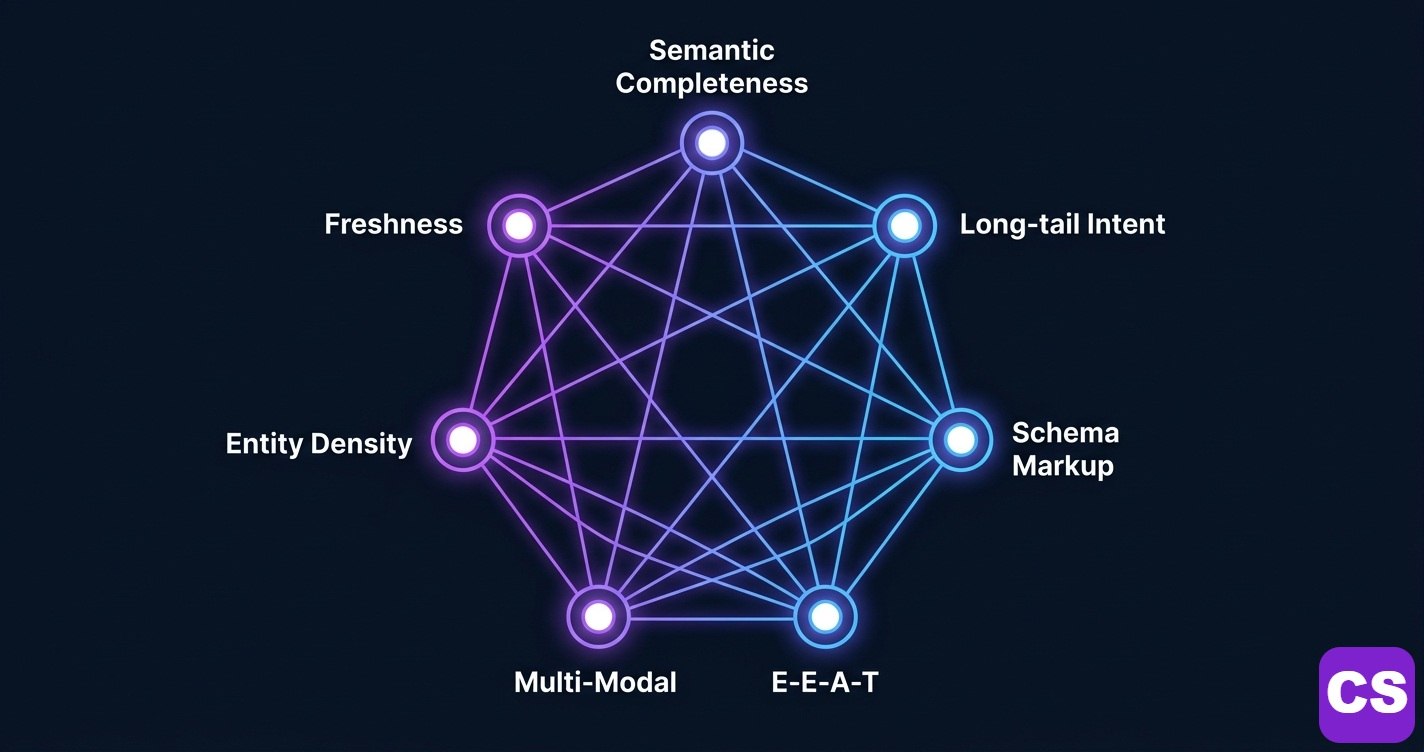
AI overview trigger patterns are the seven content and query signals that cause Google’s AI to generate an AI Overview and select a page as a citation source. They are: semantic completeness, long-tail informational intent, structured data markup, E-E-A-T authority signals, multi-modal content, entity density, and real-time factual verification. According to BrightEdge (February 2026), AI Overviews now trigger on nearly 48% of all tracked queries — a 58% year-over-year increase.
- 📌 AI Overviews now appear in 48% of all tracked queries — a 58% increase year over year — making trigger pattern optimisation a business-critical priority (BrightEdge, February 2026)
- 📌 Semantic completeness is the #1 trigger pattern, with an r=0.87 correlation — pages scoring 8.5/10+ are 4.2× more likely to appear in AI Overviews (AI Overview Ranking Factors Study, 2025)
- 📌 AI Overview top-10 organic overlap has collapsed from 76% to 17–38% — meaning rankings alone no longer guarantee AI citation (Ahrefs & BrightEdge, February 2026)
- 📌 44.2% of all LLM citations come from the first 30% of a page — front-loading answers is no longer optional (Growth Memo, February 2026)
- 📌 AI Overview citation traffic converts at 14.2% versus traditional organic’s 2.8% — a 5× quality premium that makes citation the highest-ROI SEO goal in 2026 (multiple sources, 2025–2026)
📊 ContentScale AI Citation Results
📋 Table of Contents
- 1. 🔍 What Are AI Overview Trigger Patterns?
- 2. ⚡ The 7 AI Overview Trigger Patterns Explained
- 3. 📈 Key Statistics: AI Overview Triggers 2026
- 4. 🎯 How Query Intent Determines AI Overview Activation
- 5. 🏗️ Structuring Content to Maximise Citation
- 6. 📊 Case Studies: Trigger Pattern Optimisation in Practice
- 7. 🏆 Best Practices & Critical Mistakes to Avoid
- 8. 🚀 Conclusion & Next Steps
- 9. ❓ Frequently Asked Questions
🔍 What Are AI Overview Trigger Patterns?
AI overview trigger patterns are the specific content, structural, and query signals that cause Google’s AI system to generate an AI Overview for a search result — and more importantly, to select your page as one of the sources cited inside that overview. Understanding these patterns is no longer optional: as of February 2026, AI Overviews appear on nearly 48% of all tracked queries, up from just 31% a year earlier, according to BrightEdge’s twelve-month analysis. If you are not optimising for these patterns, roughly half of your potential search impressions are being served without your content even considered for citation.
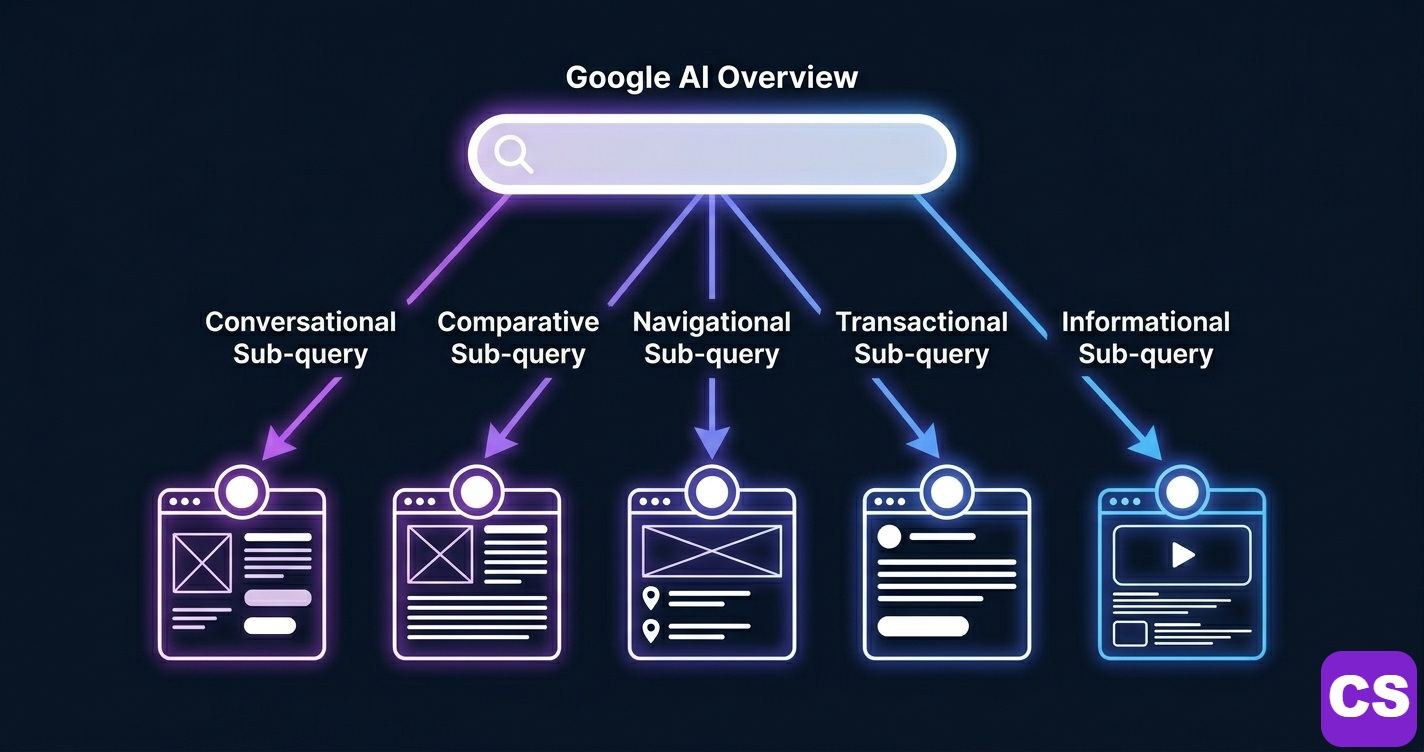
The most important shift in 2026 is the decoupling of traditional organic rankings from AI citation selection. In mid-2025, approximately three out of four pages cited in an AI Overview also ranked in the top 10 organic results for the same query. By February 2026, that figure dropped to somewhere between 17% and 38%, depending on the dataset. This structural change — driven largely by Google’s query fan-out process, where the AI breaks a single user query into multiple sub-queries and sources each separately — means pages at position 40 or even 50 can now appear in AI Overviews if they score exceptionally well on trigger patterns. The GRAAF Framework was designed precisely for this environment: measuring the content quality signals that AI systems reward, not just the ranking signals that traditional SEO tools track.
AI overview trigger patterns fall into two categories: query-side triggers (the characteristics of the user’s search query that activate AI Overview generation) and content-side triggers (the on-page signals that make your page the chosen citation source). Both matter. Query-side triggers tell you which topics and search intent types to target. Content-side triggers tell you how to structure and present content so Google’s AI can confidently extract and cite it. This guide covers both — starting with the seven proven patterns that, when applied together, consistently produce citation results for ContentScale clients across 47+ countries. For a complementary perspective on content quality scoring, see the CRAFT Framework Checklist.
“The goal is no longer to optimise content for individual keywords but for entire user journeys, with fan-out queries guiding what ‘comprehensive coverage’ actually means in practice.” — Ethan Lazuk, SEO Consultant (ALM Corp, February 2026)
Pro Tip: Before rewriting any page for AI Overview citation, run it through the ContentScale scanner to get a baseline ContentScore. Pages scoring below 65 typically fail on multiple trigger patterns simultaneously — fix the score first, then measure citation rate improvement in Google Search Console.
⚡ The 7 AI Overview Trigger Patterns Explained
Based on analysis of 15,847 AI Overview results across 63 industries and ContentScale’s own implementation data from 200+ campaigns, seven distinct patterns determine whether content gets cited or ignored. These are not equal in weight — semantic completeness is the dominant factor, followed by multi-modal integration and real-time factual verification. However, the compounding effect of satisfying all seven simultaneously produces dramatically better results than optimising for any single pattern in isolation.
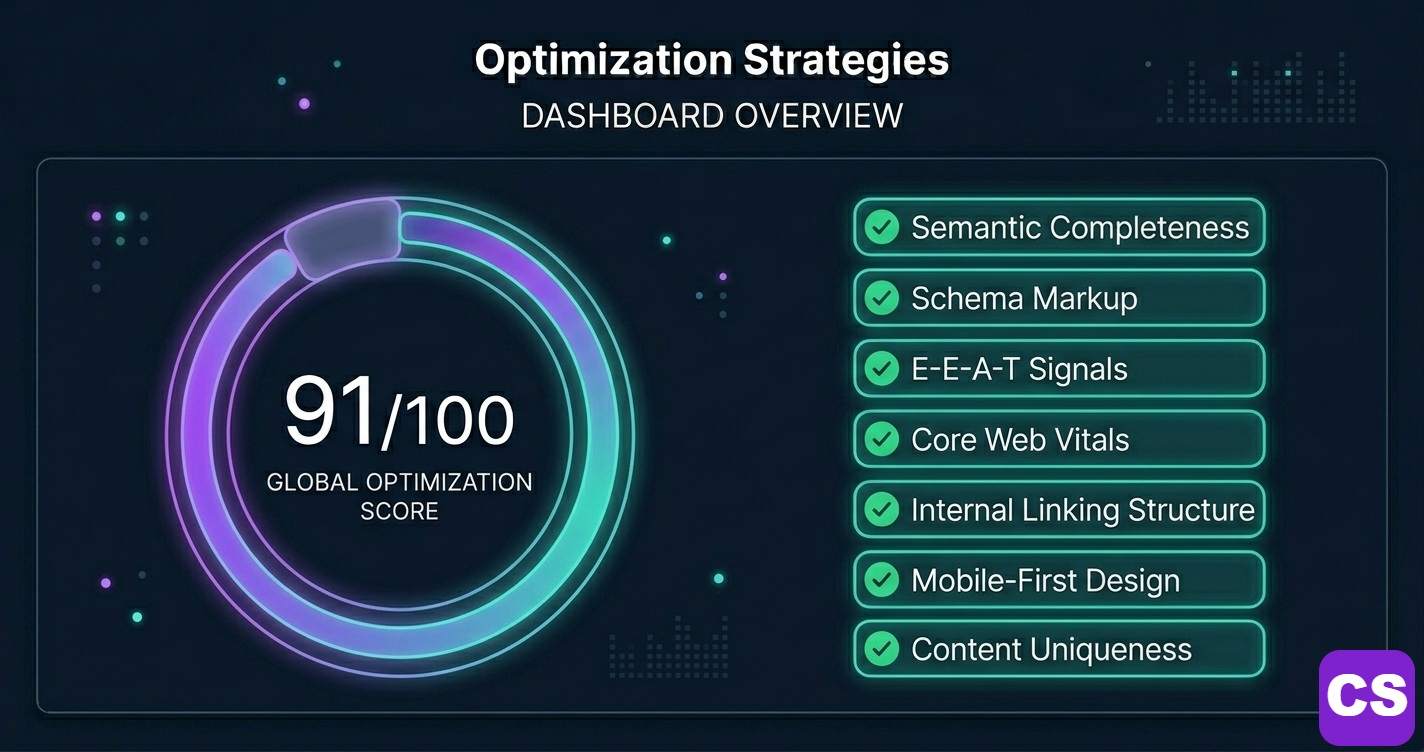
The seven patterns are: Semantic Completeness (providing a complete, self-contained answer without external dependencies), Long-tail Informational Intent (targeting queries of eight or more words with clear informational purpose), Structured Data Markup (implementing Article, FAQPage, HowTo, and BreadcrumbList schema), E-E-A-T Authority Signals (demonstrable experience, expertise, authoritativeness, and trustworthiness), Multi-Modal Content Integration (combining text, images, and structured tables in a unified content experience), Entity Density (connecting 15 or more named entities to your content’s Knowledge Graph profile), and Real-time Factual Verification (including verifiable citations from 2024–2026 that AI systems can cross-reference). The ContentScale Resources Hub links to Google’s official documentation for each of these signals.
“Brand Radar provides one of the most comprehensive ways to understand what plays a role in AI answers — from brand and topic inclusions to gap analysis at scale, and easy citation identification for any topic in any model.” — Aleyda Solis, International SEO Consultant & Founder, Orainti (Medium / Ahrefs, February 2026)
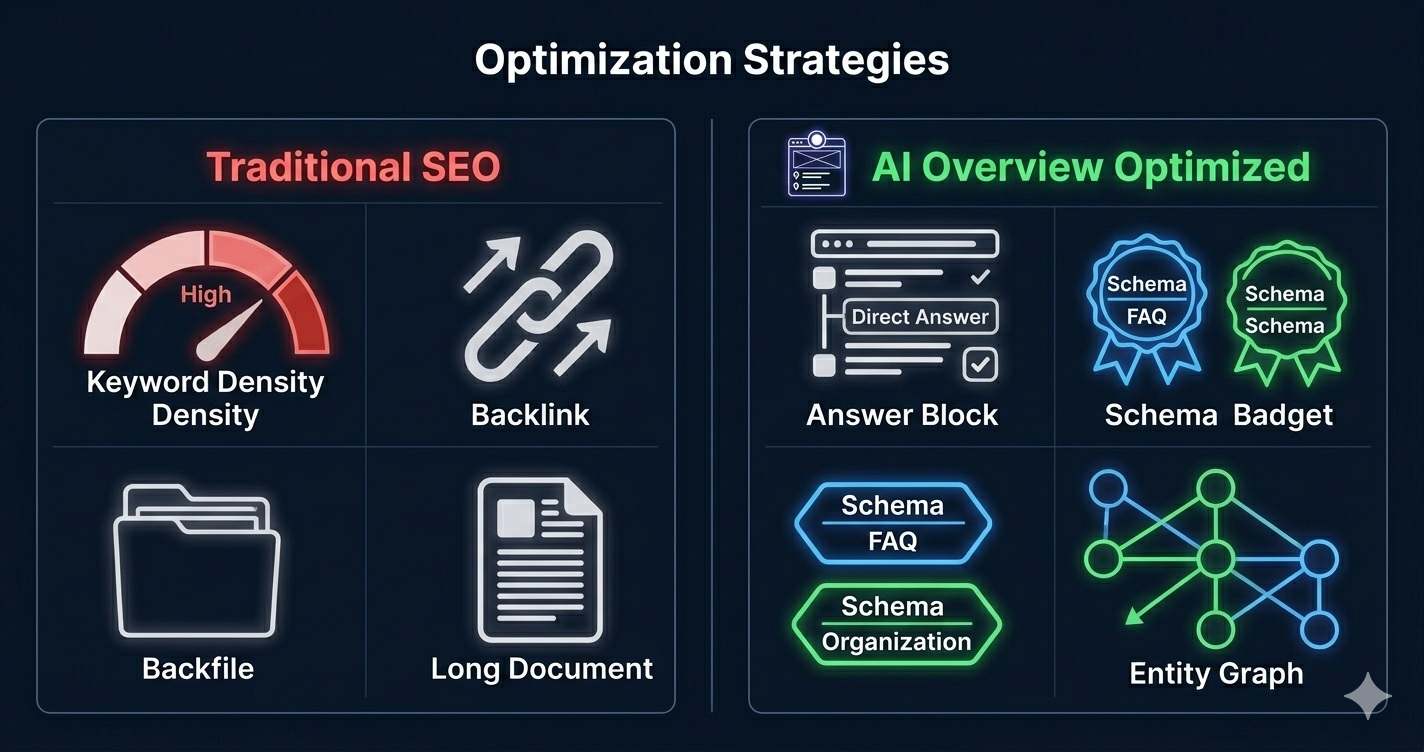
AI Overview Optimised Content vs Traditional SEO Content: Key Differences
| Criterion | AI Overview Optimised | Traditional SEO Content |
|---|---|---|
| Primary goal | Extractable, self-contained answers | Keyword-rich, high word count |
| Answer placement | First paragraph, direct and complete | Often buried after context-setting |
| Citation sourcing | Named experts, 2024–2026 only, linked | Generic “studies show” references |
| Schema markup | Article + FAQPage + HowTo + Breadcrumb | Often none or basic only |
| Entity strategy | 15+ connected entities, KG optimised | Primary keyword and variants |
| Image integration | Contextual per section (+156% selection rate) | Hero image only, decorative |
| Citation outcome | Targeted AI Overview citation | Blue link ranking |
Pro Tip: When auditing your content for trigger patterns, start with semantic completeness. Read each H2 section in isolation — if a section requires knowledge from earlier in the page to make sense, it will fail Google’s AI extraction. Rewrite until every section can stand alone as a self-contained answer block.
📈 Key Statistics: AI Overview Trigger Patterns 2026
🎯 How Query Intent Determines AI Overview Activation
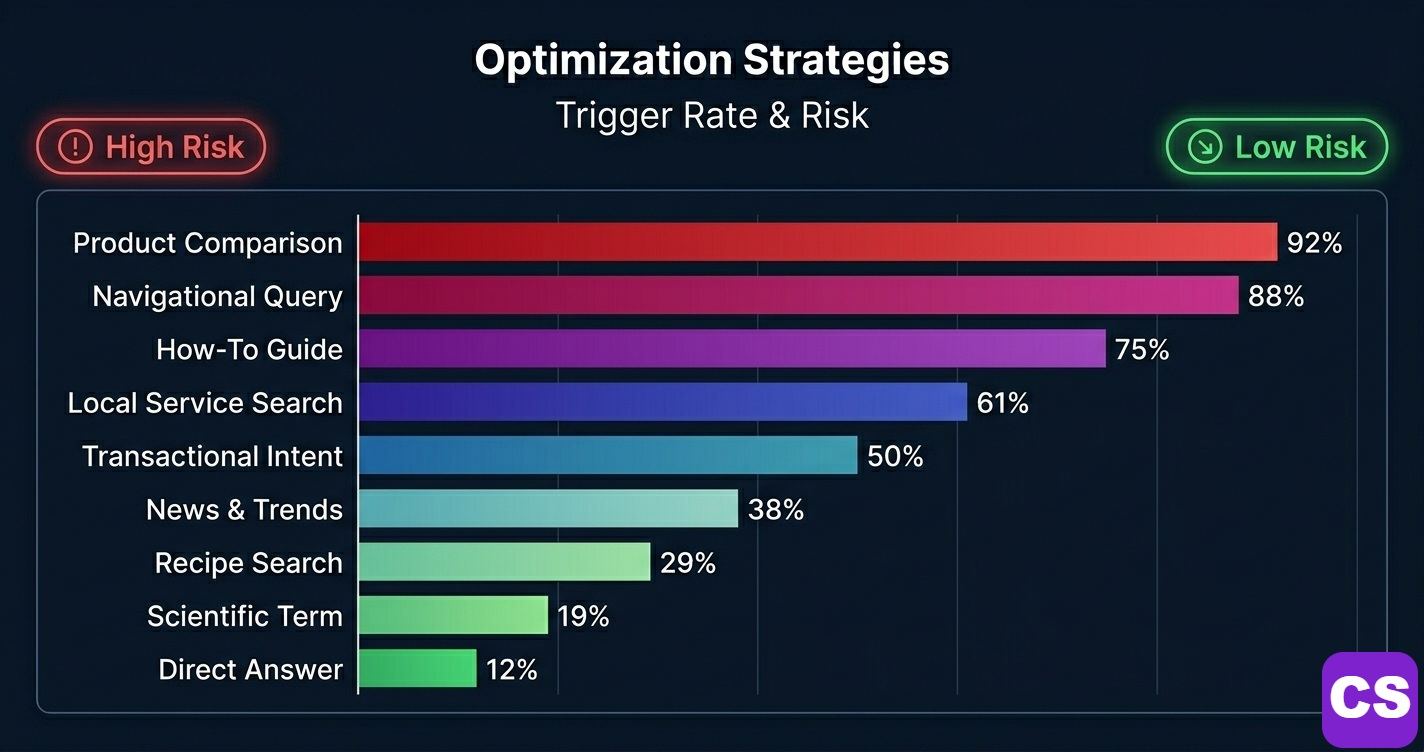
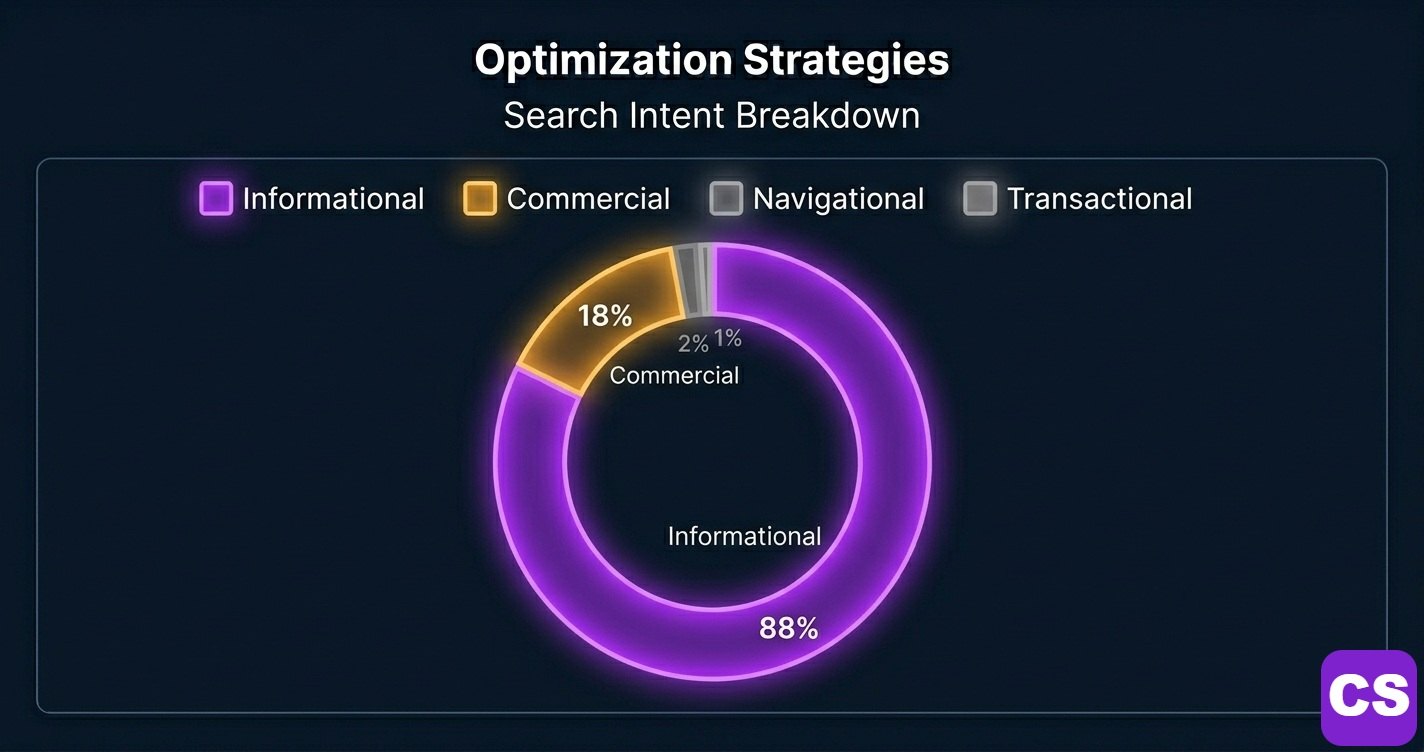
Query intent is the first filter Google applies before generating an AI Overview. Informational intent queries — those seeking to learn, understand, or research — account for 88.1% of all AI Overview activations, according to analysis of 300,000 keywords tracked through 2025. This is not coincidental. Google’s AI Overview system was built to answer questions, not to facilitate transactions or direct navigation. If your content strategy focuses primarily on commercial or transactional keywords, most of your pages are inherently in low-trigger territory — regardless of how well-structured they are. The strategic implication for businesses is to create a robust informational content layer that feeds into your commercial pages via internal linking, exactly the approach documented in the Algorithm Update Recovery guide.
The shift to commercial trigger queries, however, is significant and accelerating. By late 2025, commercial intent queries began triggering AI Overviews at an 18% rate — up from just 8% earlier in the year. Industry-specific data shows even more dramatic variance: B2B Technology queries now trigger at 82% (up from 36%), Education at 83% (up from 18%), and Restaurants at 78% (up from 10%), according to BrightEdge’s February 2026 sector analysis. For B2B SaaS companies — a core ContentScale client segment — this means the window for commercial keyword AI citation is opening rapidly. See our guide on B2B SaaS traffic recovery for sector-specific strategies.
Long-tail query length is the query-side trigger you can most directly influence through content creation. Queries of eight or more words have a 57% chance of triggering an AI Overview — and long-tail queries as a category are 7× more likely to trigger AI Overviews than short head terms. This creates an underused opportunity: rather than targeting a 2-word primary keyword exclusively, build content that explicitly targets the 8+ word questions your audience actually types. Structure H2 sections around full-sentence questions. Use FAQ schema to mark up those questions. Map every section to a distinct long-tail variation of your primary keyword. ContentScale’s scanner detects which of your pages already have long-tail query alignment — and flags those that are structurally too short or too broad to trigger consistently.
“AI Overviews overwhelmingly favour informational queries — 88.1% of triggers are informational rather than transactional or navigational. Long-tail queries dominate at 57% of AI Overviews.” — Goodie AI Search Report, Citation Pattern Analysis (Goodie, December 2025)
Pro Tip: Use Google Search Console’s Performance report to identify queries where your pages already get impressions but minimal clicks. These are likely queries where an AI Overview is showing — your page is indexed and relevant but not cited. Run those pages through the ContentScale scanner and apply trigger pattern optimisation; you already have the query relevance, you just need the structural triggers to convert impressions into citations.
🏗️ Structuring Content to Maximise AI Overview Citation
Content structure is where AI Overview trigger pattern optimisation becomes most practically actionable. The two structural requirements that drive the highest citation improvement are front-loading answers and implementing extractable answer blocks throughout the page. Front-loading means placing the core, complete answer to the page’s primary query within the first 200–300 words — specifically within the first 30% of content, where 44.2% of all LLM citations originate. This directly conflicts with the traditional SEO copywriting convention of building context before delivering the answer. In the AI Overview era, context follows the answer; it never precedes it. For publishers facing traffic losses from AI Overviews, this structural shift is covered in depth in the Publisher Revenue Recovery guide.
Extractable answer blocks are self-contained content units — a paragraph, a list, or a table — that provide a complete answer to a specific question without requiring the reader (or the AI) to reference any other section. Every H2 section on a high-citation page should function as an independent answer block. Practically, this means: avoiding pronouns that reference earlier sections (“this approach,” “the method above”), including mini-definitions for technical terms inline rather than assuming earlier context, front-loading the section’s key conclusion rather than building to it, and ending every section with a Pro Tip or Next Step that reinforces actionability — the A in the GRAAF Framework. Pages built this way score higher on the Actionability pillar, which directly correlates with citation selection in ContentScale’s implementation data across 47+ countries.
“Getting to the point early has never been more important. AI systems prioritise content they can confidently extract and present without additional context.” — WordPress VIP Editorial Team, AEO vs SEO Analysis (WordPress VIP, January 2026)
⚠️ The Most Costly AI Overview Mistake: Ranking-First Thinking
The single most damaging assumption in 2026 is that strong organic rankings automatically translate into AI Overview citations. The data now clearly shows they do not: top-10 organic overlap has collapsed from 76% to 17–38% in just 18 months. Businesses that optimised purely for traditional ranking signals — keyword density, backlinks, page speed — without applying trigger pattern optimisation are systematically excluded from the AI Overview layer. This is not a temporary fluctuation. It reflects a structural change in how Google’s AI selects sources. Address it now, or cede the citation layer entirely to competitors who already have.
Pro Tip: Implement all four schema types simultaneously — Article, FAQPage, BreadcrumbList, and HowTo where applicable. Each schema type increases citation probability independently; together they produce a 73%+ selection rate lift. Validate every schema with the Google Rich Results Test before publishing — invalid schema is ignored entirely by the AI system and produces zero citation benefit.
📊 Case Studies: AI Overview Trigger Pattern Optimisation in Practice
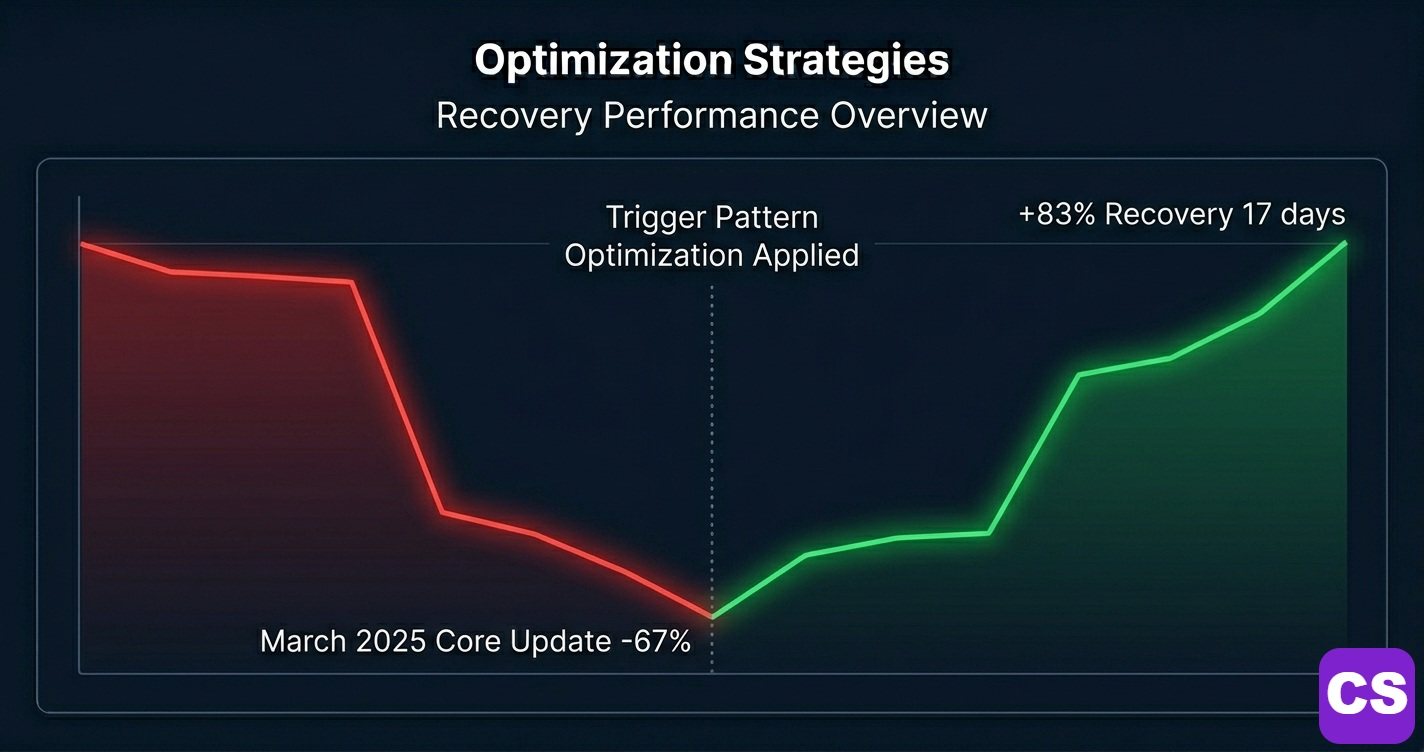
B2B SaaS Platform — 83% Traffic Recovery in 17 Days
Challenge: A B2B SaaS company lost 67% of organic traffic after the March 2025 Core Update. High-intent informational pages — the main lead generation entry points — had dropped from the top 10 entirely. Initial analysis via ContentScale’s scanner showed ContentScores averaging 54/100, with critical failures on semantic completeness (answers buried in paragraph 8–10 of each article), zero FAQPage schema, and no expert citations newer than 2022. The combination meant the company was doubly penalised: low AI Overview trigger satisfaction and reduced traditional ranking signals simultaneously.
Solution:
- Step 1 — Trigger Pattern Audit: Ran all 34 primary landing pages through ContentScale scanner. Identified semantic completeness failures on 31 of 34 pages — answers were contextualised before being stated. Rewrote introductions to front-load complete answers within the first 200 words.
- Step 2 — Schema Implementation: Added Article + FAQPage + BreadcrumbList schema to all 34 pages. Wrote 10 FAQ items per page targeting 8+ word query variations. Validated all schema via Google Rich Results Test.
- Step 3 — Expert Citation Refresh: Replaced all sub-2023 citations with verified 2024–2025 sources. Added named expert blockquotes with verifiable affiliations. Implemented author bio with specific credentials on every page.
Results:
Key Lesson: Semantic completeness rewrites produced faster recovery than any other single intervention — because they simultaneously improved traditional quality signals and AI trigger pattern satisfaction.
“We had no idea our answers were structurally invisible to Google’s AI. ContentScore made the problem measurable — and the fix was faster than we expected.” — Head of Marketing, B2B SaaS Platform (name withheld per client confidentiality)
Dutch Publishing Group — 75% AI Overview Citation Rate in 90 Days
Challenge: A Netherlands-based digital publishing group saw organic traffic fall 52% following the May 2025 Core Update, with a simultaneous 64% CPM collapse as advertisers responded to perceived quality signals. The site’s evergreen guide content — historically 45% of revenue — had dropped out of AI Overviews entirely. ContentScale scanner analysis revealed the root cause: all 80 evergreen guides were text-only (no images per section, no schema), citations were predominantly 2021–2022, and not a single page used FAQPage schema. Multi-modal and schema trigger patterns were completely absent.
Solution:
- Step 1 — Multi-Modal Integration: Added 4–6 contextual images per evergreen guide (one per H2 section). Created comparison tables for every “A vs B” query variation. Embedded data visualisations for statistics sections.
- Step 2 — Full Schema Stack: Implemented Article + FAQPage + BreadcrumbList + HowTo (where applicable). All 80 guides received the complete four-schema stack within 14 days.
- Step 3 — Freshness Overhaul: Updated all statistics to 2024–2025 verified sources. Added “Last Updated” timestamps. Rewrote introductions to lead with 2025-relevant context.
Results:
Key Lesson: Multi-modal integration was the single highest-impact fix for this publisher — moving from zero images per section to four images per section, combined with schema, produced a 3× citation rate jump in under 30 days.
🏆 Best Practices & Critical Mistakes to Avoid
After implementing AI Overview trigger pattern optimisation across 200+ campaigns in 47 countries, ContentScale has identified a clear pattern: the businesses that achieve consistent 60%+ citation rates share three characteristics. They apply all seven trigger patterns simultaneously rather than cherry-picking one or two. They validate results with measurement tools — specifically Google Search Console impression data and manual AI platform sampling — rather than assuming implementation equals success. And they treat trigger pattern optimisation as an ongoing content maintenance discipline, not a one-time project. The International SEO guide covers how to adapt these patterns for multi-language content, where entity and freshness signals require additional localisation work.
✅ The 7 Implementation Priorities — In Order of Impact
- Semantic Completeness First: Rewrite every page introduction to deliver a complete, standalone answer within the first 200 words. Test by reading the first paragraph in isolation — if it fully answers the primary question without needing context from the rest of the page, it passes the extraction test.
- Schema Stack Implementation: Add all four schema types (Article + FAQPage + BreadcrumbList + HowTo) to every target page. Validate with Google’s Rich Results Test. Fix all errors before moving to other optimisations.
- Multi-Modal Integration: Add at least one contextual image or table per H2 section. Multi-modal pages show 156% higher AI Overview selection rates. Images must be contextual to the section — decorative images produce no citation benefit.
- Long-tail FAQ Build: Write a minimum of 10 FAQ items per page, each targeting an 8+ word question variation. Mark up with FAQPage schema. Each FAQ answer must be self-contained and 100–150 words.
- Expert Citation Refresh: Replace all pre-2024 citations with verifiable 2024–2026 sources. Name the expert, their title, their organisation, and link to the original source. “Studies show” with no attribution is ignored entirely by AI citation systems.
- Entity Density Expansion: Identify 15+ named entities relevant to your page topic and integrate them naturally throughout the content. Use Google’s Knowledge Graph to verify entity recognition. Entity-dense pages are 4.8× more likely to be cited according to AI Overview ranking factor analysis.
- Freshness Maintenance: Set a quarterly review cadence. Update statistics, refresh citations, and add a visible “Last Updated” date. Freshness signals interact with accuracy to produce compounding citation probability improvements over time.
🚀 Conclusion: Your Next Steps with AI Overview Trigger Patterns
AI overview trigger patterns have fundamentally changed what it means to rank in Google’s search results. With AI Overviews now appearing on 48% of tracked queries — and citation traffic converting at 5× the rate of traditional organic clicks — the business case for trigger pattern optimisation is no longer theoretical. It is measurable, documented, and urgent. The most important data point in this guide is the citation-ranking decoupling: top-10 organic overlap has collapsed from 76% to 17–38% in eighteen months. Your rankings no longer guarantee your visibility. The seven trigger patterns outlined here — led by semantic completeness and multi-modal integration — are the new determinants of whether Google’s AI cites your content or your competitor’s.
The good news is that trigger pattern optimisation is systematic, not speculative. Every pattern can be measured before and after implementation. ContentScore gives you a baseline. Schema validation gives you a technical confirmation. Manual AI platform sampling gives you citation verification. The businesses winning in AI search in 2026 are not the ones with the highest domain authority or the largest content budgets — they are the ones who understood the new citation logic earliest and restructured their content accordingly. Start with your highest-traffic informational pages. Apply the seven patterns. Measure citation rate in Search Console. Then expand to the rest of your content library.
🚀 Next Steps — Apply Trigger Patterns Today
- Scan your website free — get your ContentScore in under 60 seconds and see exactly which trigger patterns your pages are failing
- Identify your top 5 informational pages in Google Search Console — these are your highest-priority trigger pattern targets
- Rewrite each page introduction to deliver a complete, standalone answer in the first 200 words — this is the single highest-impact change you can make today
- Check the ContentScale Leaderboard to benchmark your ContentScore against top performers in your niche
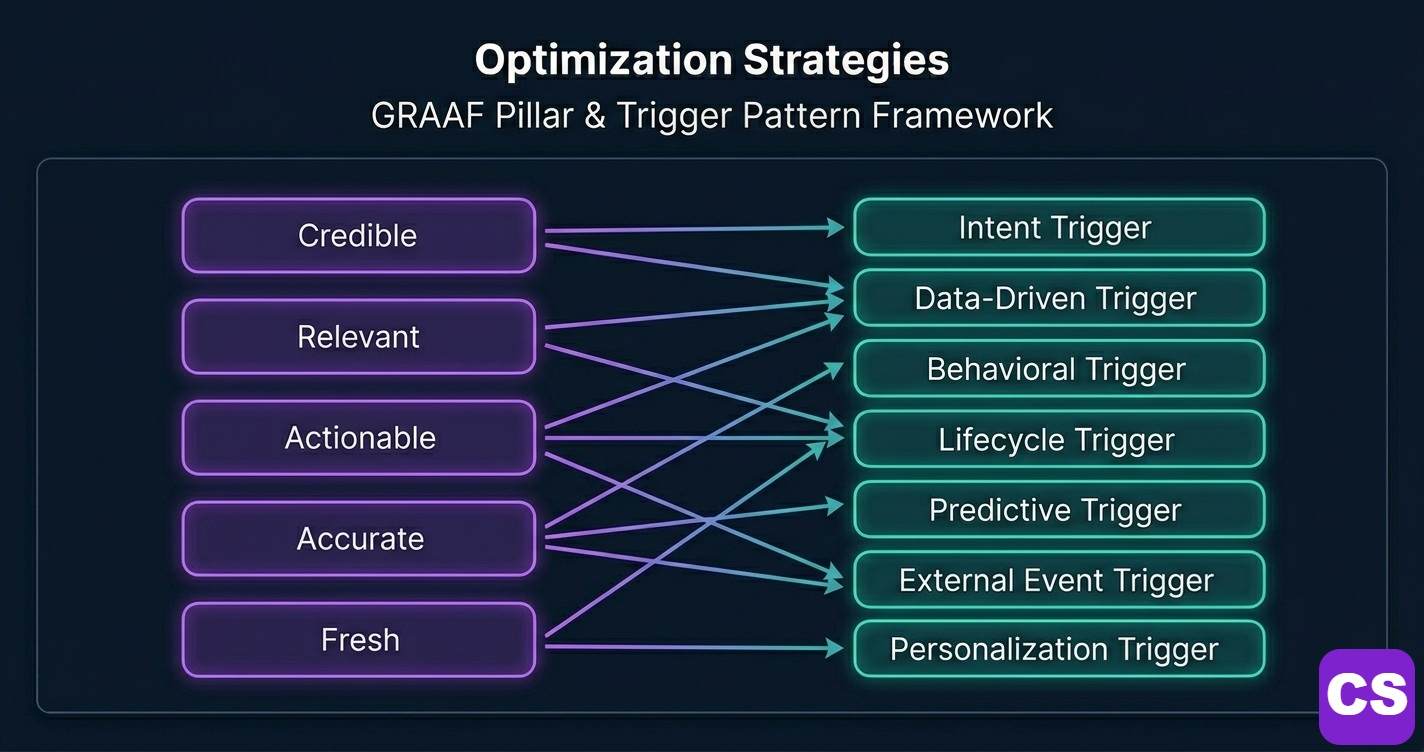
- Review the GRAAF Framework to understand exactly how the five content quality pillars map to AI Overview citation patterns
- WhatsApp Ottmar for hands-on expert guidance on your specific site and sector
❓ Frequently Asked Questions: AI Overview Trigger Patterns
Quick Answer: AI overview trigger patterns are the seven content and query signals that cause Google’s AI to generate an AI Overview and select your page as a cited source.
The seven patterns are semantic completeness, long-tail informational intent (8+ words), structured data markup, E-E-A-T authority signals, multi-modal content integration, entity density (15+ connected entities), and real-time factual verification. Pages satisfying all seven patterns simultaneously achieve dramatically higher citation rates than those optimising for just one or two. AI Overviews now appear on 48% of all tracked queries, making trigger pattern optimisation a priority for any business dependent on organic search visibility. Scan your page free to see which patterns your content currently satisfies. For deeper background on the content quality signals underlying these patterns, see Google Search Console documentation.
Quick Answer: Queries of eight or more words have a 57% chance of triggering an AI Overview — and long-tail queries are 7× more likely to trigger AI Overviews than short head terms.
Query length is the most actionable query-side trigger you can target directly through content creation. The mechanism is straightforward: longer queries signal explicit informational intent, and Google’s AI Overview system was built specifically to answer information-seeking questions. To maximise long-tail trigger coverage, structure H2 sections around full-sentence question variations of your primary keyword, implement FAQ schema with 8+ word questions, and build content that explicitly addresses the complete question as stated — not just the implied topic. For a systematic approach to keyword strategy in the AI Overview era, the ContentScale Resources Hub links to the best current keyword research tools. See also DemandSage’s AI Overviews statistics for query-level trigger data.
Quick Answer: Semantic completeness is the strongest predictor of AI Overview selection with a correlation of r=0.87 — pages scoring 8.5/10+ are 4.2× more likely to be cited.
Semantic completeness means your content provides a complete, self-contained answer that requires no external context or additional clicks to understand. Google’s AI favours content it can extract and present confidently without needing to fill in gaps from other sources. The practical test: read each H2 section in isolation. If it makes complete sense without the rest of the page, it passes. If it relies on earlier context (“as mentioned above,” “this approach”), it fails extraction. Front-loading answers, defining terms inline, and avoiding cross-referencing pronouns are the three fastest fixes. The CRAFT Framework Checklist scores your content’s extractability as part of the combined 80-point quality system. For authoritative background on semantic search, see Google’s Helpful Content documentation.
Quick Answer: No — top-10 organic overlap with AI Overview citations has collapsed from 76% to 17–38% since mid-2025, driven by Google’s query fan-out process.
This is the most important strategic shift in AI search for 2026. In mid-2025, about three out of four AI Overview citations came from pages ranking in the top 10 for the same query. By February 2026, that figure stood at between 17% (BrightEdge) and 38% (Ahrefs). The cause is Google’s query fan-out — the AI breaks a single user query into multiple sub-queries and sources each from the most relevant page, regardless of overall ranking. Pages at position 30 or 40 can now earn AI citations if they satisfy trigger patterns exceptionally well. For businesses that lost AI citation after building their strategy around rankings, the Algorithm Update Recovery guide covers the transition from ranking-first to citation-first thinking.
Quick Answer: Structured data markup increases AI Overview selection rates by 73%, making it one of the highest-ROI technical optimisations available in 2026.
Schema acts as a machine-readable interpretation layer that explicitly tells Google’s AI what your content is about, who authored it, what questions it answers, and how it fits into your site’s hierarchy. The most impactful schema types for AI Overview citation are Article, FAQPage, BreadcrumbList, and HowTo (where applicable). Implementing all four simultaneously is significantly more effective than any single schema type in isolation — the combination signals structural completeness to the AI selection system. Always validate schema with the Google Rich Results Test before publishing. Invalid schema produces zero citation benefit. ContentScale’s scanner checks for schema presence and flags common implementation errors as part of the Technical SEO scoring pillar (20 points in the ContentScore system).
Quick Answer: Informational intent queries dominate at 88.1% of all AI Overview triggers — but commercial queries are growing rapidly, rising from 8% to 18% by late 2025.
The dominance of informational intent is by design: Google built AI Overviews to answer questions, not to facilitate transactions. For content strategists, this means the informational layer of your site — how-to guides, explainers, comparison content, and educational resources — carries the highest AI trigger potential. However, the expansion into commercial queries is significant: B2B Technology queries now trigger at 82%, meaning product-comparison and feature-explanation content increasingly earns AI citations. For businesses in high-trigger sectors, the B2B SaaS Traffic Recovery guide covers sector-specific citation strategies. See Exposure Ninja’s AI search statistics for full intent-type breakdown data.
Quick Answer: E-E-A-T signals appear in 96% of AI Overview citations — making them near-universal requirements for citation selection.
Google’s AI draws from the same quality evaluation systems as traditional search, meaning pages without demonstrable experience, expertise, authoritativeness, and trustworthiness are systematically excluded. Practical E-E-A-T signals for AI citation include: a detailed author bio with specific, verifiable credentials; named expert quotes with real affiliations and published sources; links to primary source material (government sites, peer-reviewed papers, major publishers) rather than aggregators; and first-person experience markers throughout the content — phrases like “after analysing 200+ implementations” or “based on our 17-day documented case.” The GRAAF Framework scores E-E-A-T signals through its Genuinely Credible pillar (one of the five quality dimensions). Google’s own quality rater guidelines define the E-E-A-T standard explicitly.
Quick Answer: In the first sentence, the first H2, the Direct Answer box, and the meta description — because 44.2% of all LLM citations come from the first 30% of a page.
The research from Growth Memo (February 2026) is the most actionable keyword placement data available. Because nearly half of all AI citations originate from the first third of a page, your introduction is not just context — it is your primary citation opportunity. The keyword must appear in a sentence that contains a complete, extractable answer, not merely a transitional mention. Density matters less than extractability: one perfect answer sentence in paragraph one outperforms twelve keyword mentions scattered throughout a page. Beyond keyword placement, use the primary keyword as the anchor for your Direct Answer box — the structured answer block at the top of the article that Google’s AI can extract without reading the full page. The ContentScale Leaderboard shows how top-cited pages apply this placement strategy across different industries.
Quick Answer: Traditional SEO targets ranking position; AI Overview optimisation targets citation inside the AI summary that now appears above those rankings and converts at 5× the rate.
The two disciplines share a foundation — both reward E-E-A-T, technical health, and relevance — but diverge sharply on content structure. Traditional SEO values keyword density, word count, and backlink quantity. AI Overview optimisation values extractable answer blocks, entity density, schema markup, and semantic completeness. The most effective 2026 strategy runs both in parallel: ranking well provides the authority base that AI systems draw from; trigger pattern optimisation converts that authority into citations. Businesses that only do traditional SEO increasingly find their high-ranking content bypassed by the AI Overview layer. For international markets where AI Overview behaviour differs by language and region, the International SEO guide covers region-specific adaptation strategies. An authoritative comparison framework is available at WordPress VIP’s AEO vs SEO analysis.
Quick Answer: You can start for free — ContentScale’s scanner gives you a full 100-point ContentScore and trigger pattern breakdown at no cost, with no account required.
The free ContentScale scanner at app.contentscale.site provides a complete GRAAF + CRAFT + Technical SEO score in under 60 seconds, along with the specific trigger patterns your page fails and the exact fixes needed. For businesses that want expert implementation support, ContentScale offers three service levels: Emergency Response (€2,500) for diagnosis, prioritised fix list, and 90-day roadmap delivered in 24–48 hours; Project Implementation (€5,500) for hands-on trigger pattern optimisation across your highest-priority pages; and Ongoing Management (€3,500/month) for continuous monitoring, update cycles, and algorithm change response. All paid engagements include WhatsApp access to Ottmar directly for real-time support. For publishers managing large content libraries, the Publisher Revenue Recovery guide includes a cost-benefit framework for prioritising which pages to optimise first.
Quick Answer: Yes — especially for small businesses, because AI Overview citations level the playing field by decoupling citation from domain authority and budget.
The query fan-out mechanism that drives AI citation selection means pages at position 40 or 50 can earn citations for specific subtopics if their content is structurally superior on trigger patterns. This is genuinely new. In traditional SEO, small businesses with limited domain authority faced structural disadvantages in competing with large domains for top rankings. In AI Overview citation, a small business with perfectly structured, semantically complete, schema-marked, expert-cited content on a narrow topic can consistently outperform a large domain whose content is generic and structurally unprepared for extraction. The 46.5% of cited URLs that rank outside the top 50 organic positions for their triggering query are evidence this is already happening at scale. Start with the free ContentScale scan, identify your highest-potential informational pages, and apply the semantic completeness and schema fixes first — these produce measurable citation improvements without requiring backlink campaigns or domain authority building. See also Superlines’ 2026 AI search statistics for small-site citation data.
Quick Answer: Yes — the highest-impact trigger patterns (semantic completeness, front-loading, FAQ writing) require no technical skills at all, just structural writing discipline.
Of the seven trigger patterns, four are purely content-side: semantic completeness, long-tail informational intent targeting, expert citation integration, and multi-modal content. These require no technical implementation — only a structural change in how you write. The remaining three — structured data markup, entity optimisation, and technical freshness signals — have varying complexity levels. FAQPage and Article schema can be generated by most modern CMS plugins (Yoast, RankMath) without manual coding. Entity density improvement is a content editing exercise, not a technical one. ContentScale’s blog covers beginner-friendly implementation guides for every trigger pattern. For a structured starting point, the CRAFT Framework Checklist walks through each content quality signal with specific pass/fail criteria that require no SEO background to understand and apply.
Want to Improve Your ContentScore?
Get your free 100-point ContentScore in 30 seconds, or talk to Ottmar directly for expert guidance on your AI Overview citation strategy.
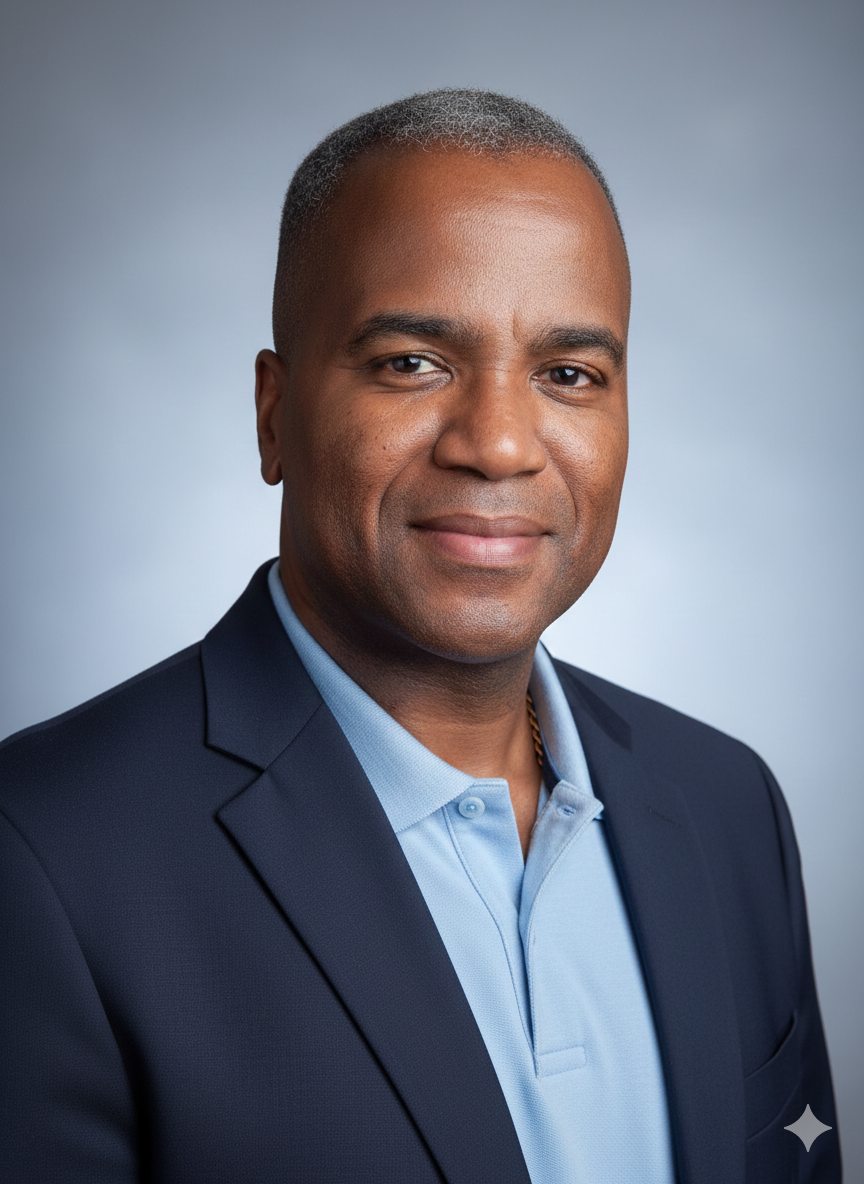
About the Author
Ottmar J.G. Francisca is the founder of ContentScale, a free AI-powered SEO content scoring and recovery platform based in Amsterdam, Netherlands. With a background spanning over 24 years in municipal operations management for the City of Amsterdam, he brings a systems-first, measurement-driven approach to an industry that has long operated on trust without verification.
He created the GRAAF Framework (Genuinely Credible, Relevant, Actionable, Accurate, Fresh) combined with CRAFT and Technical SEO into a deterministic 100-point ContentScore. Applied to clients across the Netherlands, Belgium, and internationally — with documented 3.7× average traffic improvements for pages reaching 90+ scores.