Evidence-Based SEO Content Strategy · Amsterdam · International
SEO Content Optimization Services — Research, Improve & Measure
By Ottmar J.G. Francisca · SEO Specialist & GEO Strategist ·
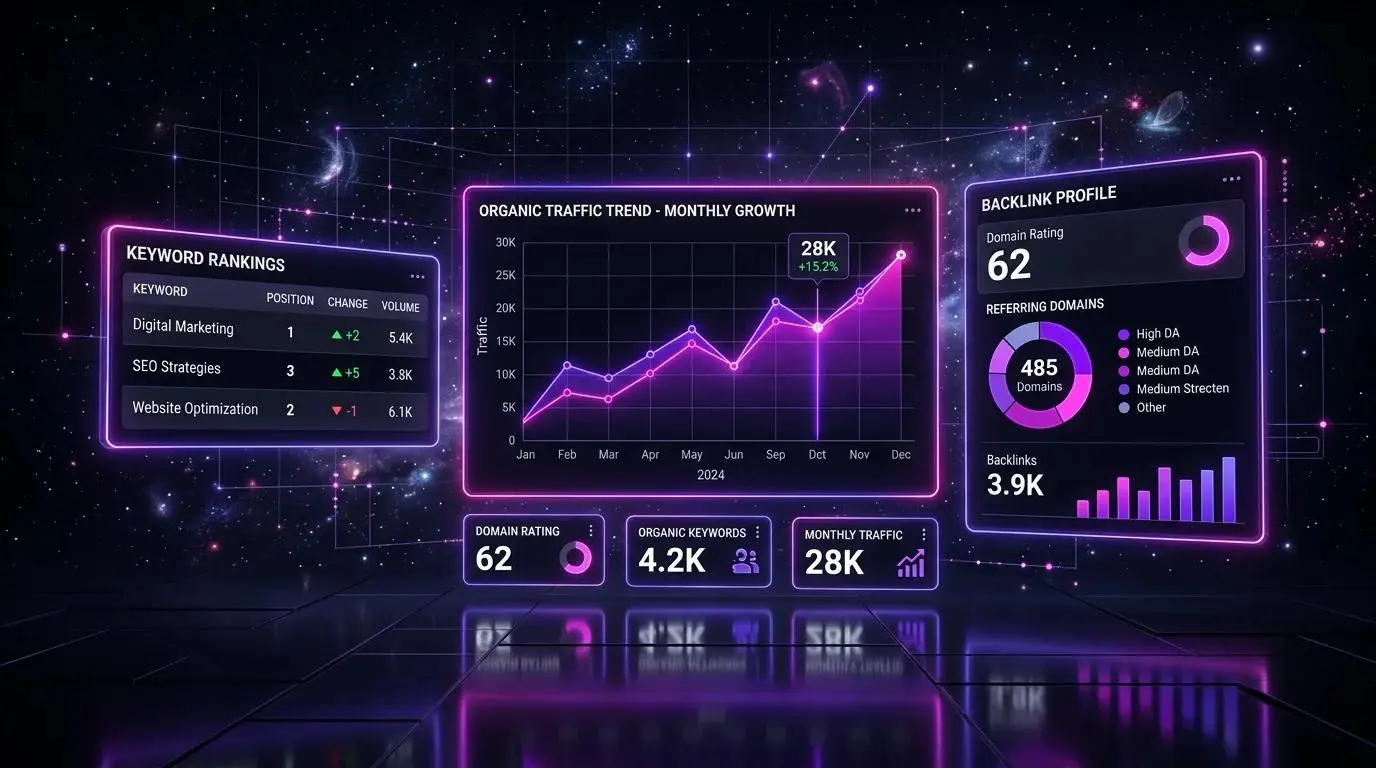
Direct answer: SEO content optimization services investigate which existing pages deserve improvement, when distinct new content is justified, and how to measure the results. My consulting combines Growth research, Pre-Write Brief planning, technical SEO and evidence-based decisions—without promises of rankings or AI citations.
SEO content optimization services help businesses decide which existing website pages to improve, what new content is worth creating, and how to evaluate results. I provide research-led recommendations rather than generic rewrites. The starting point is your website, your customers and the search evidence available for your market.
I’m Ottmar J.G. Francisca, an independent SEO & AI Search Optimization Specialist based in Amsterdam. I work directly with website owners and marketing teams on technical SEO, evidence-based content strategy and practical editorial decisions. Growth supports investigation of existing pages. Pre-Write Brief supports research before new pages are commissioned. The GRAAF Framework guides quality assessment; search-performance evidence helps determine what happens next.
The service is designed for a commercial question: Which changes are worth investing in, and why? You receive prioritized findings, explanations and an implementation-ready handoff suited to your own CMS. My work can also support your team’s implementation process, depending on the project scope.
What Are SEO Content Optimization Services?
SEO content optimization services examine how well an existing page serves its intended search audience and business purpose. The work can include search-intent analysis, on-page content review, internal linking, technical checks, competitor comparisons and measurement. Good optimization does not mean adding a target phrase repeatedly or increasing word count until a page looks comprehensive.
I begin by identifying the job of the page. An informational guide should answer a question thoroughly; a commercial service page should explain the offer and show a credible way to get help. A page may be well written but miss the actual searcher’s goal. Conversely, a page already doing its job may be damaged by a broad rewrite.
I examine the current content, the competing results and any verified performance data. If a page needs a clearer opening, an answer to a missing customer question, more accurate evidence or improved internal links, I describe that specific opportunity. If the research does not justify a change, I say so.
This is a consulting service, not a promise that a content score will cause a ranking increase. I focus on practical decisions that can be implemented and assessed.
Questions I Investigate
- What do searchers in the selected country actually want to accomplish?
- Which page should serve this intent, and is another page already targeting it?
- What are the real queries, impressions, clicks and CTR when Google Search Console is available?
- Which useful topics do relevant competing pages address, and are those topics missing here?
- Which claims can be supported by a primary source or the business’s own evidence?
- What business action should a qualified visitor be able to take?
Why Content Optimization Matters in Today’s Search Landscape
Websites can gain search impressions without gaining the clicks or enquiries they need. A weak CTR does not prove that the title is the problem: the query, position, SERP layout, market and intent all matter. Likewise, a fall in clicks may result from changing search demand rather than a content-quality issue.
Publishing more articles is not necessarily the answer. Two pages with overlapping intent may confuse visitors and compete internally. New content can repeat what a stronger page already explains, while a service page with commercial potential remains difficult to understand.
I separate search visibility, site visits and business enquiries. Each requires its own measurement. Search Console can show query-level clicks and impressions, but it does not prove that a visitor sent an enquiry or became a paying client. To see where a page stands in Google each week in a specific country, use the free rank tracker.
AI-assisted search creates additional ways for people to encounter information. I consider clear explanations, original information and credible sources when relevant. However, this service is not a second GEO-specialist landing page. Dedicated GEO/AEO consultancy has its own remit; this page is specifically about the decisions behind content improvement and new content planning.
As Google Search Central explains, its guidance emphasizes useful, reliable, people-first information. That is a reason to investigate usefulness and source quality, not an endorsement of any proprietary content-scoring formula.
“We update, remove, redirect or consolidate underperforming content where applicable.”
My Evidence-Based Approach to Content Optimization
I work in a sequence that protects useful existing content while making the case for any proposed change.
1. Establish the Starting Point
I identify the page, its intended audience and the business objective. When available, I review Search Console queries, clicks, impressions, CTR and average position for a defined period. When this data is missing, I still investigate search intent and the public search results, but I clearly state what cannot be verified.
2. Research the Actual Search Market
I examine relevant competing pages in the selected search region. For cross-border businesses, country and language matter: a US search result may not show the same intent as one in the Netherlands or the UK. I compare the roles and substance of competing pages, not just their headings.
3. Check Quality and Evidence With GRAAF
I created the GRAAF Framework to structure review around credible, relevant, actionable, accurate and fresh information. It is my editorial quality framework, not a set of proven Google ranking factors. I use it alongside technical assessment and source verification, not as a substitute for search data.
4. Choose an Appropriate Editorial Action
The outcome can be no change, improve an existing page, plan a distinct page or investigate further. A competitor covering a topic does not automatically mean that copying the topic is worthwhile. Recommendations should explain the searcher’s need, the evidence and the reason for the selected action.
5. Prepare a Practical Handoff
I document what to retain, what to change and why. Depending on the scope, this can include replacement passages, suggested sections, linking recommendations, an SEO title and meta proposal, or a separate new-page brief. I can prepare instructions for WordPress, Wix, Shopify, Webflow or another CMS; access and implementation responsibilities are agreed separately.
The Role of AI in Modern Content Optimization
AI-assisted systems can help organize research, identify possible questions and compare content structures. They can also produce confident statements that turn out to be wrong. I treat a generated suggestion as a research lead until its supporting evidence has been examined.
For content decisions, I distinguish between an observed search result, a source-backed fact, an expert’s opinion and a hypothesis about what could improve performance. An AI-generated answer is not a substitute for verified company information, and an AI citation is not the same as a qualified website visit.
Google’s published guidance on AI-generated content makes clear that the quality and purpose of content matter more than whether AI helped produce it. I use AI-assisted research as part of a documented workflow; I do not claim that a special GEO paragraph or heading format guarantees inclusion in an AI Overview.
GEO/AEO is relevant context, not the product sold on this page. For a dedicated AI Search strategy, I direct visitors to the separate specialist offering rather than duplicating it here.
“The longer-is-better approach — first and foremost, content needs to serve the intent behind the search.”
Key Components of My SEO Content Optimization Services
Growth — Improvement Research for Existing Pages
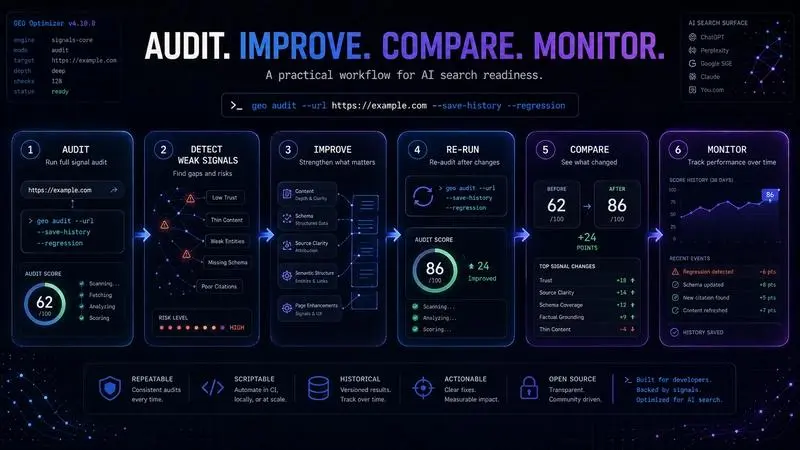
Growth is the workflow I use to investigate improvement opportunities on pages that already exist. I begin with the live page and its existing intent. I compare the content and available search evidence with relevant competitor pages, then decide whether there is enough evidence to justify an editorial action.
An existing page can already rank well for valuable queries. Replacing it wholesale may remove information and relevance that are working. I therefore prefer specific, reviewable recommendations: improve an answer, clarify service details, update a source, fix an internal link, address unnecessary overlap or retain the page unchanged.
The handoff identifies the page, the observation, supporting evidence, the proposed change and the measurement plan. Where evidence is insufficient, I do not present a speculative recommendation as verified.
Pre-Write Brief — Research Before a New Page Is Written
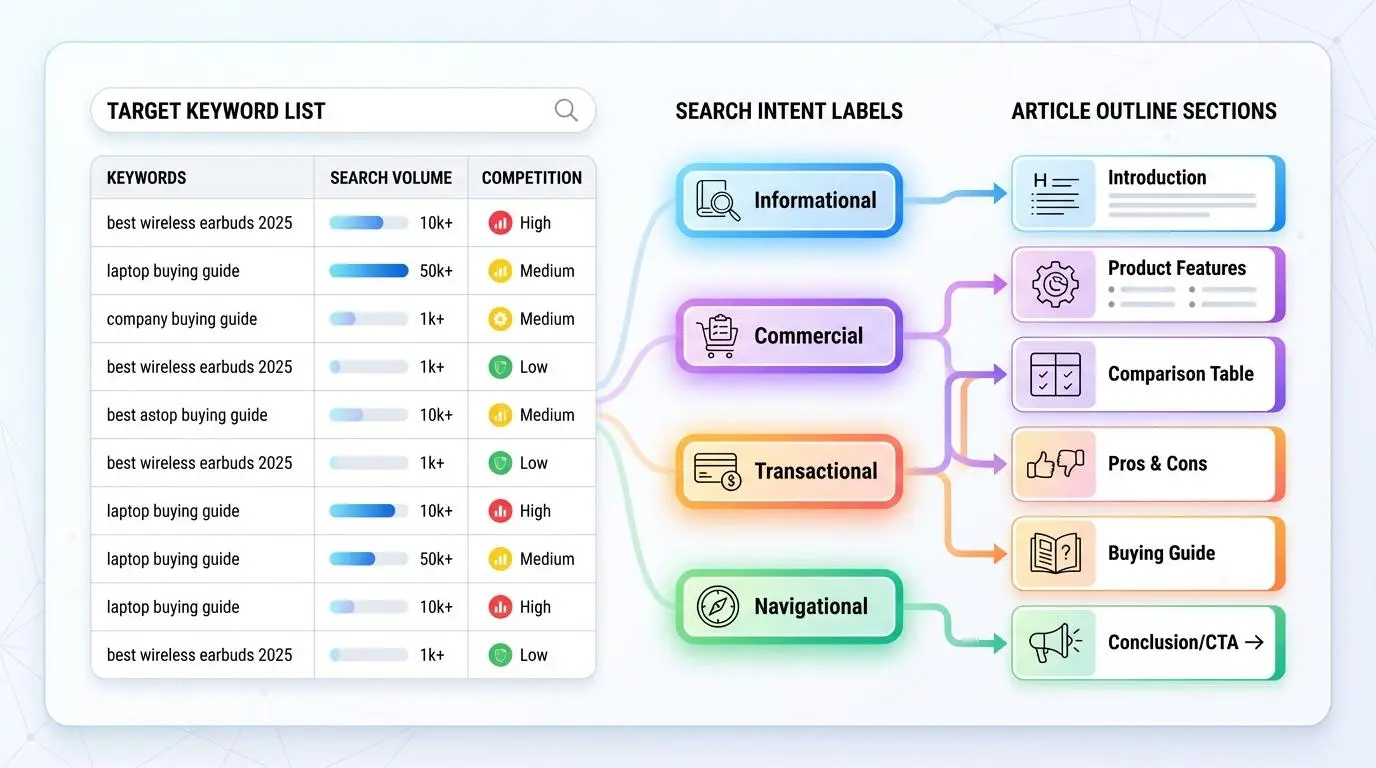
Pre-Write Brief addresses a different decision. It is used when research suggests that a new page may deserve to exist. I investigate the proposed keyword, the actual search intent, competing results, questions, useful entities and source requirements before the writing begins.
A useful brief can include an SEO title and slug proposal, recommended outline, questions to answer, internal linking opportunities, information that requires fact-checking and a clear commercial action. It also checks whether the intended topic would duplicate a page already on the site.
The output is an editorial blueprint—not a guarantee of ranking above today’s competitors. A proposed new page should contribute something genuinely useful or distinctive, not merely rephrase what competitors have already written.
Technical SEO, Internal Links and Implementation
I examine crawlability, indexability, page structure, canonical relationships and internal links when these affect the content decision. Structured data should accurately reflect what the visitor sees and must not duplicate markup already provided by WordPress or Rank Math.
I can provide a CMS-neutral implementation handoff; I do not suggest that a download or research report itself publishes changes to a client’s website.
What You Receive
The agreed deliverable may contain a page audit, search-intent map, competitor observations, prioritized actions, ready-to-review copy, new-page brief and before/after measurement plan. I define the scope before work begins rather than promising identical outputs for every business.
How I Measure Success: Search Performance and Business Outcomes
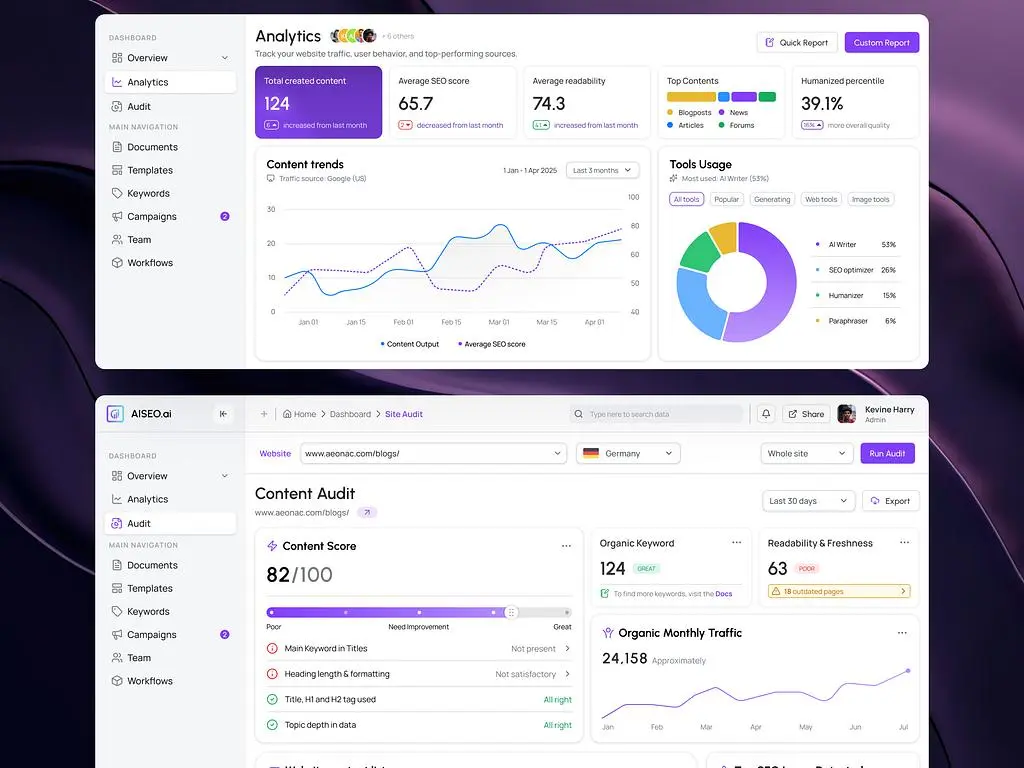
I measure against the goal of the engagement, not the largest number available in a dashboard. A content page may be intended to earn relevant organic clicks; a service page may also need to generate WhatsApp messages or email enquiries.
When verified Search Console data is available, I record the pre-publication baseline for relevant pages and queries. For suitable changes, a 28-day period before publication can be compared with 28 days after publication once the data is finalized. I document what was changed and when. Search demand, seasonality, competitor actions and Google updates can still affect the comparison, so it is not proof of causation by itself.
My Free AI Citations Tracker remains a separate free tool. Where relevant, it can provide supporting observations about AI/search visibility, but my paid consulting service is the interpretation, prioritization, editorial planning and implementation guidance—not access to a free tracker.
If a client needs enquiry or revenue measurement, we discuss which business-side records can be used. I do not turn impressions into invented leads or equate a brand mention with a citation of an exact canonical URL.
Who Can Benefit From SEO Content Optimization Services?
B2B and professional service businesses may have service pages that rank for broad questions but do not explain the offer clearly enough to attract qualified enquiries. I examine search intent, service language, proof and contact opportunities.
Local and regional businesses may need stronger service information or more accurate targeting. I avoid producing near-identical pages for every city without a clear local purpose.
Publishers and content-heavy websites often need an inventory of what is worth keeping, improving, consolidating or retiring. More production can hide the problems in existing content.
E-commerce sites may benefit from clearer category content, buying guidance, internal links or technical fixes. I consider the commercial role of each page rather than recommending extra words for their own sake.
Marketing teams and agencies can use documented briefs and focused research findings to reduce uncertainty before commissioning content. My work remains personally reviewed and CMS-independent.
I work remotely from Amsterdam and can investigate relevant search markets in the Netherlands, Belgium, the UK, the US and other regions suited to the project. Market targeting is chosen from actual business needs and research, not a claim that I already have clients in each country.
Getting Started With Your Content Optimization Strategy
Send me your website URL, the page or topic you are concerned about, your target market and the business result you hope to improve. You do not need to prepare a detailed technical report before contacting me.
I begin by discussing the scope: is the immediate need existing-page improvement, a researched new-page brief, technical investigation, or a combination? We agree what research and deliverables are appropriate before implementation.
I work personally on the research and recommendations. I do not promise ranking positions, AI citations, a fixed number of leads or a particular return on investment. I aim to provide evidence, clear choices and a useful handoff you or your team can act on.
For my background and approach, see About Ottmar Francisca. For existing documented results, see the ContentScale case study, including its stated dates and limitations.
Ready to review a real page rather than order another generic report? Send me the URL and describe the problem. I will discuss the appropriate research scope with you.
Frequently Asked Questions
What is the difference between Growth and Pre-Write Brief?
I use Growth to evaluate improvements to existing pages and Pre-Write Brief to research justified new pages before writing. Both are reviewed against the existing site to reduce overlap.
Will you improve my rankings or guarantee AI citations?
No. I investigate evidence, recommend appropriate actions and assess available results. Rankings, clicks, AI citations and enquiries cannot be guaranteed.
Do I need Google Search Console?
No. Public search research and content review can begin without it. Verified GSC data improves baseline measurement when available.
Is the Free AI Citations Tracker part of this paid service?
The Free AI Citations Tracker is a separate free tool. My consulting is the research, judgment, recommendations and implementation planning, not access to the tool.
Can you work with WordPress, Wix or Shopify?
Yes. I prepare a CMS-independent handoff. Direct implementation depends on the agreed project scope and access.
How much does content optimization cost?
The scope depends on the pages, markets, research and deliverables. Contact me with your website URL and I will discuss the appropriate engagement before providing a quotation.
When can the result be measured?
For suitable changes, I can compare defined before-and-after periods, including 28 days before and after publication where appropriate. The comparison is not proof of causation by itself.
Let’s review what your website actually needs
Send your URL, target market and the page or problem you want investigated. I will discuss the appropriate content optimization scope with you personally.
Related specialist pages and sources
This page covers content optimization consultancy. For separate intents, visit my International SEO service, all SEO consulting services, or the Free AI Citations Tracker.