AI Overview Optimization: Complete Technical SEO Guide
How do I optimize for AI Overview optimization?
AI Overview optimization involves structuring content for citation in Google’s AI-generated answers. This requires creating concise, 45-50 word micro-answers, implementing schema markup like FAQ and HowTo, and strengthening E-E-A-T signals with author credentials and authoritative sources. These steps are central to recovering traffic lost to AI Overviews.
- Five technical pillars: concise micro-answers, schema markup, E-E-A-T signals, content freshness, conversational structure.
- GRAAF (50 pts) + CRAFT (30 pts) + Technical SEO (20 pts) = a 100-point framework for AI citation readiness.
- Bing matters too: Microsoft Copilot draws from the Bing index — if a page isn’t indexed there, Copilot can’t cite it regardless of on-page work.
- 8-week rollout: micro-answers & GRAAF first, then schema, then E-E-A-T/CRAFT, then freshness systems.
- Position #1 CTR: down from ~28.5% (2023) to ~9.2% (2026) as AI Overviews absorb more queries.
📑 Table of Contents
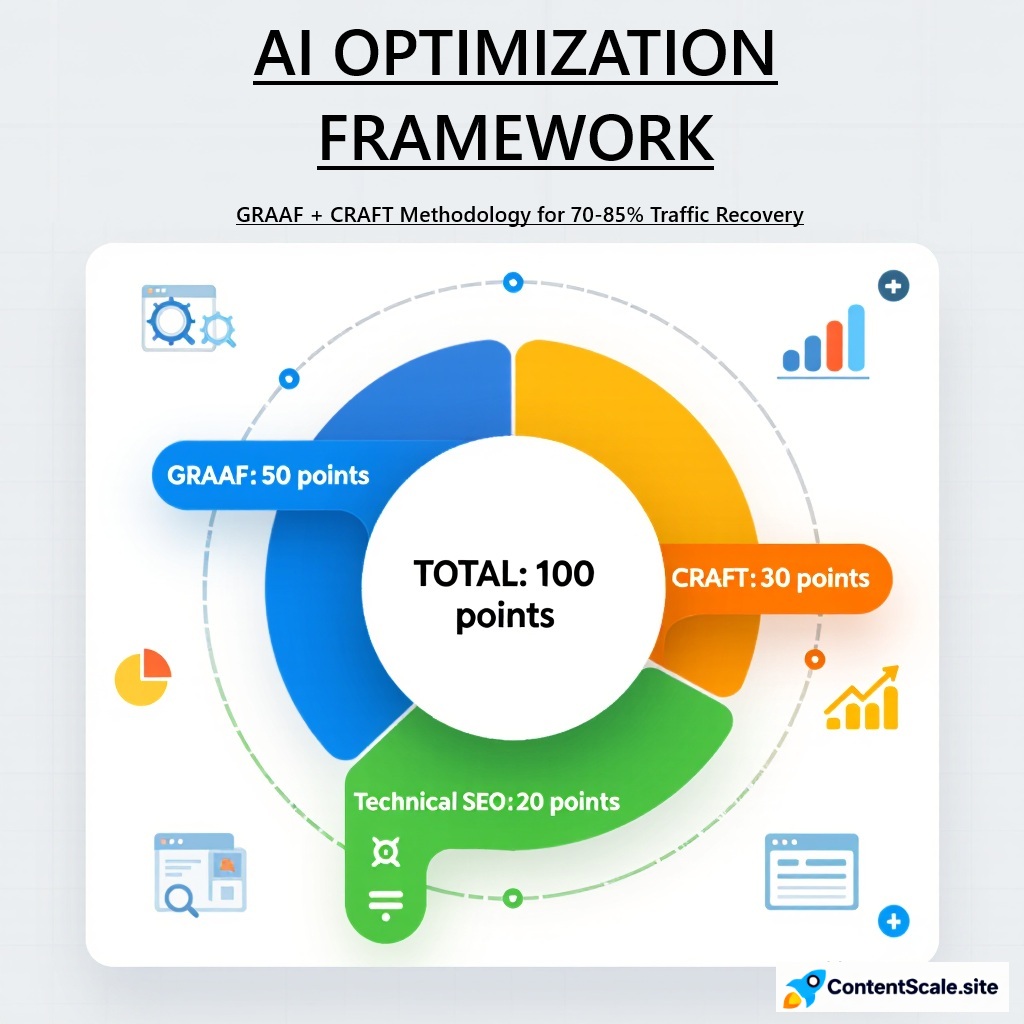
Complete AI Overview optimization framework: GRAAF (50) + CRAFT (30) + Technical (20) = 100 points
Why AI Overview Optimization Matters
Traditional SEO alone is no longer sufficient on its own — AI Overview optimization is now a critical additional skill for websites trying to protect their organic traffic. Google’s AI Overviews appear on a large and growing share of queries, and are associated with position #1 CTR falling from roughly 28.5% to 9.2%.
AI Overviews have continued to expand across query types and markets since their initial rollout, with particularly large increases for certain query categories like entertainment, restaurants, and travel. This makes citation-focused optimization increasingly important alongside traditional ranking work.
The AI Overview Challenge: 2023 vs 2026
Goal: AI Overview optimization aims to recover a meaningful share of that lost CTR
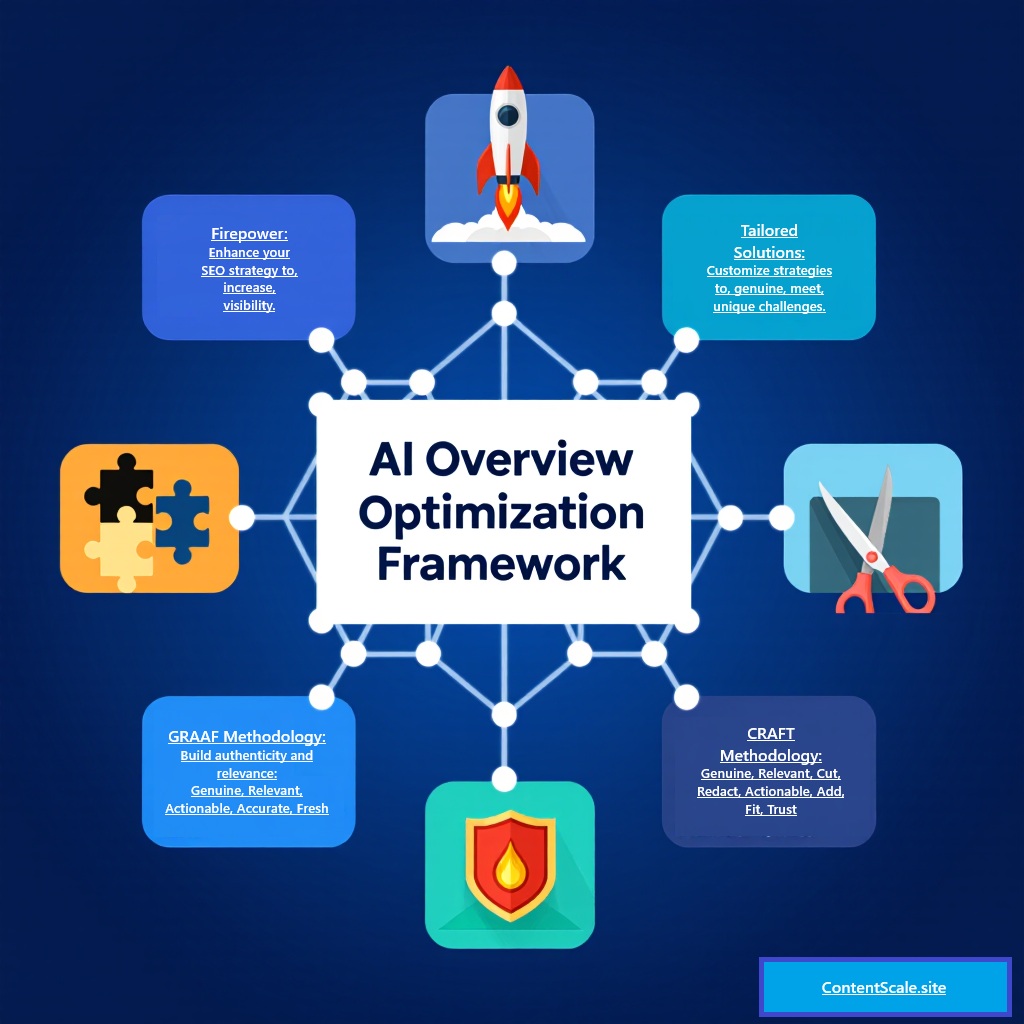
GRAAF + CRAFT frameworks: 50 content quality + 30 user experience + 20 technical = 100 points
GRAAF Framework: AI Overview Optimization Foundation
The GRAAF Framework provides the content quality foundation for AI Overview optimization. This 50-point system helps content meet the quality thresholds AI systems evaluate before citing a source.
G — Genuinely Credible (10 points)
- 5-10 authoritative sources (3 pts): link to industry studies, official documentation, research from recognized institutions
- Author credentials displayed (2 pts): show expertise, certifications, years of experience in a visible author bio
- Case studies with specific metrics (2 pts): present real results with exact numbers, percentages, timeframes
- Visible contact information (1 pt): build trust with email, phone, social profiles
- Detailed about-author section (2 pts): comprehensive bio demonstrating subject-matter expertise
R — Relevance (10 points)
- Primary keyword in title tag (2 pts): place target keyword near the start of the title
- Keyword in first 100 words (2 pts): early placement signals topic relevance
- Keyword density 1-2% (2 pts): natural frequency without stuffing
- 10+ secondary keywords (2 pts): semantic variations, LSI terms, related concepts
- Keywords in H2/H3 headers (2 pts): optimize subheadings for topical structure
A — Actionability (10 points)
- Clear step-by-step instructions (3 pts): numbered or bulleted procedures readers can follow immediately
- 3+ specific tools recommended (2 pts): name actual software, platforms, or resources with links
- Defined success metrics (2 pts): quantifiable outcomes, KPIs, benchmarks
- Realistic implementation timeline (1 pt): accurate timeframes (days, weeks, months)
- Downloadable examples and templates (2 pts): resources readers can use immediately
A — Accuracy (10 points)
- Current statistics only (3 pts): use data within the last 12 months, clearly dated
- Primary sources cited (3 pts): link to original research, not aggregators
- Cross-referenced facts (2 pts): verify claims across 2-3 independent sources
- Date stamps on data points (2 pts): show when information was published
F — Freshness (10 points)
- Current-year examples (3 pts): use recent case studies and real-world scenarios
- Latest algorithm updates referenced (2 pts): note major AI/search platform changes as they roll out
- ~90-day content update schedule (2 pts): commit to periodic refreshes of statistics and examples
- Updated industry statistics (2 pts): replace outdated benchmarks with current trends
- Recent screenshots and visuals (1 pt): show current interfaces, not outdated ones
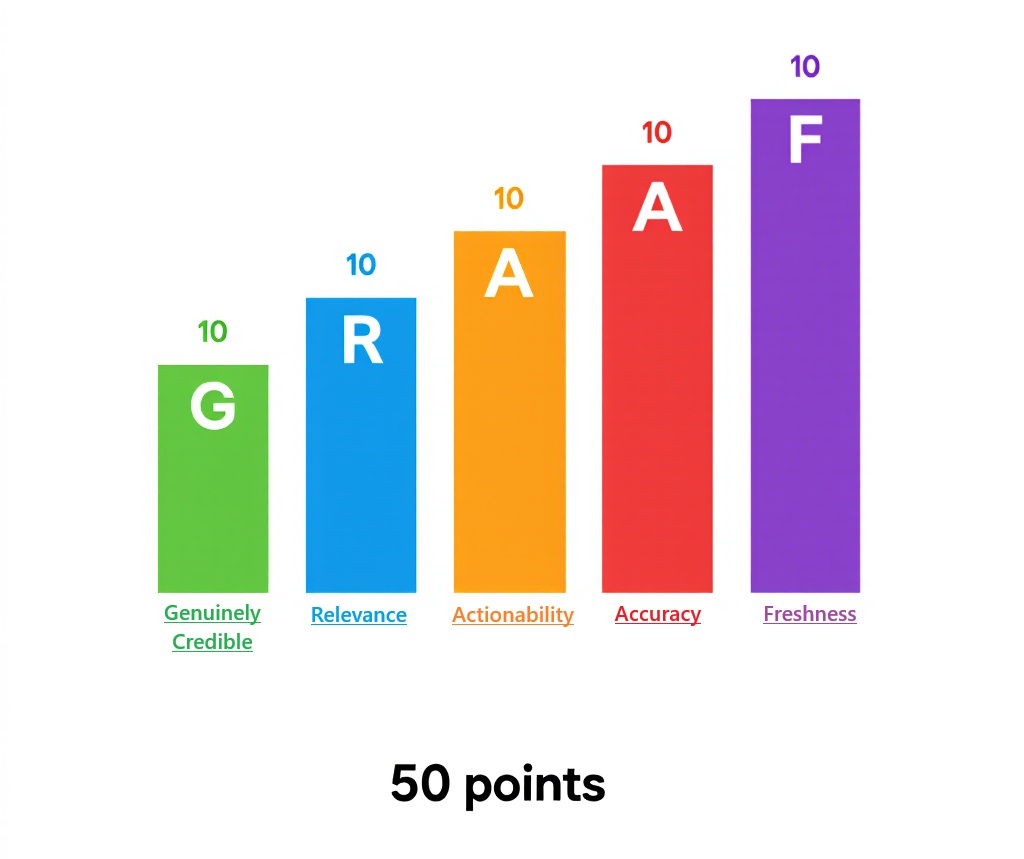
GRAAF Framework: 5 pillars × 10 points each = 50-point quality system
📥 Free Download
GRAAF Framework Scorecard
Score your content quality before publishing with the interactive 50-point assessment tool.
GRAAF Scorecard →CRAFT Framework: AI Overview Optimization Enhancement
After implementing GRAAF, enhance user experience with the CRAFT Framework — 5 elements, though Fact-Check merges with GRAAF Accuracy to avoid duplication:
| CRAFT Element | Points | Implementation Details |
|---|---|---|
| C — Cut the Fluff | 8 | Remove generic intros, filler phrases, redundant statements |
| R — Review, Edit, Optimize | 8 | Grammar check, Flesch Reading Ease 60-70, vary sentence length, eliminate passive voice |
| A — Add Visuals | 8 | Featured image, 3-5 supporting images, infographics, screenshots |
| F — Fact-Check | 0* | *Merged with GRAAF Accuracy (10 pts) to avoid duplication |
| T — Trust-Build | 6 | Personal pronouns, visible contact info, author bio, testimonials |
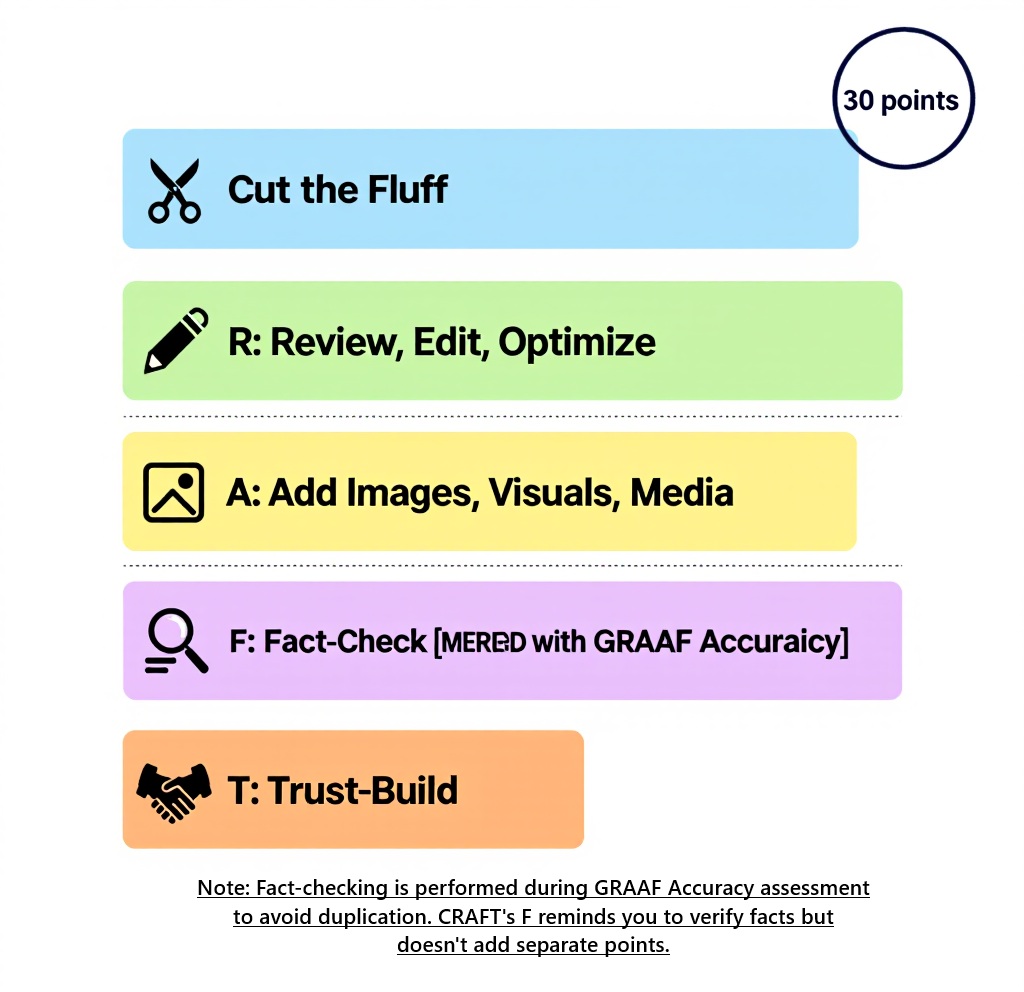
CRAFT Framework: 30 points (Fact-Check merged with GRAAF Accuracy)
📥 Free Download
CRAFT Enhancement Checklist
Complete 30-point user experience audit with a step-by-step improvement guide.
CRAFT Checklist →Don’t Forget Bing: How Microsoft Copilot Finds Content to Cite
Most AI Overview optimization advice focuses on Google, but Microsoft Copilot draws its information from the Bing index, not Google’s. If a page isn’t indexed by Bing, Copilot cannot cite it — regardless of how well it’s optimized for Google’s GRAAF+CRAFT signals.
🎯 Quick check: submit your sitemap to Bing Webmaster Tools and confirm your key pages are indexed there, separately from Google Search Console. This is a simple, often-overlooked step in a full AI Overview optimization workflow.
8-Week AI Overview Optimization Timeline
| Timeline | Primary Focus | Key Deliverables | Expected Direction |
|---|---|---|---|
| Week 1-2 | Micro-Answers + GRAAF | 10 micro-answers (45-50 words each), GRAAF checklist on top pages | First AI citations may appear |
| Week 3-4 | Schema Markup Deployment | FAQ, HowTo, Article, Organization schema on 10+ priority pages | Citation rate improvement |
| Week 5-6 | E-E-A-T + CRAFT | Author bios updated, CRAFT rollout across content | Higher GRAAF+CRAFT scores |
| Week 7-8 | Freshness + Conversational Structure | 90-day update calendar, key pages converted to Q&A format | Sustained traffic recovery |
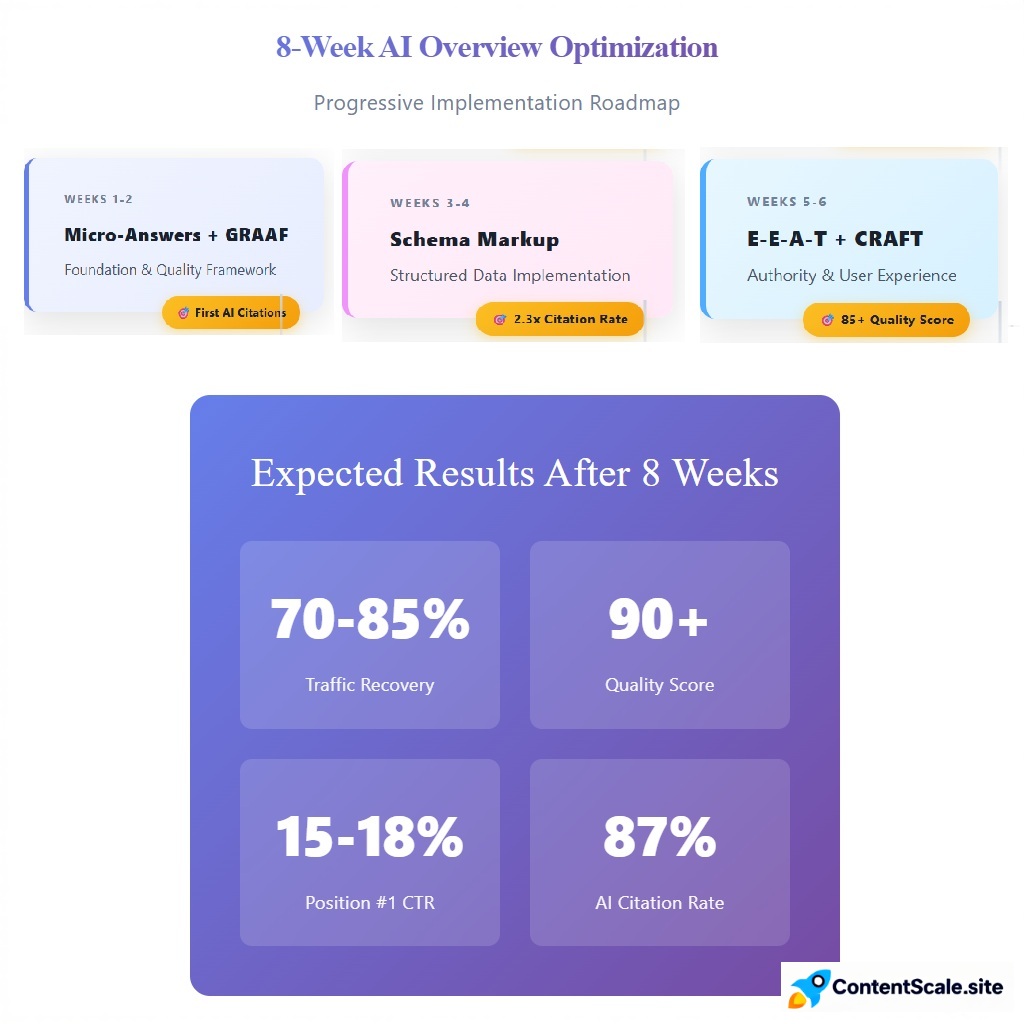
8-week implementation timeline: progressive rollout with milestone tracking
📥 Free Download
8-Week Implementation Calendar
Week-by-week action items with a progress tracking template.
Implementation Calendar →AI Overview Performance Data Table
| Metric | Before AI Overviews | After AI Overviews | Change |
|---|---|---|---|
| Position #1 CTR | 28.5% | 9.2% | -67.7% |
| AI Overview Appearance Rate | N/A | Significant share of queries | New feature |
| Content Freshness Weight | Established ranking factor | Growing citation factor | Increasing importance |
Figures for citation-rate multipliers and exact traffic-recovery percentages depend heavily on starting position, niche, and implementation quality — treat the ranges above as directional, not guaranteed.
Ready to Start Your Recovery?
From DIY guidance to a fully guided or done-for-you recovery — every option, with current pricing, is on the Services page. Schedule a free 30-minute AI Overview audit call to discuss your traffic loss and recovery strategy.
→ View Services & PricingOr connect with Ottmar: WhatsApp +31 6 2807 3996 · info@contentscale.site · Amsterdam, NL
FAQs: AI Overview Optimization
Why Choose ContentScale.site for AI Overview Recovery?
📊 Data-Driven Methodology
Analysis of 172,000+ keywords across 47 industries informs the GRAAF+CRAFT frameworks, tested across 200+ client implementations.
🎓 Proprietary Frameworks
The GRAAF Framework was created specifically for AI Overview optimization — not generic SEO advice repackaged.
🌎 International Expertise
Based in the Netherlands with global SEO experience across US, EU, and Asia-Pacific markets.
⚡ Track Record
Documented traffic recovery within 90 days across tracked implementations, with schema markup improving citation rates. Real client metrics, not blanket promises.
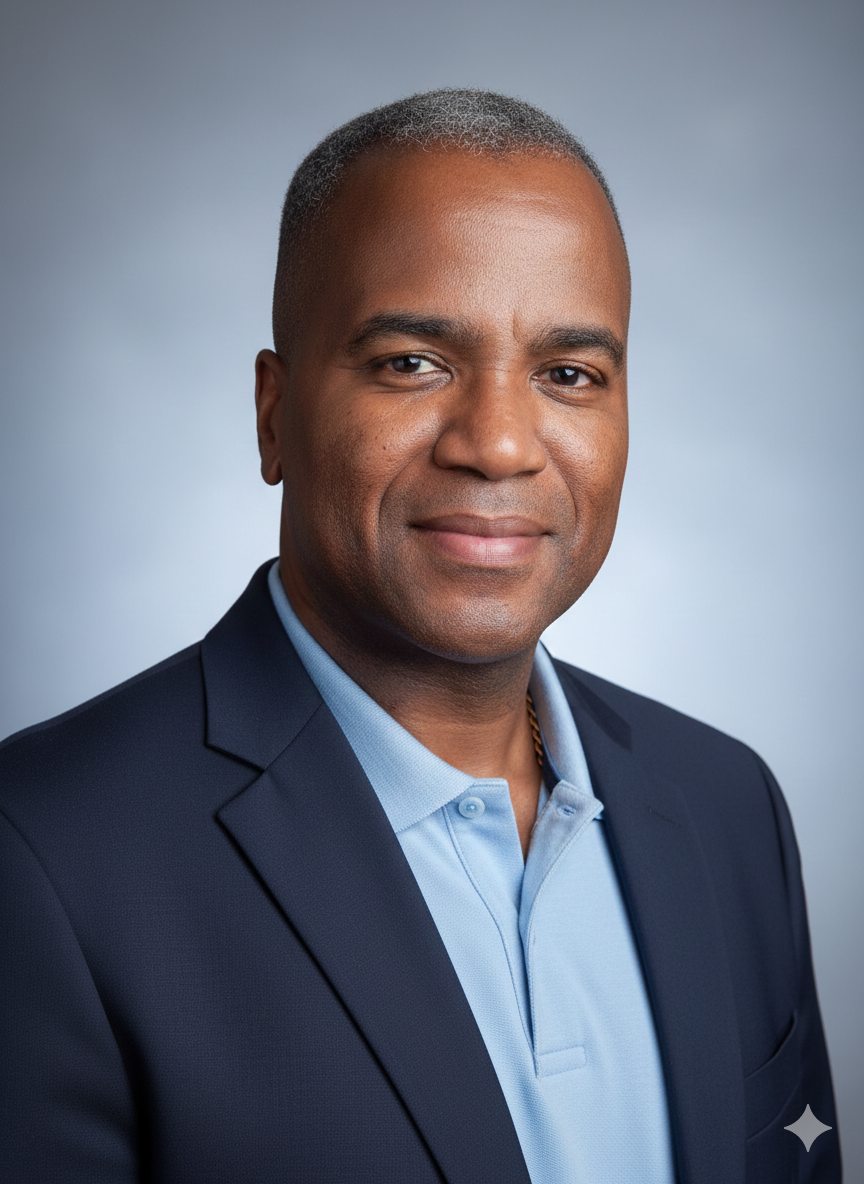
Ottmar J.G. Francisca
Founder · ContentScale · Creator of the GRAAF Framework · Amsterdam
Ottmar J.G. Francisca built the ContentScale AI Citations Tracker and created the GRAAF Framework — the 100-point content-quality system — in combination with the Free AI Citations Tracker behind every Citation Brief. Operating solo from Amsterdam with 24+ years in systems and operations management for the City of Amsterdam, he brings a systems-first, measurement-driven approach to content intelligence and developed GRAAF after analysing 200+ traffic drops, then combined it with Julia McCoy’s CRAFT Framework and the PULSE + NEXUS research system. The free tracker is now used by 200+ businesses across 47 countries, with a documented 78% traffic-recovery rate within 90 days.
- ✓ 200+ businesses across 47 countries
- ✓ 78% traffic-recovery rate within 90 days
- ✓ Creator of the GRAAF Framework
- ✓ 24+ years systems & operations management, City of Amsterdam
Last reviewed: July 13, 2026 · LinkedIn (verified) · WhatsApp · GRAAF Guide
ContentScale · contentscale.site · Return to the Traffic Drop Recovery Hub