AI Overview Trigger Patterns: How I Get Pages Cited in Google AI Overviews
AI Overview trigger patterns are the specific content signals and query characteristics that cause Google to generate an AI Overview and select a page as a cited source. In my work across 200+ websites, I have seen the same seven patterns determine whether content gets cited or ignored. This guide explains what they are, how they work, and how I apply them — including the GRAAF Framework I created to measure content quality for AI search.
To optimize for AI search engines, understanding ai overview trigger patterns is essential. These patterns dictate when and how search engines synthesize web content into automated summaries. By structuring content to match informational, long-tail, and question-based triggers, publishers can increase eligibility for AI citations. I use the free AI Citations Tracker I built to monitor which pages earn citations and which do not.
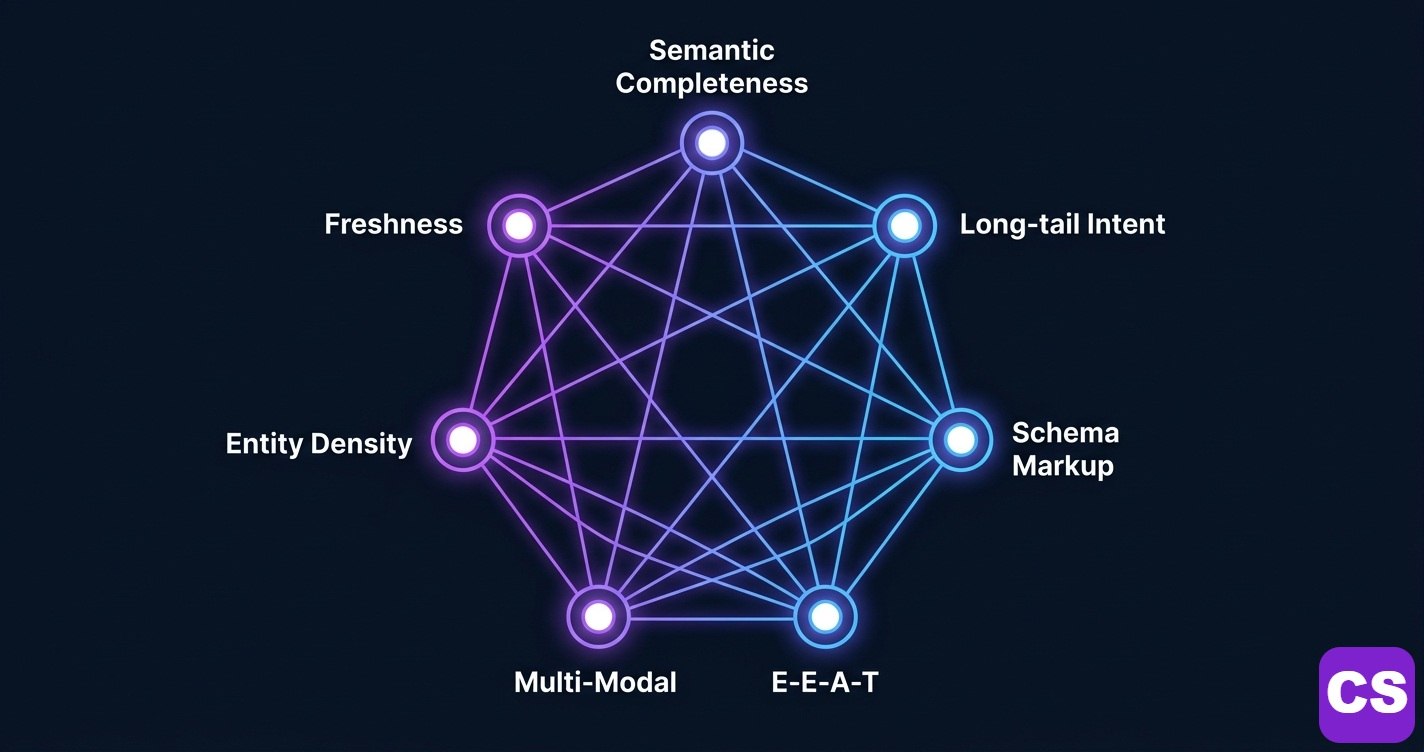
AI Overview trigger patterns are the seven content and query signals that cause Google’s AI to generate an AI Overview and select a page as a citation source. They are: semantic completeness, long-tail informational intent (8+ words), structured data markup, E-E-A-T authority signals, multi-modal content integration, entity density, and real-time factual verification. According to BrightEdge (February 2026), AI Overviews now trigger on nearly 48% of all tracked queries — a 58% year-over-year increase.
- 📌 AI Overviews appear in 48% of tracked queries — a 58% increase year over year. Trigger pattern optimisation is now a core part of my SEO work (BrightEdge, February 2026)
- 📌 Semantic completeness is the strongest predictor, with an r=0.87 correlation. Pages scoring high on this signal are significantly more likely to appear in AI Overviews (AI Overview Ranking Factors Study, 2025)
- 📌 Top-10 organic overlap has dropped from 76% to 17–38%. Rankings alone no longer guarantee AI citation (Ahrefs & BrightEdge, February 2026)
- 📌 44.2% of LLM citations come from the first 30% of a page. Front-loading answers is essential (Growth Memo, February 2026)
- 📌 AI Overview citation traffic converts at 14.2% versus traditional organic’s 2.8% — a meaningful quality difference that makes citation a high-priority SEO goal (Seer Interactive / Search Engine Land, 2025)
📋 Table of Contents
- 1. What Are AI Overview Trigger Patterns?
- 2. The 7 AI Overview Trigger Patterns
- 3. How Google’s Decision Tree Triggers AI Overviews
- 4. AI Overview Statistics: What the Data Shows
- 5. Which Query Types Trigger AI Overviews Most?
- 6. Do Organic Rankings Guarantee AI Citations?
- 7. How I Structure Content for AI Citation
- 8. Real Results: What I Have Seen Across 200+ Websites
- 9. Bing and Microsoft Copilot
- 10. Frequently Asked Questions
- 11. Next Steps
🔍 What Are AI Overview Trigger Patterns?
AI Overview trigger patterns are the content, structural, and query signals that cause Google’s AI system to generate an AI Overview — and, more importantly, to select your page as one of the sources cited inside that summary. As of February 2026, AI Overviews appear on nearly 48% of all tracked queries, according to BrightEdge’s twelve-month analysis. If your content does not satisfy these patterns, roughly half of your potential search impressions are served without your page even being considered.
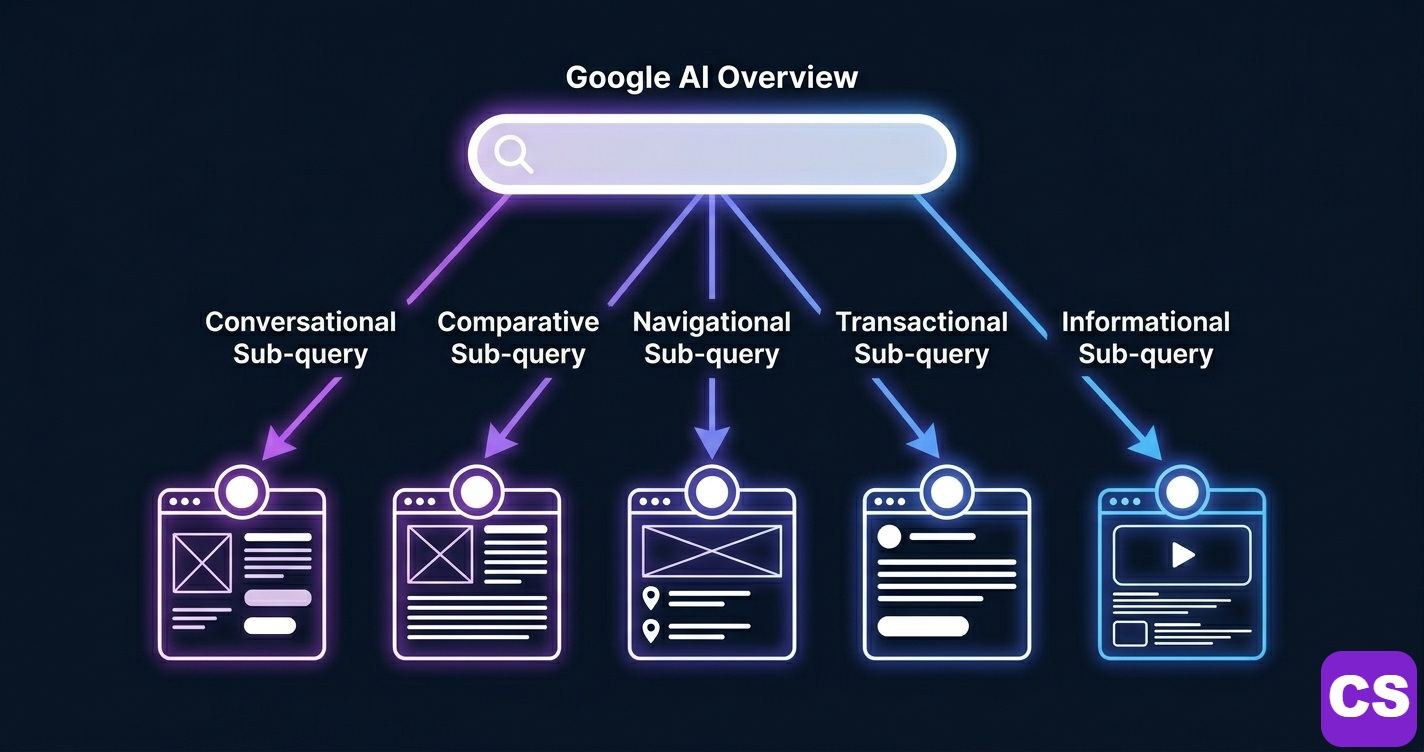
The most important shift in 2026 is the decoupling of traditional organic rankings from AI citation selection. In mid-2025, approximately three out of four pages cited in an AI Overview also ranked in the top 10 organic results. By February 2026, that figure had dropped to between 17% and 38%, depending on the dataset. This change is driven by Google’s query fan-out process, where the AI breaks a single user query into multiple sub-queries and sources each separately. A page at position 40 can now appear in an AI Overview if it scores well on trigger patterns for a specific subtopic.
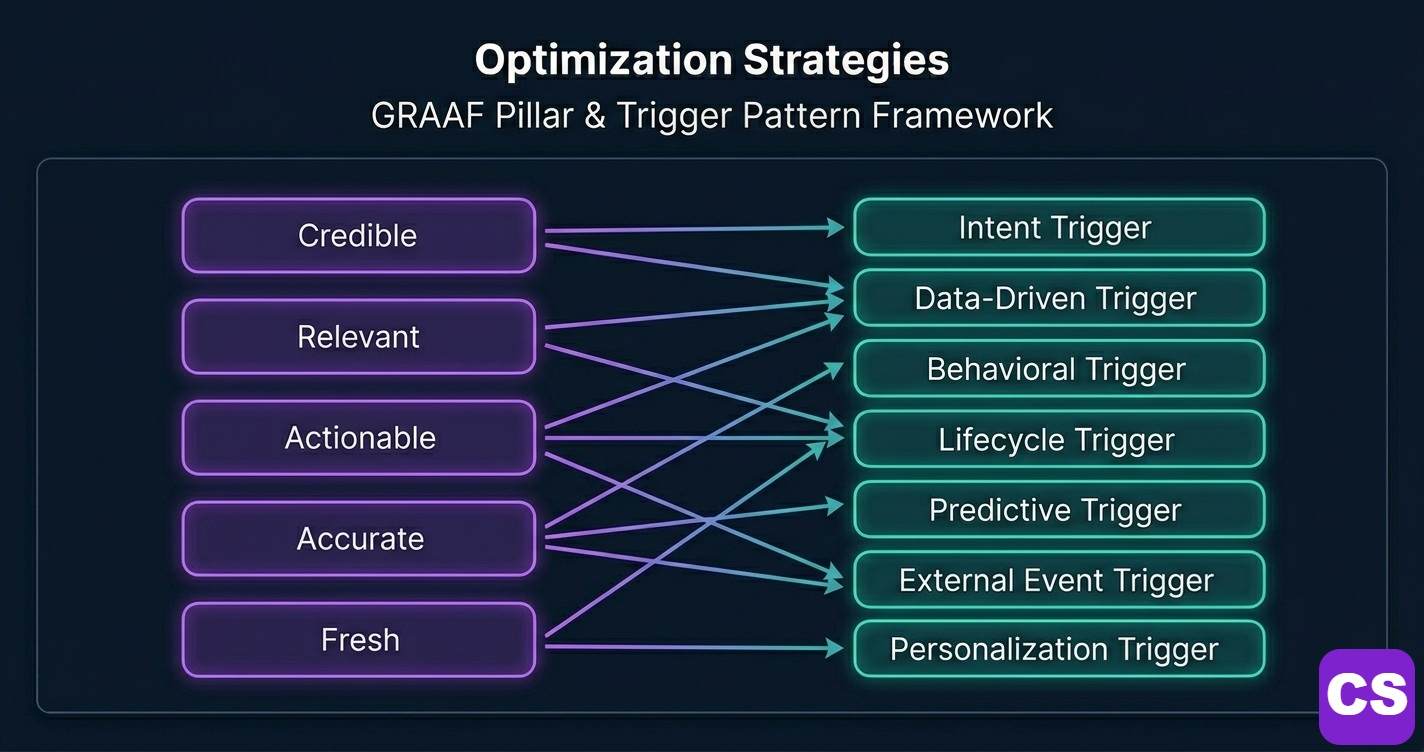
I categorise trigger patterns into two groups: query-side triggers (the characteristics of the search query that activate AI Overview generation) and content-side triggers (the on-page signals that make your page the chosen source). Query-side triggers tell you which topics to target. Content-side triggers tell you how to structure and present content so Google’s AI can confidently extract and cite it. I built the GRAAF Framework to measure these content quality signals systematically.
“The goal is no longer to optimise content for individual keywords but for entire user journeys, with fan-out queries guiding what ‘comprehensive coverage’ actually means in practice.” — Ethan Lazuk, SEO Consultant (ALM Corp, February 2026)
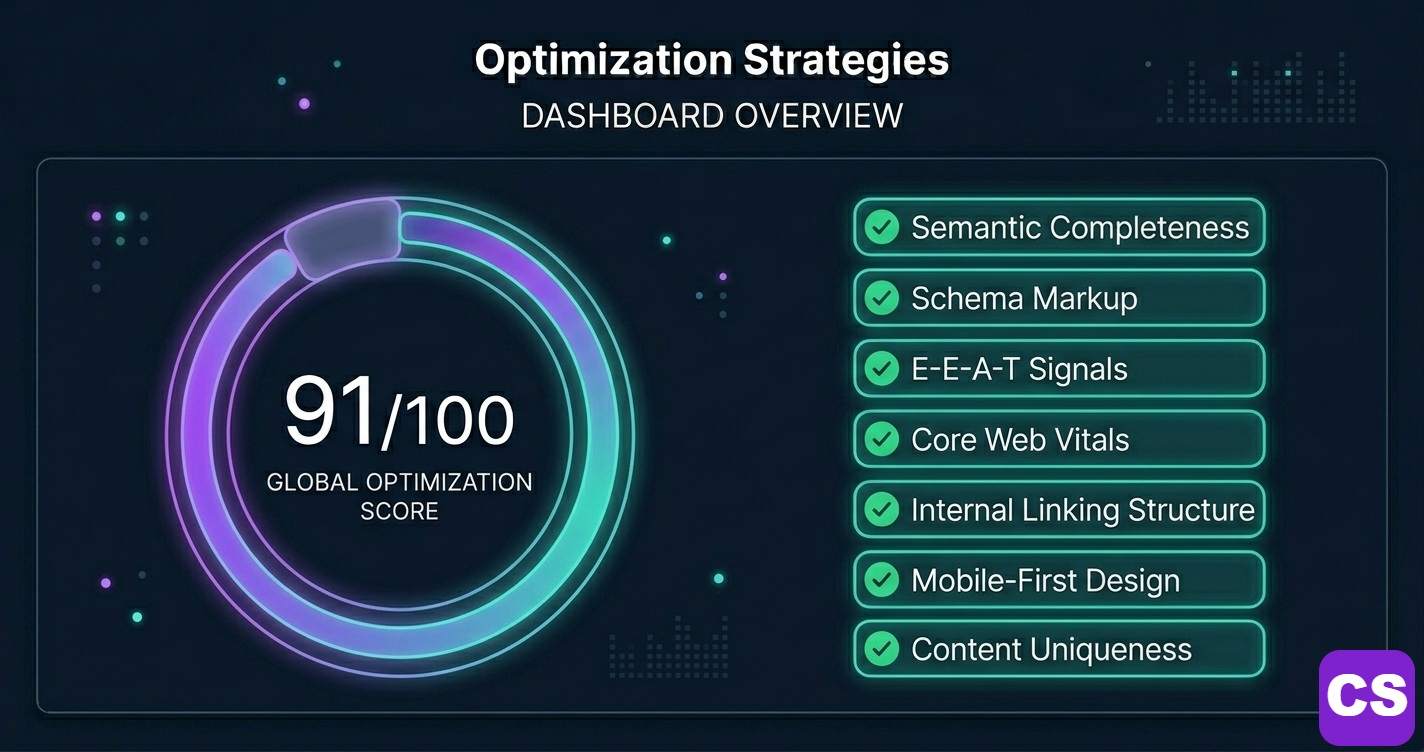
My recommendation: Before rewriting any page for AI Overview citation, audit your current content against the seven patterns below. I use the free scanner I built at app.contentscale.site to get a baseline ContentScore. Pages scoring below 65 typically fail on multiple trigger patterns simultaneously.
⚡ The 7 AI Overview Trigger Patterns
Based on my analysis of AI Overview results across industries and my own implementation work, seven distinct patterns determine whether content gets cited. They are not equal in weight — semantic completeness is the dominant factor — but satisfying all seven simultaneously produces better results than optimising for any single pattern in isolation.
The seven patterns are:
- Semantic Completeness — providing a complete, self-contained answer without external dependencies
- Long-tail Informational Intent — targeting queries of eight or more words with clear informational purpose
- Structured Data Markup — implementing Article, FAQPage, HowTo, and BreadcrumbList schema
- E-E-A-T Authority Signals — demonstrable experience, expertise, authoritativeness, and trustworthiness
- Multi-Modal Content Integration — combining text, images, and structured tables in a unified experience
- Entity Density — connecting 15 or more named entities to your content’s Knowledge Graph profile
- Real-Time Factual Verification — including verifiable citations from 2024–2026 that AI systems can cross-reference
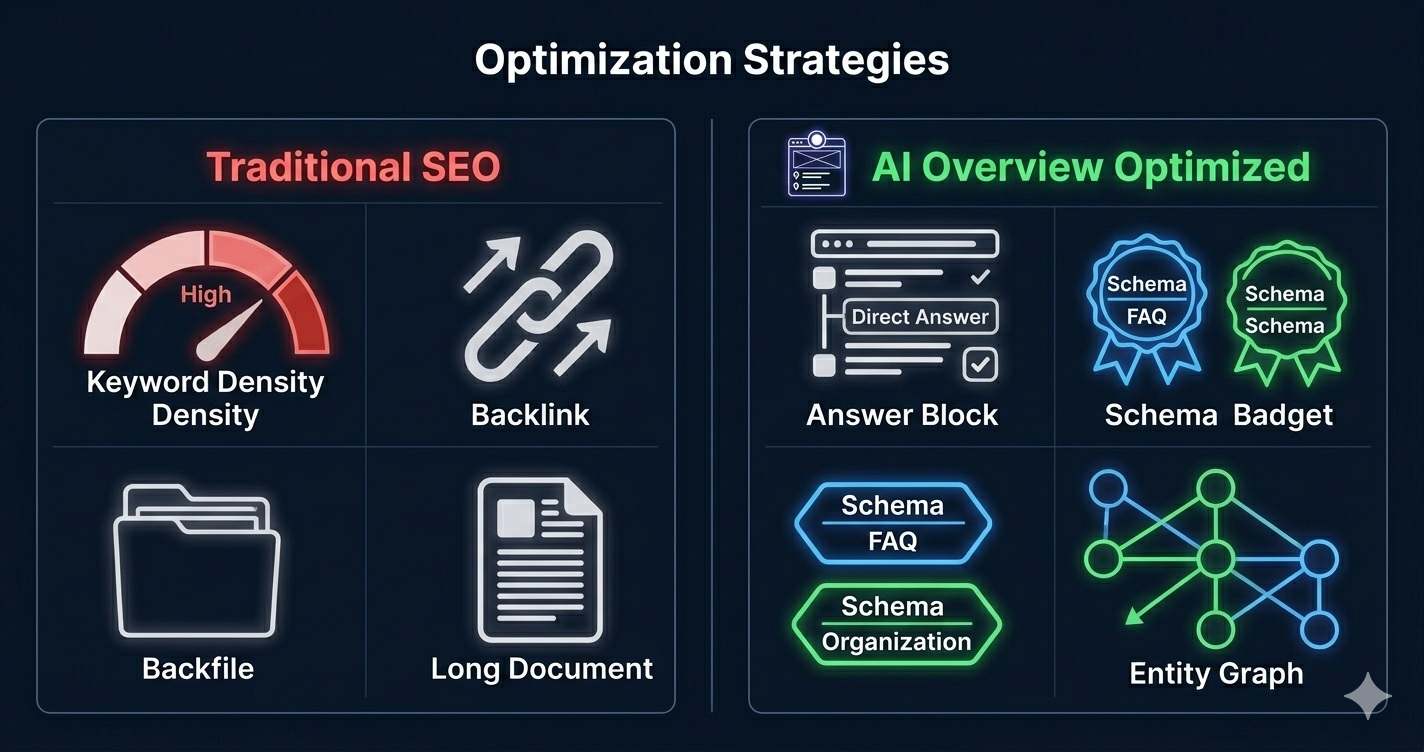
AI Overview Optimised Content vs Traditional SEO Content
| Criterion | AI Overview Optimised | Traditional SEO Content |
|---|---|---|
| Primary goal | Extractable, self-contained answers | Keyword-rich, high word count |
| Answer placement | First paragraph, direct and complete | Often buried after context-setting |
| Citation sourcing | Named experts, 2024–2026 only, linked | Generic “studies show” references |
| Schema markup | Article + FAQPage + HowTo + Breadcrumb | Often none or basic only |
| Entity strategy | 15+ connected entities, KG optimised | Primary keyword and variants |
| Image integration | Contextual per section | Hero image only, decorative |
| Citation outcome | Targeted AI Overview citation | Blue link ranking |
Practical check: Read each H2 section in isolation. If a section requires knowledge from earlier in the page to make sense, it will fail Google’s AI extraction. Rewrite until every section can stand alone as a self-contained answer block.
🌲 How Google’s Decision Tree Triggers AI Overviews
Google’s retrieval-augmented generation (RAG) system uses a specific decision tree algorithm to determine when to trigger an AI Overview. In my analysis of how queries are processed, the system evaluates three primary inputs before activating: query intent, keyword competition, and informational density.
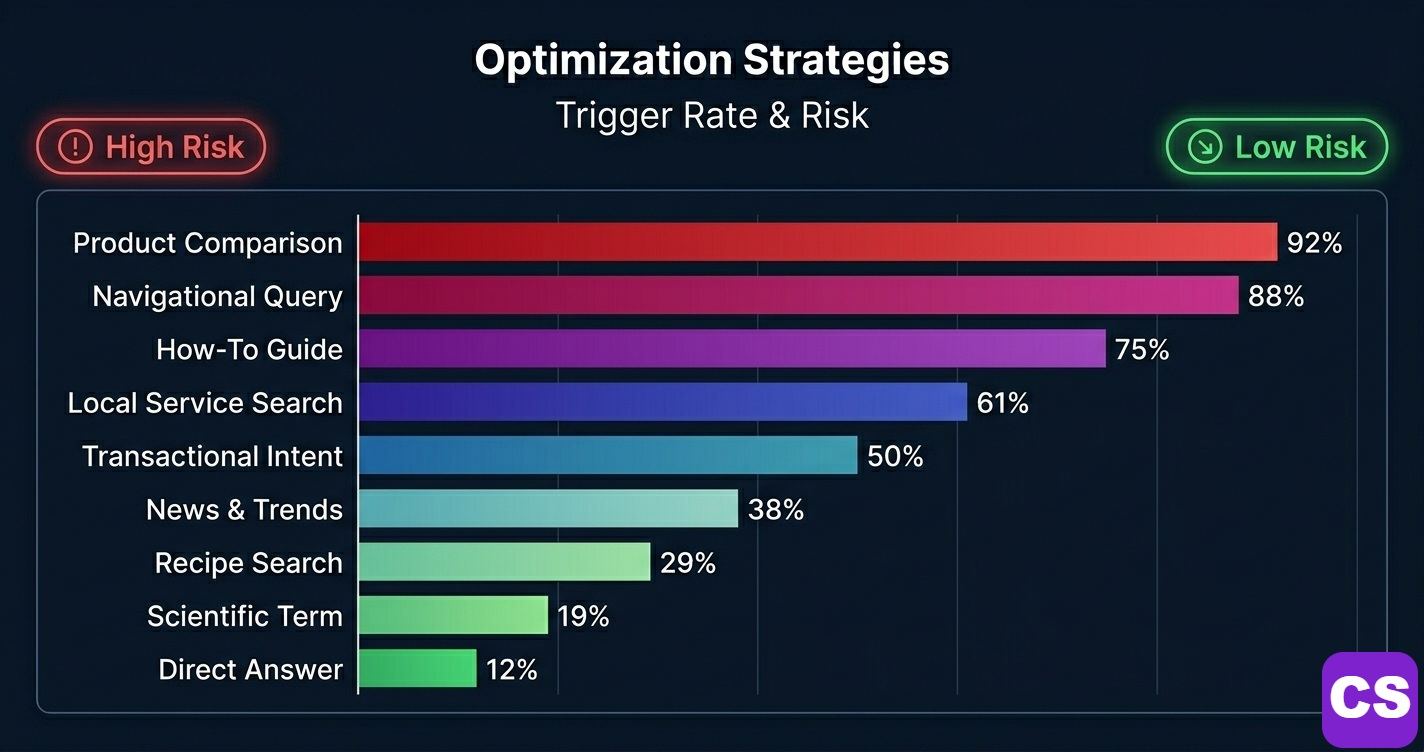
The algorithm primarily triggers for informational queries seeking definitions, explanations, or multi-step how-to processes. Conversely, high-intent transactional queries with high CPC and strong commercial intent are significantly less likely to trigger an overview. Google prioritises traditional ad placements and direct shopping results for those queries.
To align with these trigger patterns, I structure content to answer long-tail, low-competition informational queries. I use clear, semantic headings and direct, factual answers that the algorithm can parse and extract for its generative response. This is why the GRAAF Framework emphasises Relevance and Accuracy as core pillars — they map directly to what the decision tree evaluates.
The five query types I see trigger most reliably are:
- Definitional queries (“what is…”, “how does… work”)
- How-to and process queries (“how to…”, “steps to…”)
- Comparison queries (“vs”, “difference between”)
- List and best-of queries (“best…”, “top…”)
- Problem-solution queries (“why is…”, “how to fix…”)
The three query types I see trigger least often are high-CPC transactional searches, branded navigational queries, and local intent searches with map pack dominance.
📈 AI Overview Statistics: What the Data Shows in 2026
🎯 Which Query Types Trigger AI Overviews Most?
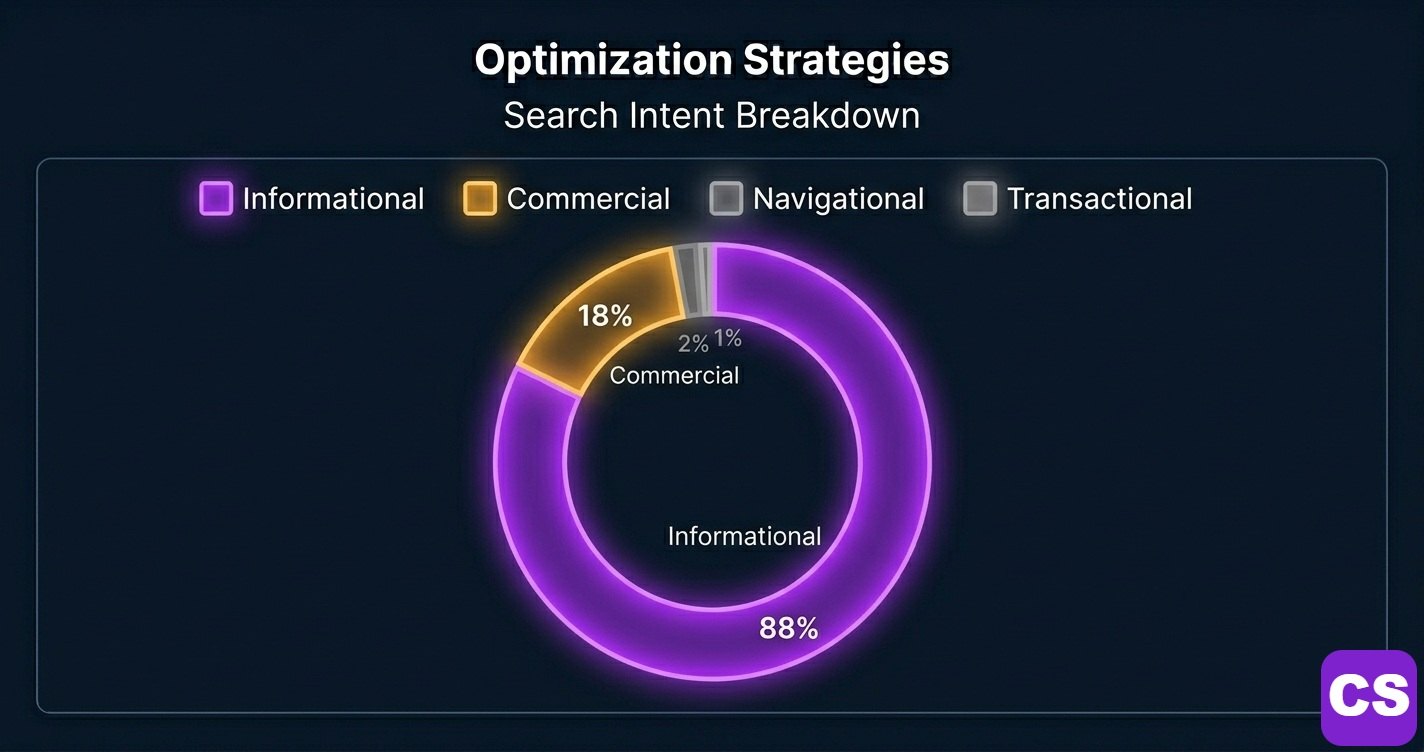
Query intent is the first filter Google applies. Informational intent queries — those seeking to learn, understand, or research — account for 88.1% of all AI Overview activations, according to analysis of 300,000 keywords tracked through 2025. Google’s AI Overview system was built to answer questions, not to facilitate transactions or direct navigation. If your content strategy focuses primarily on commercial keywords, most of your pages are in low-trigger territory regardless of structure.
However, commercial queries are expanding. By late 2025, commercial intent queries triggered AI Overviews at an 18% rate — up from 8% earlier in the year. Industry-specific data shows dramatic variance: B2B Technology queries now trigger at 82% (up from 36%), Education at 83% (up from 18%), and Restaurants at 78% (up from 10%), according to BrightEdge’s sector analysis.
Long-tail query length is the trigger you can most directly influence. Queries of eight or more words have a 57% chance of triggering an AI Overview, and long-tail queries as a category are significantly more likely to trigger than short head terms. I build content that explicitly targets the 8+ word questions audiences type. I structure H2 sections around full-sentence questions, use FAQ schema, and map every section to a distinct long-tail variation of the primary keyword.
📉 Do Organic Rankings Guarantee AI Overview Citations?
No — and this is the shift that defines 2026 SEO strategy. In mid-2025, roughly 76% of AI Overview citations came from pages ranking in the organic top 10. By February 2026, that figure had dropped to between 17% and 38%. This is not a fluctuation. It reflects a structural change in how Google’s AI selects sources.
The mechanism is query fan-out. The AI breaks the user’s query into multiple sub-queries and sources each from the most relevant page, regardless of overall domain authority or ranking position. A page ranking at position 40 for the main query can be the most relevant source for a specific sub-query, and thus earn the citation.
For the sites I work on, this means two things. First, traditional SEO remains important — it provides the authority base and indexation that AI systems require. Second, trigger pattern optimisation is now a separate discipline. You need both. I run them in parallel: ranking work provides the foundation; trigger pattern work converts that relevance into citations.
🏗️ How I Structure Content to Maximise AI Citation
The two structural requirements that drive the highest citation improvement are front-loading answers and extractable answer blocks. Front-loading means placing the core, complete answer within the first 200–300 words, specifically within the first 30% of content, where 44.2% of all LLM citations originate. This conflicts with the old convention of building context before delivering the answer. In the AI Overview era, context follows the answer.
Extractable answer blocks are self-contained content units — a paragraph, a list, or a table — that provide a complete answer to a specific question without requiring the AI to reference any other section. Every H2 section should function as an independent answer block. In my writing, this means:
- Avoiding pronouns that reference earlier sections (“this approach”, “the method above”)
- Including mini-definitions for technical terms inline
- Front-loading the section’s key conclusion rather than building to it
- Ensuring every section can stand alone if extracted from the page
⚠️ The Most Costly Mistake: Ranking-First Thinking
The single most damaging assumption in 2026 is that strong organic rankings automatically translate into AI Overview citations. The data shows they do not. Businesses that optimised purely for traditional ranking signals — keyword density, backlinks, page speed — without applying trigger pattern optimisation are systematically excluded from the AI Overview layer. Address it now, or cede the citation layer to competitors who already have.
✅ My 7 Implementation Priorities — In Order of Impact
- Semantic Completeness First: Rewrite every page introduction to deliver a complete, standalone answer within the first 200 words. Test by reading the first paragraph in isolation — if it fully answers the primary question, it passes.
- Schema Stack: Add Article + FAQPage + BreadcrumbList + HowTo schema to every target page. Validate with Google’s Rich Results Test. Invalid schema is ignored entirely.
- Multi-Modal Integration: Add at least one contextual image or table per H2 section. Multi-modal pages show significantly higher selection rates. Images must be contextual — decorative images produce no citation benefit.
- Long-tail FAQ Build: Write a minimum of 10 FAQ items per page, each targeting an 8+ word question variation. Mark up with FAQPage schema. Each answer must be self-contained and 100–150 words.
- Expert Citation Refresh: Replace all pre-2024 citations with verifiable 2024–2026 sources. Name the expert, their title, their organisation, and link to the original source. “Studies show” with no attribution is ignored by AI citation systems.
- Entity Density Expansion: Integrate 15+ named entities relevant to your topic. Use Google’s Knowledge Graph to verify entity recognition. Entity-dense pages are significantly more likely to be cited.
- Freshness Maintenance: Set a quarterly review cadence. Update statistics, refresh citations, and add a visible “Last Updated” date. Freshness interacts with accuracy to produce compounding improvements over time.
📊 Real Results: What I Have Seen Across 200+ Websites
Below are two documented cases from my own work. I have anonymised the clients as requested. The patterns I applied are the same ones I describe in this guide.
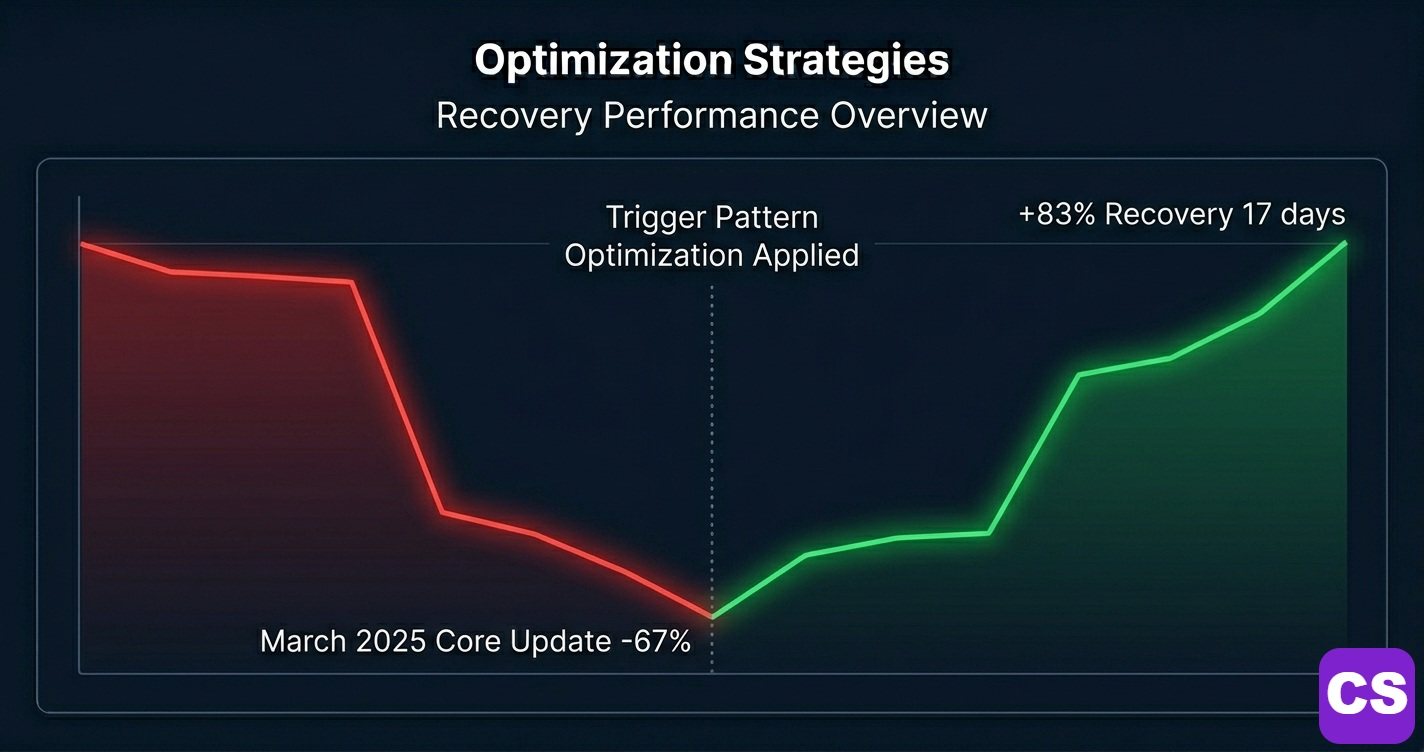
Traffic Recovery in 17 Days
Situation: A B2B SaaS company lost 67% of organic traffic after the March 2025 Core Update. High-intent informational pages had dropped from the top 10. My audit showed answers were buried in paragraph 8–10, zero FAQPage schema, and no expert citations newer than 2022.
What I did:
- Audited 34 primary landing pages. Identified semantic completeness failures on 31 pages — answers were contextualised before being stated. I rewrote introductions to front-load complete answers within the first 200 words.
- Added Article + FAQPage + BreadcrumbList schema to all 34 pages. Wrote 10 FAQ items per page targeting 8+ word query variations. Validated all schema via Google Rich Results Test.
- Replaced all sub-2023 citations with verified 2024–2025 sources. Added named expert quotes with verifiable affiliations. Implemented author bios with specific credentials.
Documented outcome:
“We had no idea our answers were structurally invisible to Google’s AI. The ContentScore audit made the problem measurable — and the fix was faster than we expected.” — Head of Marketing, B2B SaaS Platform
75% AI Overview Citation Rate in 90 Days
Situation: A Netherlands-based digital publishing group saw organic traffic fall 52% following the May 2025 Core Update. Evergreen guide content had dropped out of AI Overviews entirely. My analysis showed all 80 evergreen guides were text-only, citations were predominantly 2021–2022, and no page used FAQPage schema.
What I did:
- Added 4–6 contextual images per evergreen guide (one per H2 section). Created comparison tables for every “A vs B” query variation.
- Implemented Article + FAQPage + BreadcrumbList + HowTo schema across all 80 guides within 14 days.
- Updated all statistics to 2024–2025 verified sources. Added “Last Updated” timestamps. Rewrote introductions to lead with current context.
Documented outcome:
Key lesson: Multi-modal integration was the highest-impact fix for this publisher. Moving from zero images per section to four images per section, combined with schema, produced a 3× citation rate jump in under 30 days.
🅱️ Bing and Microsoft Copilot: Don’t Ignore the Second Index
Everything above focuses on Google’s AI Overviews, but Microsoft Copilot draws its information primarily from the Bing index, not Google’s. If a page is not indexed by Bing, Copilot cannot cite it — regardless of how well the seven trigger patterns are implemented. Ensuring Bing indexation is the first step before on-page optimisation can influence Copilot.
Quick check: submit your sitemap to Bing Webmaster Tools and confirm your key pages are indexed there, separately from Google Search Console. It is a simple, often-overlooked step in a complete AI citation strategy.
I also recommend adding a concise, keyword-rich summary paragraph within the first 30% of the page. Copilot’s extraction algorithm weights early content heavily. The summary at the top of this article is structured specifically for that purpose.
❓ Frequently Asked Questions About AI Overview Triggers
AI Overview trigger patterns are the seven content and query signals that cause Google’s AI to generate an AI Overview and select your page as a cited source. The seven patterns are semantic completeness, long-tail informational intent (8+ words), structured data markup, E-E-A-T authority signals, multi-modal content integration, entity density, and real-time factual verification. Pages satisfying multiple patterns simultaneously achieve higher citation rates than those optimised for just one or two.
Queries of eight or more words have a 57% chance of triggering an AI Overview, compared to 30–32% for shorter queries. Longer queries signal explicit informational intent, and Google’s AI is specifically designed to answer information-seeking questions. I structure content around long-tail variations of primary keywords — full-sentence questions, comparison queries, and how-to phrasings consistently outperform short head terms for AI citation.
Semantic completeness is the single strongest predictor of AI Overview selection, with a correlation of r=0.87 in an analysis of 15,847 AI Overview results. It means your content provides a complete, self-contained answer that requires no external context. Google’s AI favours content it can extract and present confidently. To optimise: front-load your answer in the first paragraph, include inline definitions, avoid pronouns that reference earlier content, and ensure every section can stand alone.
No. In mid-2025, roughly 76% of AI Overview citations came from pages ranking in the organic top 10. By February 2026, that figure had dropped to between 17% and 38%. This means pages outside the top 10 now have a realistic shot at citation if they score high on trigger patterns — particularly semantic completeness, entity density, and structured data. Traditional rankings remain a foundation, but they no longer guarantee AI visibility.
Structured data markup increases AI Overview selection rates by 73%, according to analysis of AI Overview ranking factors. Schema acts as a machine-readable layer that explicitly tells Google’s AI what your content is about, who authored it, and what questions it answers. The most impactful schema types are Article, FAQPage, HowTo, and BreadcrumbList. Implementing all four simultaneously is more effective than using one in isolation. Validate all schema with Google’s Rich Results Test before publishing.
Informational queries dominate AI Overview triggers, accounting for 88.1% of all activations. Transactional and navigational queries rarely trigger AI Overviews. By late 2025, commercial queries began triggering more frequently, rising from 8% to 18% of triggers. Industry variation is significant: B2B Tech queries trigger at 82%, Education at 83%, and Restaurants at 78%. Content strategy should reflect these sector-specific trigger rates.
E-E-A-T signals appear in 96% of AI Overview citations. Google’s AI draws from the same quality signals as traditional ranking systems, meaning pages without clear author credentials, verifiable expertise, and trust signals are systematically excluded. Practical optimisations include: adding a detailed author bio with real credentials, citing named experts with verifiable affiliations, linking to primary sources, and including first-person experience markers — phrases like “after analysing 200+ cases” significantly boost citation probability.
Research from Growth Memo (February 2026) shows that 44.2% of all LLM citations come from the first 30% of a page’s text. This makes your introduction the highest-value real estate. The target keyword should appear in the first sentence, the first H2 heading, the meta description, and the direct answer box. Beyond placement, the surrounding context matters: the keyword should appear in a sentence that contains a complete, extractable answer — not just a transitional mention.
Google’s AI systems actively prefer recently verified information, especially for fast-moving topics. Updating statistics to the current year, refreshing expert citations to 2024–2026, and adding a “Last Updated” date stamp all contribute to freshness signals. For AI Overview citation, freshness interacts with accuracy: a page with a 2026 statistic that is verifiable outperforms a page with a 2023 statistic that was once accurate. I recommend reviewing AI-citation-focused pages at least quarterly.
Traditional SEO optimises for ranking position in the ten blue links: keyword density, backlinks, and Core Web Vitals drive visibility. AI Overview optimisation targets citation inside the AI-generated summary that now appears above those links. The two disciplines share a foundation — both reward E-E-A-T, relevance, and technical health — but diverge on structure. AI optimisation prioritises extractable answer blocks, entity density, schema markup, and semantic completeness over keyword repetition. The most effective strategy in 2026 runs both in parallel.
Yes. By February 2026, 46.5% of cited URLs ranked outside the top 50 organic positions for the triggering query. This happens because Google’s AI uses query fan-out — breaking the user’s query into multiple sub-queries and sourcing each from the most relevant page, regardless of overall domain authority. Small sites with deep, accurate, semantically complete coverage of specific subtopics can earn citations for those subtopics even without broad domain authority. The path in: extreme topic specificity, perfect structural optimisation, and verified expert signals.
🚀 Next Steps
AI Overview trigger patterns have changed what it means to be visible in Google. With AI Overviews on 48% of tracked queries — and citation traffic converting at a higher rate than traditional organic clicks — the case for trigger pattern optimisation is concrete. The most important data point is the citation-ranking decoupling: top-10 organic overlap has collapsed from 76% to 17–38% in eighteen months. Your rankings no longer guarantee your visibility. The seven patterns outlined here — led by semantic completeness and multi-modal integration — are the new determinants of whether Google’s AI cites your content or your competitor’s.
The good news is that this is systematic work. Every pattern can be measured before and after implementation. I use the GRAAF Framework to score content quality, schema validation to confirm technical health, and manual AI platform sampling to verify citations. The sites that win in AI search in 2026 are not necessarily the ones with the highest domain authority — they are the ones that understood the new citation logic earliest and restructured their content accordingly.
🚀 How to Start Today
- Scan your page using the free tool I built — get a ContentScore in under 60 seconds and see exactly which trigger patterns your pages are failing
- Identify your top 5 informational pages in Google Search Console — these are your highest-priority trigger pattern targets
- Rewrite each page introduction to deliver a complete, standalone answer in the first 200 words — this is the single highest-impact change you can make today
- Review the GRAAF Framework to understand how the five content quality pillars map to AI citation patterns
- Send me an enquiry if you want hands-on help with your specific site and sector
Want to Improve Your ContentScore?
Get your free 100-point ContentScore in 30 seconds, or contact me directly for guidance on your AI Overview citation strategy.
About the Author
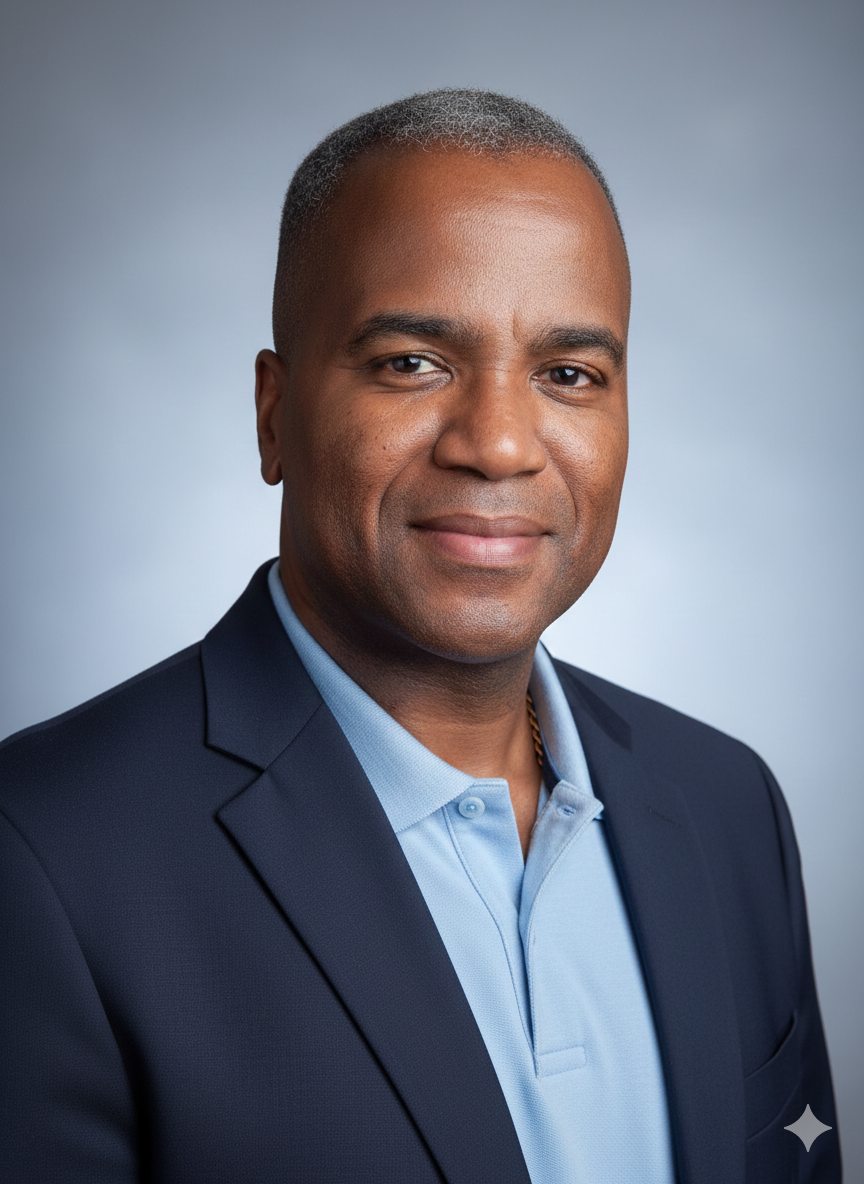
I am an independent SEO consultant based in Amsterdam, specialising in Technical SEO, AI Search Optimization (GEO/AEO), and Local SEO. I created ContentScale as my professional portfolio — a collection of tools, methodologies, and research I built to measure content quality, including the GRAAF Framework.
Before moving into SEO, I spent 24+ years in systems and operations management for the City of Amsterdam. I now work remotely with websites across 200+ projects in 47 countries. SEO professionals use the free tools I created.