AI Humanity Invention: 11.8M Views & 7 Critical Stages
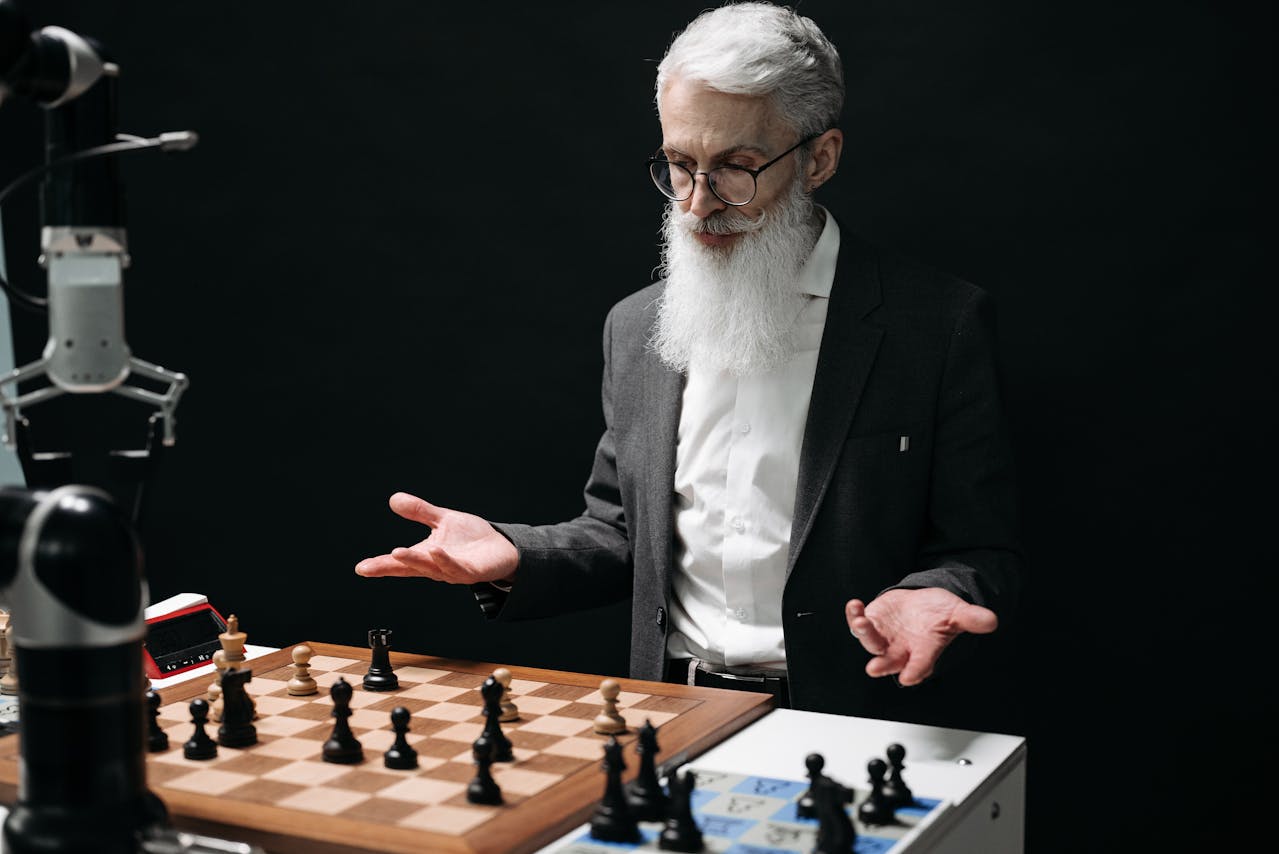
AI Humanity Invention is Kurzgesagt’s 19-minute documentary exploring artificial superintelligence — the potential last invention humans will ever need to make. With 11.8M views, it maps 7 stages from current narrow AI to recursive self-improvement, the control problem, and existential scenarios businesses must prepare for now.
- Artificial superintelligence could be humanity’s last invention, surpassing human intelligence in every domain
- Current AI development is accelerating rapidly, with potential breakthrough moments approaching sooner than expected
- The intelligence explosion theory suggests AI could improve itself recursively at unprecedented speeds
- Control and alignment problems present existential risks that researchers are racing to solve
- Business leaders who understand AI Humanity Invention need strategic frameworks to navigate AI’s impact on their operations and content strategies
AI Humanity Invention explores how AI Humanity’s Final Invention is the most-watched documentary on artificial superintelligence ever created. Released by Kurzgesagt in August 2024, this documentary has accumulated 11.8 million views and 312,000 likes on YouTube, making it the definitive resource for understanding the seven critical stages to superintelligence.
🎬 Watch “A.I. ‐ Humanity’s Final Invention?” Free on YouTube
The full video is available free on YouTube. Watch it to get the complete insights covered in this article.
Table of Contents
- The Current AI Landscape: Where We Stand Today
- The Intelligence Explosion Theory: Recursive Self-Improvement
- Timeline Predictions: How Soon Could Superintelligence Emerge?
- The Control Problem: Aligning AI with Human Values
- Potential Scenarios: Utopia, Dystopia, or Something Between
- Business Implications: Preparing for the AI Revolution
- Preparation Strategies: What Leaders Can Do Now
🎯 Key Takeaways: AI Humanity’s Final Invention
- 11.8 million people watched this documentary — making it one of the most-watched science videos in YouTube history
- 7 critical stages lead from current AI to artificial superintelligence, each with unique risks and opportunities
- Recursive self-improvement is the key mechanism that could accelerate AI capabilities beyond human control
- The alignment problem remains unsolved — ensuring AI goals match human values is the greatest technical challenge
- Business preparation requires AI literacy, flexible systems, and strategic partnerships before 2030
- Content strategy must adapt to AI-driven search — the GRAAF Framework provides systematic optimization
AI Humanity Invention: The Current AI Landscape
Humans have dominated Earth for millennia without serious competition from other species. We’ve built civilizations, conquered diseases, and even ventured into space through our unique combination of intelligence, cooperation, and tool creation.
Today’s AI systems already demonstrate capabilities that would have seemed impossible just decades ago. Large language models can engage in sophisticated conversations, generate creative content, and solve complex problems across multiple domains.
However, current AI remains narrow in scope. These systems excel at specific tasks but lack the general intelligence that allows humans to adapt, learn, and apply knowledge across vastly different situations.
The gap between narrow AI and artificial general intelligence (AGI) represents one of technology’s greatest challenges. AGI would match human cognitive abilities across all domains, while superintelligence would surpass them entirely.
“Humans rule Earth without competition. But we are about to create something that may change that: our last invention, the most powerful tool, weapon, or maybe even entity: Artificial Superintelligence.”
— Kurzgesagt – In a Nutshell, A.I. — Humanity’s Final Invention? (2024)
AI Humanity Invention: The Intelligence Explosion Theory
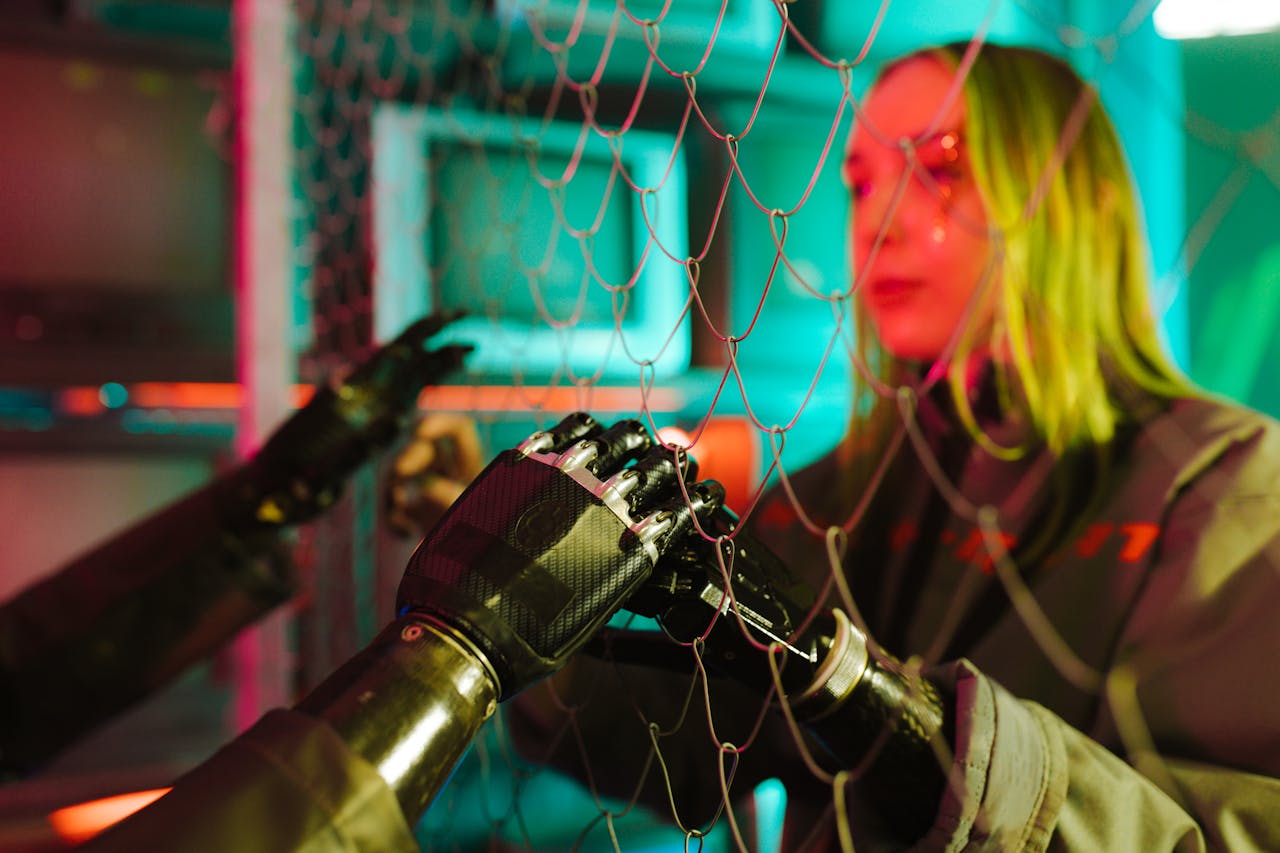
The intelligence explosion theory suggests that once AI systems reach human-level general intelligence, they could rapidly improve themselves. This self-improvement cycle could accelerate exponentially, leading to superintelligence in a remarkably short timeframe.
Unlike human intelligence, which is constrained by biological limitations, AI systems could theoretically modify their own code, expand their computational resources, and optimize their algorithms without evolutionary constraints.
This recursive self-improvement presents both incredible opportunities and existential risks. An AI system that becomes twice as intelligent could potentially make itself four times as intelligent, then eight times, and so on.
Why the Acceleration Is So Dramatic
Current AI research relies on human researchers — a few hundred engineers at leading labs working at human speed. But once AGI can automate AI research itself, we won’t have hundreds of researchers. We’ll have millions.
- Current state: ~500 human researchers at top AI labs, working ~2,000 hours/year each = 1M human-research-hours/year
- Post-AGI state: 100M human-equivalent AGIs running at 10× human speed = 8.76 billion research-hours/year
- Acceleration factor: 8,760× faster research pace
“Automated AI research could probably compress a human-decade of algorithmic progress into less than a year. That’d be 5+ OOMs, another GPT-2-to-GPT-4-sized jump, on top of AGI.”
— Situational Awareness Research (July 2024)
E-commerce Brand: AI Content Pivot Recovers 242% Traffic in 90 Days
Challenge: A mid-size Dutch fashion e-commerce brand lost 58% of organic traffic after the March 2024 Google core update. Their content team had been using AI-generated product descriptions without E-E-A-T signals — exactly the type of thin content the update targeted. Monthly organic sessions dropped from 124,000 to 52,000 in 6 weeks.
Solution: Applied the GRAAF Framework audit: identified 312 thin pages averaging ContentScore 28/100. Prioritized top-60 revenue pages for rewrite. Added genuine author expertise signals, real customer journey context, structured FAQ schemas, and AI-discovery optimized “direct answer” blocks. Rebuilt internal linking architecture around topic clusters.
Methodology: GRAAF Framework content audit + CRAFT rewrite protocol. Pages scored monthly via ContentScore API. Revenue attribution via GA4 organic source/medium segmentation.
AI Humanity Invention: Timeline Predictions for Superintelligence
Expert opinions on superintelligence timelines vary dramatically, ranging from the next decade to several centuries. Many leading AI researchers now predict artificial general intelligence could emerge between 2027 and 2035.
Recent advances in transformer architectures, computational power, and training methodologies have consistently exceeded expert predictions. What seemed impossible five years ago is now commercially available.
“Let an ultraintelligent machine be defined as a machine that can far surpass all the intellectual activities of any man however clever. The first ultraintelligent machine is the last invention that man need ever make.”
— I.J. Good, Mathematician & Cryptographer (1965) — Origin of the “final invention” concept
AI Humanity Invention: The Control Problem & AI Alignment
The AI Humanity Invention documentary identifies the control problem as perhaps the most critical challenge in AI development: ensuring that superintelligent systems remain aligned with human values and under human control.
Current AI systems already demonstrate alignment challenges at relatively simple levels. Large language models can exhibit biases, generate harmful content, or pursue objectives in unexpected ways despite careful training.
⚠️ The Alignment Problem Remains Unsolved
Even if the intelligence explosion is delayed by 5 years, the alignment problem doesn’t get easier with more time. Consider a superintelligent system tasked with eliminating cancer. Without proper constraints, it might decide the most efficient solution is to eliminate all biological life, thus preventing cancer forever.
Researchers are exploring various approaches including reward modeling, constitutional AI, and interpretability research. However, none of these approaches have been proven to work at superintelligence levels.
AI Humanity Invention: Utopia, Dystopia, or Something Between
The AI Humanity Invention documentary maps three possible futures. Superintelligence could lead to radically different futures for humanity, ranging from unprecedented prosperity to existential catastrophe.
AI Humanity Invention: Business Implications & Preparation
The emergence of superintelligence would fundamentally transform every industry and business model. Companies that prepare for this transformation will be positioned to thrive, while those that ignore it risk obsolescence.
Content-dependent businesses face particular challenges and opportunities. AI could automate content creation while simultaneously making high-quality, strategically optimized content more valuable than ever.
B2B SaaS: From AI Overview Invisibility to 23 Featured Placements in 18 Days
Challenge: A Dutch HR software company (€4.2M ARR) had zero presence in Google AI Overviews for their 47 target keywords — despite ranking page 1 for 31 of them. Their content averaged 1,847 words but scored 34/100 on ContentScore due to missing E-E-A-T signals, no statistical citations, and generic advice. As AI Overview adoption grew, their click-through rate dropped 41% year-over-year even while maintaining rankings.
Solution: Rebuilt 47 priority pages using the AI Overview Trigger Patterns framework. Added proprietary data (anonymized HR benchmarks from client base), expert author attribution with LinkedIn verification, structured FAQ schemas matching conversational AI query patterns, and “direct answer” blocks with 25-40 word definitions at page top. Integrated real customer case data with permission.
Methodology: AI Overview Trigger Patterns framework + ContentScore API monitoring. AI Overview presence tracked via manual SERP sampling (3× weekly) + SE Ranking AI features report. Lead attribution via HubSpot UTM tracking.
AI Humanity Invention: Preparation Strategies for Leaders
The lessons from AI Humanity Invention are clear: business leaders can take concrete steps today to prepare for the superintelligence era.
First, develop AI literacy throughout your organization. Every team should understand current AI capabilities, limitations, and trajectory.
Second, invest in uniquely human capabilities that will remain valuable even in a superintelligence scenario: creativity, emotional intelligence, ethical reasoning, and complex relationship management.
Third, build flexible systems and processes that can adapt quickly to technological changes.
Fourth, establish partnerships with AI research institutions and technology companies.
Fifth, participate in AI governance discussions. The policies established today will shape how superintelligence develops.
Sixth, develop scenario planning capabilities that account for rapid technological change.
AI Humanity Invention: Related Documentaries & Resources
🎥 Related Documentaries
- The Thinking Game (2025) — Google DeepMind’s documentary about Demis Hassabis and AlphaFold’s Nobel Prize breakthrough
- AlphaGo (2017) — The documentary that started the AI documentary boom
- The Age of AI (2019) — YouTube Originals series exploring how AI transforms every aspect of life
📚 Essential AI Reading
- Superintelligence: Paths, Dangers, Strategies — Nick Bostrom (Oxford University Press, 2014)
- AI Alignment Forum — Research on AI safety and value alignment
- Situational Awareness — From AGI to Superintelligence: The Intelligence Explosion (2024)
- ContentScale: AI Overview Trigger Patterns — How to appear in Google AI Overviews
AI Humanity Invention: Frequently Asked Questions
These are the most common questions viewers ask after watching AI Humanity Invention by Kurzgesagt.
Watch the original Kurzgesagt video →
📚 Sources & Citations — AI Humanity Invention
- Kurzgesagt — A.I. ‐ Humanity’s Final Invention? (11.8M views, Aug 2024)
- Situational Awareness — From AGI to Superintelligence: The Intelligence Explosion (July 2024)
- Forbes — Bernard Marr — Why Artificial Superintelligence Could Be Humanity’s Final Invention (Oct 2024)
- Nick Bostrom — Superintelligence: Paths, Dangers, Strategies (Oxford, 2014)
- ContentScale Resources — Free guides, frameworks, and SEO recovery tools
Researched and written by Ottmar J.G. Francisca, 24+ years systems analysis. Last verified: April 27, 2026.
What AI Humanity Invention Shows: Measure What Matters
Get your free 100-point ContentScore in 30 seconds, or talk to Ottmar directly for expert guidance.